7 Steps to Find Mattress Stores in Chattanooga With Delivery

Last Updated: November 2, 2026

Quick Summary

To find mattress stores Chattanooga shoppers can trust for delivery, build a short list of local retailers and confirm each store’s delivery radius covers your zip code before visiting. Then compare delivery fees, setup services, and haul-away charges line by line so the quoted price includes everything.

  • Confirm each store’s delivery radius covers your exact zip code, not just the area.
  • Ask whether the quoted price includes delivery, setup, and old-mattress removal, and get it in writing.
  • Flat delivery fees often run $50 to $150 per order regardless of how many pieces you buy.
  • White glove setup typically costs $50 to $150 more than curbside delivery.
  • Store haul-away fees usually range from $25 to $75 per piece, so confirm mattress and box spring coverage.

Table of Contents

Step 1: Map Out Mattress Stores in Chattanooga With Delivery

A mattress delivery radius is the distance a store will ship to your home, and it’s the first thing to confirm.
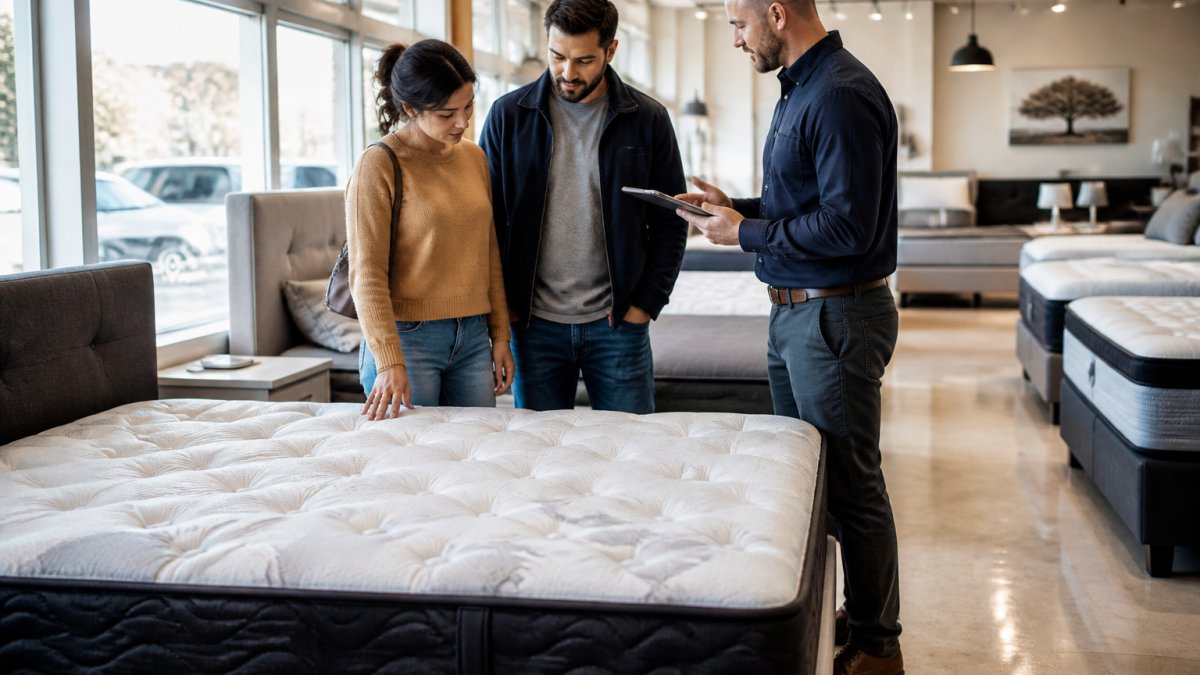
A couple selecting a hybrid bed at one of the top mattress stores Chattanooga offers with delivery service

Here’s how we’d map your options:

  • List every mattress showroom within a reasonable drive of your home.
  • Call or check the website for each store’s delivery radius.
  • Note which ones deliver to your zip code, not just “the area.”
  • Flag stores that offer curbside pickup if you have a truck.

Ask about the radius before you fall in love with a mattress, so you don’t learn delivery isn’t available after you’ve picked one out.

If you want a shortcut, start with Chattanooga mattress stores that customers trust, then narrow from there.

Step 2: Compare Mattress Delivery Fees and Setup Services

Delivery fees and setup service vary widely between mattress stores Chattanooga shoppers visit, so compare them line by line before you commit. For concrete delivery fee details in Chattanooga, see Mattress Delivery Fees Chattanooga.

Two things drive the real cost: mattress delivery fees and setup charges, and whether the store offers white glove setup, where the crew carries the mattress in and sets it on your frame.

Use this comparison approach:

What to compare

Why it matters

Delivery fee

Some stores charge a flat fee; others build it into the price

Setup included?

White glove setup saves your back and your time

Stairs and tight spaces

Confirm the fee covers walk-ups and narrow hallways

Delivery window

A firm time slot beats a vague “sometime today”

A common mistake is assuming free delivery. Ask directly whether the quoted price includes delivery, setup, and old-mattress removal. Get it in writing.

How delivery fees are actually structured

Most mattress retailers use one of three models, and each changes your total cost in a different way:

  • Flat fee per order: A single charge (often $50-$150) regardless of how many pieces you buy. This rewards larger orders.
  • Percentage of subtotal: A fee calculated as a percentage of your mattress price. This penalizes expensive purchases and can make a “free delivery” promotion misleading if the price is marked up.
  • Built-in “free” delivery: The delivery cost is baked into the mattress price. You pay for it either way, but it simplifies comparison shopping.

Ask the store which model it uses. Then calculate the landed cost, mattress price plus delivery plus setup plus haul-away, before you compare two stores.

White glove vs. curbside vs. threshold delivery

Not all delivery is equal. Clarify which service level the fee covers:

  • Curbside: The crew leaves the mattress at the curb or in your garage. Cheapest, but you move it yourself.
  • Threshold: The crew brings it inside your front door but does not set it up.
  • White glove: The crew carries it to your bedroom, removes packaging, sets it on your frame, and hauls away the old mattress. This is the service most shoppers actually want, and it often costs $50-$150 more than curbside.

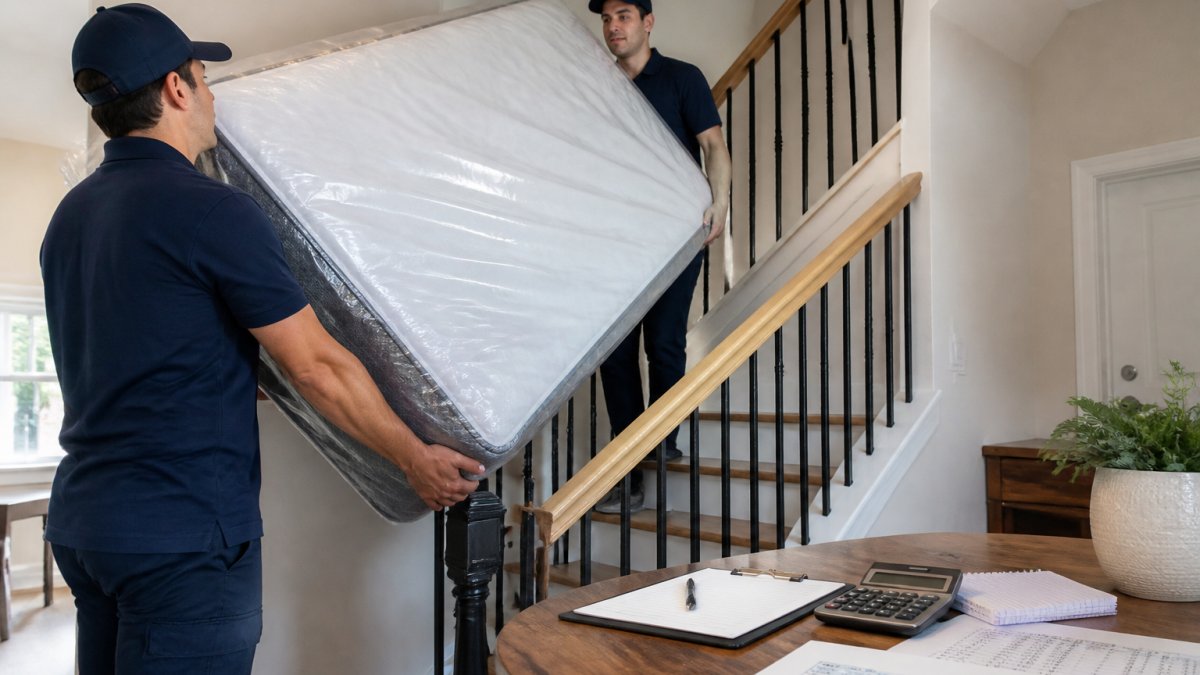
If you have stairs, a narrow hallway, or a tight turn, confirm the white-glove fee covers those conditions. Some stores add a surcharge for walk-ups above a certain floor or for hoisting mattresses over balconies.

The free-delivery trap

“Free delivery” is the most misunderstood phrase in mattress shopping. It usually means one of two things: the store has built the cost into the mattress price, or the free tier is curbside only and white glove costs extra. Ask: “Is white-glove setup included in the free delivery, or is that an upgrade?” and “Is there any charge for stairs or a second-floor bedroom?” Get the answer in writing on the order form.

For current pricing and delivery details, visit the Mattress Outlet of Chattanooga website or contact us for a quote.

Step 3: Check for Same-Day Mattress Delivery Chattanooga Options

Same-day mattress delivery in Chattanooga depends on local inventory and the store’s route schedule, so ask about it early.

Questions to ask:

  • Is the mattress I want in stock right now?
  • Do you offer same-day or next-day delivery?
  • What’s the cutoff time to qualify for same-day?
  • Can I pick it up myself if I have a vehicle?

If speed matters, ask whether same-day pickup is available. Confirm the mattress fits your vehicle and your bed frame before you drive over.

Step 4: Review Mattress Financing and Layaway Options

Financing and layaway make a quality mattress affordable, so review the terms before you fall for one you can’t pay for upfront. To understand payment plans available in Chattanooga before committing, see Mattress Payment Plans in Chattanooga: How to Pay. Ask about payment plans and layaway if you want to spread out the cost.

Here’s what to compare:

A common worry is getting denied for financing. Ask what the store actually requires to qualify, and whether layaway is an option if financing isn’t. That way one “no” doesn’t end your search.

Call Us Today (423) 255-8124 → →

For current payment options, visit the Mattress Outlet of Chattanooga website or contact us directly.

Step 5: Schedule an In-Store Consultation and Try the Mattress

Testing a mattress in person lets you judge firmness and comfort before you buy. Lying on a bed for two minutes in a showroom tells you more than any online review.

Bring these to your visit:

  • Your preferred sleep position (side, back, or stomach).
  • Any ergonomic support needs, like back or hip pain.
  • Your bed frame size and mattress dimensions.
  • A note on whether you want memory foam, innerspring, or a hybrid mattress.

Test several options, and ask about warranty coverage on each.

Step 6: Arrange Haul-Away and Mattress Disposal in Tennessee

Old-mattress disposal is a step most shoppers forget, and haul-away service solves it. Many stores will remove your old mattress when they deliver the new one, often for a fee. But disposal rules in Tennessee are more specific than most shoppers realize, and choosing the wrong option can cost you extra or create a legal headache.

Store haul-away: the easiest path, with caveats

When you buy a new mattress, ask whether the store offers haul-away at delivery. Most full-service retailers do, and the fee typically ranges from $25 to $75 per piece. Two things to confirm:

  • Does the fee cover both the mattress and the box spring? Some stores charge per piece, so a mattress-and-box-spring set can double the haul-away cost.
  • What condition will they accept? Stores generally refuse mattresses that are wet, stained, or infested. If yours is in poor condition, you may need a different disposal route.

Haul-away is convenient because the crew takes the old mattress as they deliver the new one, no extra scheduling. But it is not always the cheapest option, and it does not guarantee recycling. Ask the store where the mattress goes: landfill, incinerator, or a recycling facility. Some retailers partner with recyclers; others simply send everything to the dump.

Tennessee disposal rules you should know

  • Landfill restrictions: Many Tennessee landfills accept mattresses but charge a bulky-item fee (often $10-$30 per piece) and may require you to remove the mattress from your vehicle yourself. Some landfills ban mattresses entirely because they take up space and do not compact well.
  • Curbside bulky-item pickup: Municipal waste services in some Tennessee cities offer scheduled bulky-item pickup, but availability and fees vary by city and county. Check your local public works department for the specific rules where you live.
  • Illegal dumping penalties: Leaving a mattress on the curb without scheduling pickup, or dumping it on public land, can result in fines under Tennessee’s litter and solid-waste laws. Do not assume the curb is a free option.

Mattress recycling in Tennessee

Recycling is the most environmentally responsible option, and Tennessee has a growing network of facilities that accept mattresses.

Where to look:

  • Local recycling centers: Some county recycling centers accept mattresses for a fee. Call ahead to confirm hours and pricing.
  • Retailer recycling programs: A few mattress brands and retailers offer recycling when you buy a new mattress, sometimes at no extra charge.
  • Nonprofit donation: Clean, usable mattresses can be donated to charities that accept bedding, though many organizations have strict hygiene policies. Call before you haul.

How to choose the right disposal option

Use this decision framework:

  1. If you are buying a new mattress and the store offers haul-away: Take it. The convenience usually outweighs the small fee, and you avoid scheduling a separate pickup.
  2. If the store does not offer haul-away or charges too much: Check your city’s bulky-item pickup schedule first. It is often the cheapest legal option.
  3. If you want to recycle: Call your county recycling center or search for a local mattress recycler. Expect a fee, but it keeps materials out of the landfill.
  4. If the mattress is in good condition: Donate it. This is the only option that gives the mattress a second life.
Watch OutNever leave a mattress on the curb without confirming your city’s pickup rules. In many Tennessee municipalities, unscheduled curbside dumping is a code violation and can result in a fine.

For current pickup and delivery options, visit the Mattress Outlet of Chattanooga website or contact us.

Step 7: Ask These Questions to Ask a Mattress Store Before Ordering

The right questions to ask a mattress store before ordering protect you from surprises after the sale. Ask them in the showroom, before you hand over a card.

Run through this checklist:

  • Is this mattress brand-new, not refurbished or returned?
  • Does the quoted price include delivery, setup, and haul-away?
  • Are there any hidden fees at checkout?
  • What’s the return policy, and what does the warranty cover?
  • Can I get the delivery window in writing?

Write the answers down. A store that answers clearly and in writing earns your business. One that dodges these questions is a red flag.

Book Your Delivery With Mattress Outlet of Chattanooga

At Mattress Outlet of Chattanooga, we make this whole process simpler. We offer brand-new mattresses at prices well below retail, thanks to smart truckload pricing and quality furniture from Ashley Furniture Direct.

We also offer flexible payment plans and layaway. Our appointment-based showroom provides a personalized shopping experience.

Ready to skip the runaround? Contact us to book your delivery and get the mattress you actually want.

Frequently Asked Questions

Which mattress stores in Chattanooga offer delivery?

Most full-service mattress stores in Chattanooga offer home delivery, but the details vary widely. Some include free delivery within a set radius, while others charge a flat fee or a per-mile rate beyond city limits. Always confirm the delivery radius, whether setup and haul-away are included, and what happens if you live outside the standard zone. A quick phone call before you visit saves you from surprises at checkout.

How much does mattress delivery cost, and can I compare fees and setup services?

Delivery costs depend on the store, your distance, and the service level you choose. To compare, ask for a written quote that lists every fee before you buy. Pricing depends on quantity, dates, and delivery, so visit the Mattress Outlet of Chattanooga website or contact us for a current quote.

How soon can a mattress store deliver in Chattanooga?

Same-day mattress delivery in Chattanooga is possible at some stores if you order early and the model is in local inventory. Ask whether the store keeps stock on hand or orders from a warehouse, because that determines the wait. If you need a mattress tonight, call ahead and confirm same-day availability before you drive over.

Can I finance a mattress purchase or use layaway?

Yes. Mattress Outlet of Chattanooga offers flexible payment plans and layaway. Ask about the current terms, including minimum payments and interest, before you commit. Budget-conscious shoppers should compare the total cost, not just the monthly payment.


Stop paying retail for a great mattress. Get started with Mattress Outlet of Chattanooga and enjoy 60-80% savings on brand-new mattresses, flexible payment plans, and a personalized shopping experience built around you.

Hybrid Mattress Lifespan With Daily Use: How Long It Lasts

Last Updated: October 24, 2026

Quick Summary

A hybrid mattress lifespan with daily use typically runs 7 to 10 years when the mattress gets rotated on schedule, sits on a supportive frame, and matches the sleeper’s weight and position. Heavier sleepers and weak foundations push you toward the low end, while proper care helps you reach ten years.

  • The weak point in any hybrid is the foam comfort layer, not the steel coil core.
  • Rotate a hybrid every six months, and every three months during the first year.
  • A queen hybrid typically weighs 80 to 120 pounds, so rotation takes two people.
  • Slats should sit no more than a few inches apart so the mattress does not sag between them.
  • Skipping a mattress protector is the most common mistake and can shorten the bed’s life by years.

Table of Contents

How Long Do Hybrid Mattresses Last With Daily Use?

A hybrid mattress lifespan with daily use typically runs 7 to 10 years. For a deeper look at the broader lifespan question, see how long hybrid mattresses last. That range holds when the mattress gets rotated on schedule, sits on a supportive frame, and matches the sleeper’s weight and position. Push past a decade and you are sleeping on compressed foam and stretched coils, not comfort.

Mattress Outlet of Chattanooga sells brand-new hybrids every week, and we hear the same question from buyers: how long will this actually last? The honest answer depends less on the calendar and more on how the bed gets used. A 160-pound back sleeper on a proper foundation will get closer to ten years.

Hybrid mattress lifespan is the number of years a coil-and-foam mattress keeps its support and shape under normal nightly use. Daily use is the key phrase. A guest room hybrid can last far longer than the one you sleep on every night.

Below, we break down what wears a hybrid out, how to spot the end, and the habits that add years.

What Separates a Hybrid From All-Foam

A hybrid pairs a coil support core with foam comfort layers on top. That steel core is why hybrids often outlast all-foam beds. Coils bounce back night after night. Foam alone compresses and slowly loses lift.

The weak point in any hybrid is the foam, not the springs. Cheap comfort foam breaks down first, and that is where sagging starts. Better hybrids use denser foam that holds its shape longer. When you shop, ask about foam density, not just coil count.

Pro Tip
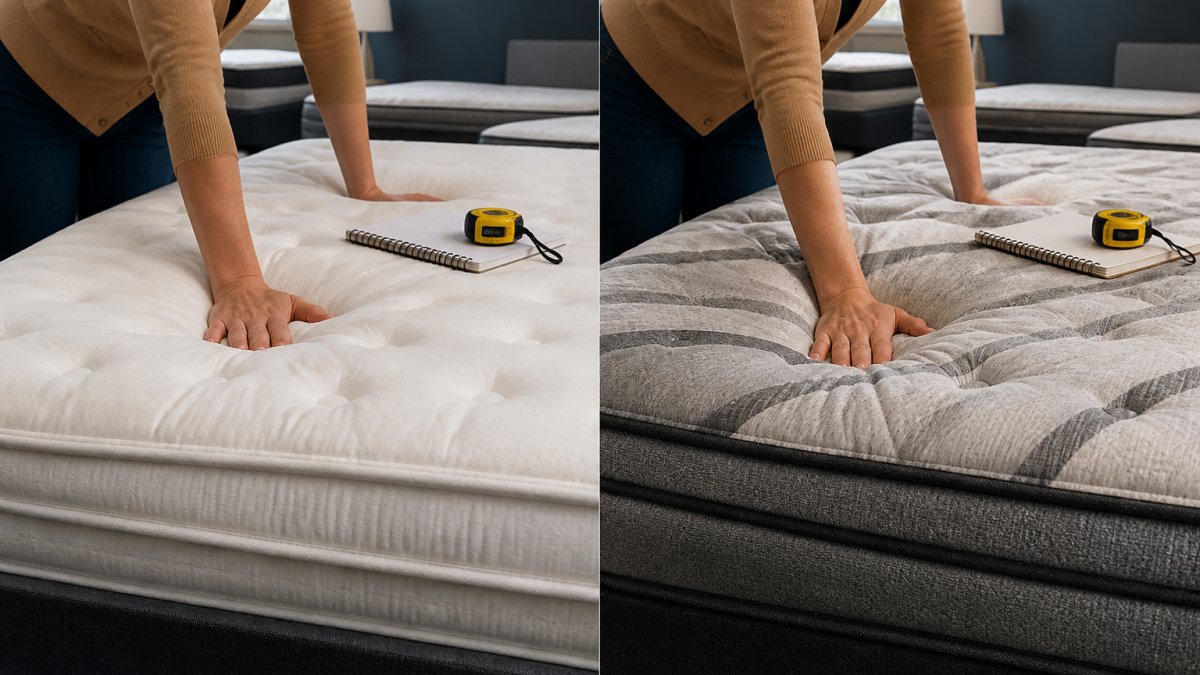
Press your palm into the comfort layer at the edge and center of a floor model. If it feels soft and slow to spring back, that foam will likely break down faster than a firmer, denser layer.

What Shortens a Hybrid Mattress Lifespan

Several everyday habits quietly cut years off a hybrid. None of them feel dramatic in the moment. Together they add up fast.

  • Heavy sleepers: More weight means faster foam compression, especially in one spot.
  • No rotation: Sleeping in the same dip every night wears one zone thin.
  • Weak foundation: A sagging box spring or slatted frame twists the coil unit.
  • Moisture and heat: Sweat and humidity break down foam and can rust coils over time.
  • Jumping and sitting on edges: Repeated edge pressure loosens the border support.
  • Wrong frame size: A frame that is too small pinches the mattress and stresses seams.

Sleeper Weight, Position, and Movement

Weight and sleep position decide where a hybrid wears first. Back and stomach sleepers load the center. Side sleepers press the shoulders and hips. Couples who toss and turn spread wear around, but they also put more total load on the bed.

Heavier sleepers should lean toward denser foam and stronger coil gauges. Lighter sleepers can get away with softer, plusher builds. If you share a bed, match the mattress to the heavier sleeper, not the lighter one.

Sleep position also shapes how your body meets the surface, which affects where the foam compresses. Our guide on how your sleep position affects your mattress choice explains how to match a build to the way you actually sleep.

Signs You Need a New Mattress

The clearest sign is a visible dip or sag where you sleep. Other signs show up before you can see them.

  • You wake up sore or stiff most mornings
  • The mattress feels lumpy or uneven under your hand
  • You roll toward the center or edge
  • The bed creaks, pops, or feels unstable
  • You sleep better in a hotel bed than your own
  • The mattress is past the 7-to-10-year mark

Run a simple check. Lay a straight edge, like a broom handle, across the surface. If you can slide your hand under the middle, the bed has sagged. That dip is not fixable, and it is time to shop.

If you are weighing whether to replace or hold out another year, our article on how often you should replace your mattress walks through the timing question in full.

How to Make a Mattress Last Longer

A few low-effort habits add real years to a hybrid. Start them on day one and the payoff shows up later.

  1. Use a mattress protector. It blocks sweat and spills from reaching the foam.
  2. Rotate the mattress on schedule. Head-to-foot flips wear more evenly.
  3. Use the right foundation. A sturdy frame or box spring supports the coils.
  4. Keep it clean. Vacuum the surface now and then to clear dust and grit.
  5. Avoid sitting on the edges. Edge sitting weakens the border support.
  6. Let it breathe. Strip the bedding now and then so moisture can escape.

New mattress in the house? Our step-by-step guide on how to break in a new mattress covers the first weeks, when the foam is still settling.

Call Us Today (423) 255-8124 → →

Watch Out
Skipping a mattress protector is the most common mistake we see. One sweat-soaked summer can stain foam and start a breakdown that shortens the bed’s life by years.

The Mattress Rotation Schedule That Actually Helps

Rotate a hybrid every six months, and more often in the first year. Set a reminder for every three months during year one, then twice a year after that. Rotation means turning the mattress head-to-foot, not flipping it over. Most hybrids are built to be rotated, not flipped, the comfort layers are on top, and flipping puts the support core where your shoulders should be.

Why rotation matters: foam settles where your body weight lands night after night. A 160-pound sleeper puts roughly 60% of that load through the hips and torso, so the center third of the mattress compresses first.

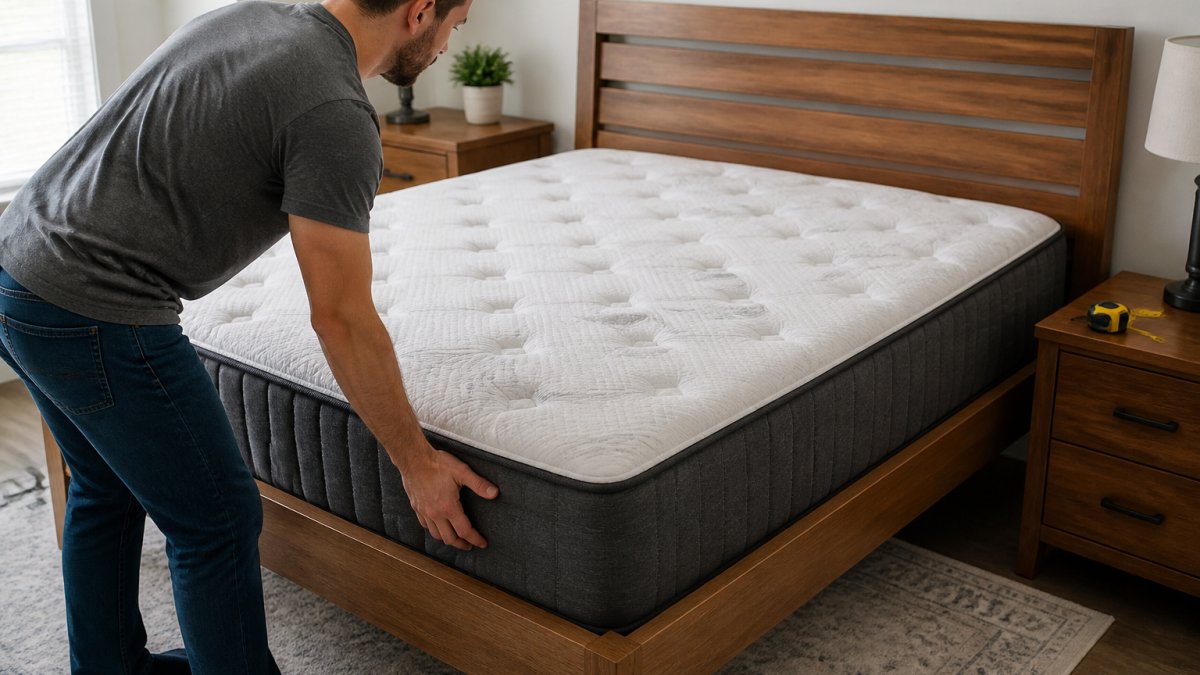
A person in casual clothes gripping the corner of a queen hybrid mattress and turning it a quarter turn on a wooden bed frame in a bright bedroom, tape measure resting on the nightstand

Here is a simple schedule to follow:

Timeframe Action Why It Helps
Month 3 Rotate head-to-foot Evens out early foam settling while the mattress is still breaking in
Month 6 Rotate head-to-foot Spreads wear across the surface before a pattern sets
Every 6 months after Rotate head-to-foot Keeps one zone from wearing thin
Yearly Check for sag and seams Catches breakdown early, while the warranty may still apply

A rotation takes two people and a few minutes. Clear the nightstands first, strip the bedding, and grip the mattress by the handles or the corners, not the ticking. Walk it a quarter turn at a time rather than dragging, which stresses the seams and the coil unit.

What happens if you skip it: the center dip deepens, the edges soften unevenly, and the mattress starts to feel like two different beds depending on which side you sleep on. That small effort is the cheapest way to stretch a hybrid mattress lifespan, cheaper than a new mattress and far cheaper than a new back.

Key Takeaway
Put the rotation on the same calendar as your smoke-detector check. Twice a year, same day, and you will never miss it.

Bed Frame Fit and Foundation Compatibility

The right frame protects your mattress. The wrong one can wreck it.

Mattress dimensions are the size of the sleep surface. A queen is 60 by 80 inches; a king is 76 by 80 inches. Bed frame dimensions are the size of the opening the mattress drops into.

Room footprint is a third number entirely. A queen bed frame with a headboard and footboard can add 4 to 6 inches to each end, so a bed that measures 80 inches long may occupy 86 to 92 inches of floor space.

  • Slatted frames: Slats should be close together, no more than a few inches apart, so the mattress does not sag between them. Check that the slats are supported in the center, not just at the rails.
  • Box springs: A worn or soft box spring undermines even a good hybrid. If the box spring flexes when you press it, replace it with the mattress.
  • Platform beds: A solid, flat platform works well and supports the coils evenly. Make sure it has ventilation, a solid deck with no airflow can trap moisture under the mattress.
  • Adjustable bases: Check that the mattress is compatible before you pair them. Most hybrids flex, but a very thick or very stiff build may not articulate well, and the warranty may require a specific base type.

Bedding and accessories matter too. Sheet pocket depth needs to match the mattress height, a hybrid with a thick comfort layer can run 12 to 16 inches deep, and standard sheets may not tuck.

Key Takeaway
Measure three things before you buy: the inside of the frame, the floor space the bed will occupy, and the path the mattress has to travel to get there. A mattress that is a half inch too big for the opening will wear at the edges and never sit flat.

Shopping for a brand that holds up? Our list of the best mattress brands for longevity helps you compare durability before you spend.

Conclusion

A hybrid mattress gives you roughly 7 to 10 years of solid sleep with daily use, and the habits above decide whether you land at the top or bottom of that range. Rotate it, protect it, and put it on a frame that fits. That is most of the battle.

When it is time for a new one, Mattress Outlet of Chattanooga makes the swap easy on your budget. We stock brand-new hybrids at 60-80% below retail through smart truckload pricing, offer flexible payment plans and layaway, and give you a personalized, appointment-based shopping experience. No gimmicks, no marked-up showroom pricing.

Call us today at (423) 255-8124 and get a brand-new hybrid that fits your frame, your budget, and the way you sleep.

Frequently Asked Questions

How long does a hybrid mattress last with daily use?

Most hybrid mattresses hold up for seven to ten years with nightly use. The coil core usually keeps its shape longer than the foam layers on top, so comfort fades before support fails. Heavier sleepers, shared beds, and mattresses without a proper foundation land at the shorter end of that range. If you sleep on it every night and notice dips or sagging past about an inch, the hybrid mattress lifespan for your specific bed is probably closer to the low end.

Do hybrid mattresses last longer than memory foam mattresses?

On average, yes, but the gap is smaller than marketing suggests. The steel coil base resists the deep body impressions that all-foam beds develop, so a hybrid often reaches eight to ten years while a comparable memory foam mattress may soften noticeably around six to eight. The foam comfort layer still breaks down on the same timeline in both designs. Foundation quality, rotation habits, and sleeper weight matter as much as the construction type.

Does rotating a hybrid mattress extend its lifespan?

Rotating helps, but only if you do it on a schedule. Turning the mattress head-to-foot every three to six months spreads wear across the surface and slows the formation of body impressions. Set a reminder for the first of the month every quarter and rotate then. Skip flipping unless the manufacturer says the mattress is double-sided, since most hybrids are built to sit one way up. Pair rotation with a breathable protector and a supportive frame for the best results.

Can a sagging hybrid mattress be repaired?

Minor softening can sometimes be eased with a firm mattress topper or a new foundation, but a genuine sag deeper than about an inch and a half is not fixable. Once the coils compress or the foam crushes, the support structure is compromised. Check the frame first, since a weak slat base can mimic mattress sag. If the mattress still dips on a solid, flat foundation, replacement is the practical answer, and a budget-friendly outlet can soften the cost.

Twin Mattress Dimensions in Inches: 7 Sizes and Fit Facts

Last Updated: October 28, 2026

Quick Summary

Twin mattress dimensions are 38 inches wide by 75 inches long, giving you a 2,850 square inch sleep surface. Twin XL adds 5 inches of length for an 80 inch mattress, while a full is 16 inches wider at the same 75 inch length. Twin fits kids, guest rooms, dorms, and bunk beds.

  • Twin and twin XL sheets are not interchangeable, so buy bedding matched to your mattress length.
  • A twin bed frame needs an interior opening of at least 38 by 75 inches to hold the mattress.
  • A twin mattress fits comfortably in a room measuring at least 7 by 10 feet.
  • Choose deep-pocket sheets if your twin mattress is 12 inches thick or more.
  • A twin is a solo bed; two adults will not sleep comfortably on 38 inches of width.

Table of Contents

Twin Mattress Dimensions in Inches: The Numbers That Matter

A twin mattress measures 38 inches wide by 75 inches long, giving you a 2,850 square inch sleep surface (Twin vs. Twin XL Mattress Comparison 2025). That is the number to memorize. Every other question about twin mattress dimensions in inches flows from those two figures, and getting them right before you shop saves you a return trip.

The twin is easy to confuse with other mattress sizes. It is not the same as a full. It is not the same as a crib mattress. And it comes in more than one length.

Here is the short version of the standard twin:

  • Width: 38 inches
  • Length: 75 inches
  • Square inches: 2,850
  • Best for: kids, guest rooms, dorms, bunk beds
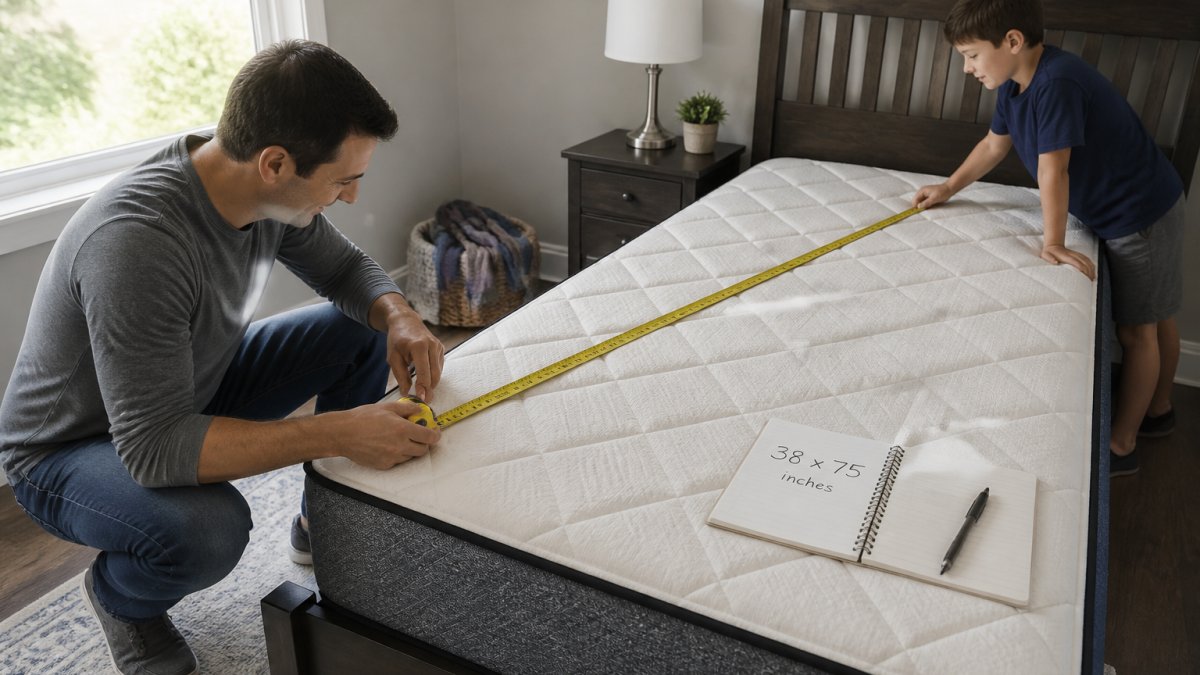
Parent and child measuring a bed to illustrate standard twin mattress dimensions of 38 by 75 inches

If you are still comparing twin against every other size on the market, our guide on how to choose the right mattress size lays the full lineup side by side.

Twin vs Twin XL Mattress Dimensions: Five More Inches of Legroom

Twin XL adds 5 inches of length and nothing else. A twin XL is 38 inches wide by 80 inches long, which puts it at 3,040 square inches (Twin vs. Twin XL Mattress Comparison 2025). Same width, longer frame, and that single change is why twin XL is the default for college dorms and tall teenagers.

The five inches matter more than people expect. Anyone over about 6 feet will feel their heels hang off a standard twin. Twin XL fixes that without eating extra floor space in a narrow room.

Watch out: twin and twin XL sheets are not interchangeable. A standard twin sheet will not stretch over an 80 inch mattress, and a twin XL sheet will bunch on a 75 inch one.

Size Width Length Square Inches Best For
Twin 38 in 75 in 2,850 Kids, guest rooms, bunks
Twin XL 38 in 80 in 3,040 Dorms, taller sleepers
Full 54 in 75 in 4,050 Single adults, couples on a budget

Twin Mattress Dimensions Compared to Full: Width, Length, and Who Fits

A full mattress is 16 inches wider than a twin but exactly the same length. Full comes in at 54 by 75 inches, or 4,050 square inches (Mattress Sizes 101: Finding Your Perfect Fit). The jump in width is the whole story, and it changes who the bed suits.

Twin mattress dimensions compared to full come down to one question: are you sleeping alone, or might two people share? A twin is a solo bed. A full can hold two adults, though tightly.

  • Twin: one sleeper, narrow rooms, bunk setups
  • Full: one adult who wants room to sprawl, or two small adults
  • Length: identical at 75 inches, so neither helps tall sleepers

If length is your problem, neither size solves it. Move up to twin XL or a queen.

Twin Bed Frame Dimensions: What Actually Holds the Mattress

A twin bed frame needs an opening of at least 38 by 75 inches, but the frame you choose changes the bed’s real footprint, its height, and how the mattress wears. Most guides stop at the mattress size. The frame is where fit problems actually start.

Start with interior dimensions, not the outer footprint. A frame labeled “twin” can have interior rails that measure 38.5 or 39 inches wide, which is fine for a standard 38-inch mattress but will squeeze one that runs wide. Check the interior length too: some decorative headboards and footboards eat into the 75-inch opening, leaving you with a mattress that bows or hangs over the rail.

Frame type changes the fit more than the numbers do:

  • Standard metal frame: sized to the mattress, usually 38 to 39 inches interior width. Needs a box spring or a bunkie board for support unless it has a solid deck.
  • Platform bed: slats support the mattress directly, so no box spring is needed. Slat spacing matters, gaps wider than about 3 inches let a foam or hybrid mattress sag between them. Look for slats no more than 2.5 to 3 inches apart, or add a bunkie board.
  • Bunk and trundle beds: built specifically around a 38 by 75 inch mattress. Trundle cavities are often tighter, so measure the cavity depth and width before buying a thick mattress, a 12-inch profile may not clear the bed above.
  • Adjustable base: rare in twin, and usually twin XL only. If you want an adjustable base, plan for a twin XL mattress and frame from the start.
  • Panel and sleigh beds: the footboard and side rails can reduce the usable interior length by an inch or more. A 75-inch mattress may not sit flush.

Height is the other number people forget. A twin mattress is commonly 8 to 12 inches thick. Add a 9-inch box spring and a 10-inch frame and your sleep surface sits 27 to 31 inches off the floor. That is fine for most adults, but for a child’s bed or an elderly sleeper, total height affects how easily someone gets in and out.

Pro Tip
Measure the frame’s interior width and length, the distance between slats, and the height from floor to the top of the rail. Bring those three numbers with you when you shop for a mattress, they determine whether a twin will actually fit and how it will feel.

If you need a frame to go with the mattress, you can browse our furniture to see what fits a twin setup.

Twin Mattress Room Size: Will It Fit Your Bedroom Layout?

A twin mattress fits comfortably in a room measuring at least 7 by 10 feet. That leaves walking space on both sides and room for a dresser. Tighter than that and you are stepping over the bed to reach the door.

Plan for more than the mattress footprint. A twin bed with a frame and headboard can occupy 42 by 80 inches of floor. Add 24 inches of clearance on the open side for getting in and out.

Small-room tricks that actually work:

Call Us Today (423) 255-8124 → →

  • Push the long side against a wall to free up floor space
  • Skip the box spring and use a platform frame
  • Choose a low-profile mattress to keep the room feeling open
  • Measure the door and stairwell before delivery day

Twin mattress room size is the reason this bed stays popular in apartments, dorms, and kids’ rooms. It is the smallest standard adult mattress size that still sleeps a grown person.

Who a Twin Mattress Fits: Kids, Guest Rooms, Dorms, and Adults

A twin mattress fits one child, one guest, one dorm resident, or one adult who sleeps alone in a small room. It is the classic first “big kid” bed after the crib transition, and it is the standard dorm room mattress across college housing.

Common uses for a twin bed:

  • Kids moving up from a crib or toddler bed
  • Guest bedrooms that need to fit two beds
  • Dorm rooms and first apartments
  • Bunk beds and trundle beds
  • Adults in studios or small bedrooms

Adults can sleep on a twin, but comfort depends on personal preference. If you’re deciding whether a twin suits you, read our guide on how your sleep position affects your mattress choice. A full offers more width.

One honest limit: a twin is not a couple’s bed. Two adults will not sleep comfortably on 38 inches of width.

Bedding and Accessory Sizing for a Twin Mattress

Twin bedding is sold by the same 38 by 75 inch standard, so sheets, pads, and protectors labeled “twin” will fit a standard twin mattress. Buy twin XL bedding only if your mattress is 80 inches long. That part is simple.

Start with the fitted sheet. A standard twin fitted sheet is cut for a mattress around 8 to 10 inches thick.

Twin and twin XL mattresses differ in length: a standard twin is 75 inches long, and a twin XL is 80 inches long.

Comforters are where sizing gets fuzzy. A comforter labeled “twin” is cut to drape over the sides and foot of a 38 by 75 inch mattress, but the drop varies by brand.

Your bedding checklist:

  • Fitted sheet: twin, deep pocket if the mattress is over 12 inches thick
  • Flat sheet: twin; tuck it under the foot if you use a thick mattress
  • Comforter: twin, or twin/twin XL combo sizing (expect extra length on a standard twin)
  • Mattress protector: twin, waterproof if it is for a kid’s bed or a guest room
  • Pillow: standard size; a twin bed pairs well with one standard pillow, two if the sleeper is small
  • Bed skirt: twin, if you use a box spring and want to hide it
Watch Out
A deep mattress plus a thick mattress protector plus a deep-pocket sheet can add up to a tight fit. If your mattress is 14 inches or thicker, look for sheets labeled for 16- to 18-inch pockets, and wash new sheets before the first use, most cotton blends shrink slightly and fit better after one wash.

Accessibility is the accessory question nobody asks. For an elderly sleeper or anyone with mobility limits, total bed height matters more than mattress size. A 12-inch mattress on a 9-inch box spring and a 10-inch frame puts the sleep surface around 31 inches off the floor, too high for some people to get in and out safely. A low-profile mattress (6 to 8 inches) on a platform frame keeps the bed around 18 to 22 inches, which is easier to manage. If you are buying bedding for a bed you are setting up for someone with mobility concerns, size the mattress and frame first, then buy sheets to match the final height.

While you are sizing bedding, it is also worth asking how often you should replace your mattress. Most mattresses last 7 to 10 years, and a sagging hand-me-down is not worth building a bedding set around.

Try a Twin Mattress in Person Before You Buy

Numbers tell you what fits. Lying on the mattress tells you what feels right. If you’re looking for a Twin Mattress Chattanooga TN area, you can visit the store to try one in person. A 38 by 75 inch twin from one maker can feel firm and supportive while another feels soft and sunk in, and no size chart captures that difference.

Mattress Outlet of Chattanooga offers brand-new mattresses, flexible payment plans, and layaway.

Frequently Asked Questions

Is a twin mattress 38 or 39 inches wide?

A standard twin mattress is 38 inches wide and 75 inches long, which works out to 2,850 square inches of sleep surface.

What is the difference between a twin and a twin XL mattress?

Twin vs twin XL mattress dimensions come down to length: both are 38 inches wide, but a twin is 75 inches long and a twin XL is 80 inches long.

Will a twin mattress fit in a small bedroom?

A twin mattress measures 38 by 75 inches. Allow additional room for walking space and other furniture.

Can two twin mattresses make a king-size bed?

Two twin mattresses placed side by side measure 76 inches wide and 75 inches long. Two twin XL mattresses combine to 76 by 80 inches.


Finding the right twin is easier when you can see it, touch it, and lie on it before you pay. Mattress Outlet of Chattanooga stocks brand-new twin mattresses at prices well below retail, with same-day pickup, flexible payment plans, and layaway options. Bring your measurements and let our team help you get the fit right the first time. Get started with Mattress Outlet of Chattanooga and sleep better on a bed sized for your room.

Queen Mattress Dimensions in Inches: A Complete Size Guide

Last Updated: October 27, 2026

Quick Summary

Queen mattress dimensions are 60 inches wide by 80 inches long, giving you 4,800 square inches of sleeping surface. In feet, that is 5 feet wide by 6 feet 8 inches long, or about 33.3 square feet of footprint. Keep both sets of numbers handy when planning your room and checking frames.

  • A full mattress is 54 by 75 inches, making a queen 6 inches wider and 5 inches longer.
  • Plan 24 to 30 inches of walking space on each side of the bed you use.
  • Leave at least 36 inches at the foot of the bed if it is a main walkway.
  • A 10 by 10 room fits a queen with side access on one side only.
  • Measure your frame opening and delivery route, not just the room.

Table of Contents

Queen Mattress Dimensions in Inches: The Standard 60 by 80

A queen mattress measures 60 inches wide by 80 inches long (Mattress Sizes 101: Finding Your Perfect Fit). That 60 by 80 footprint gives you 4,800 square inches of sleeping surface. This guide breaks down measurements from frame fit to room clearance.

In practice, the mattress is only part of the equation. Your frame, your room, and your doorway also matter.

Queen mattress dimensions are the starting point, not the finish line. Below, we walk through the numbers in inches and feet, how queen compares to full and king, and how to measure before you buy.

How Mattress Depth and Thickness Affect Fit

Length and width get all the attention. Depth is the measurement people forget, and it causes the most surprises. For guidance on how sleep position affects your mattress choice, see how your sleep position affects your mattress choice.

Your Queen Mattress Size in Feet

In feet, a queen mattress is 5 feet wide by 6 feet 8 inches long. That is the same 60 by 80 inches, just converted for room planning.

Feet are easier for floor layouts. Inches are better for doorways and frames. Keep both in your head when you shop:

  • Width: 5 feet
  • Length: 6 feet 8 inches
  • Total footprint: about 33.3 square feet

Queen Bed Frame Dimensions vs. Mattress Dimensions

A queen mattress and a queen bed frame are not the same size. The mattress is the 60 by 80 inch constant. The frame is everything built around it.

A queen mattress is 60 inches wide by 80 inches long. Frame dimensions vary, so check the specifications for the frame you have or are considering.

When fitting a bed into a wall niche or between two nightstands, check the frame’s outer dimensions as well as the mattress width.

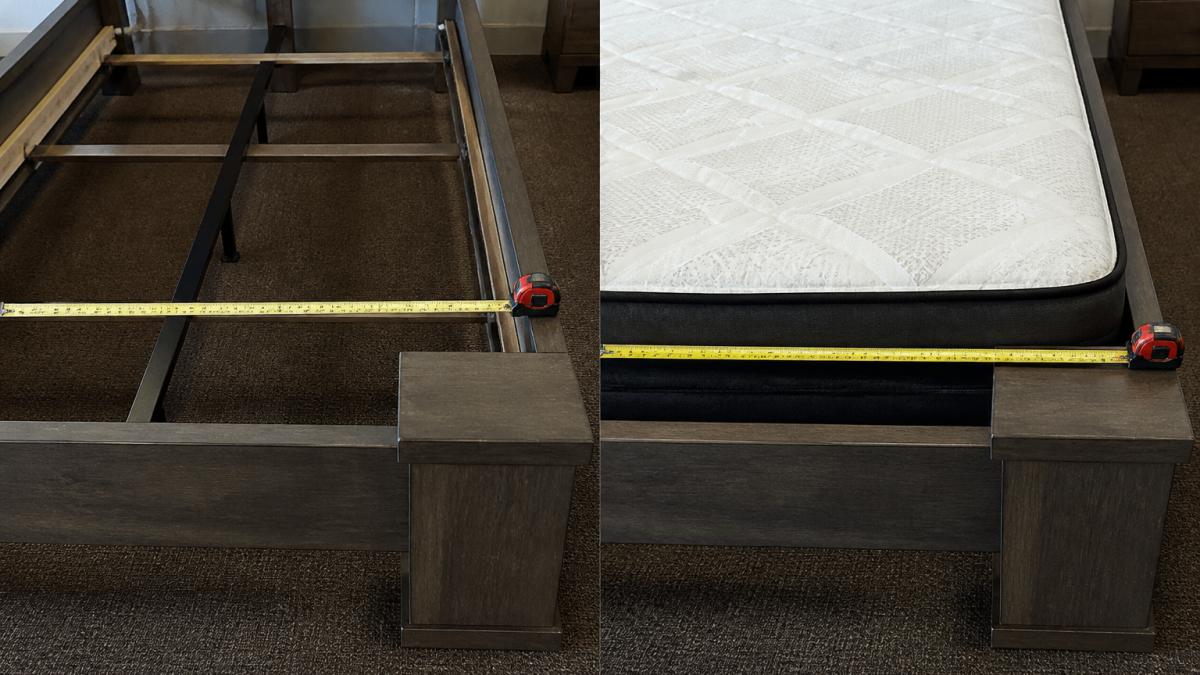
How to Measure a Frame Opening

Before buying a mattress for an existing frame, check the frame and mattress specifications for compatibility. Measure the available space in the room and compare it with the frame’s outer dimensions.

Headboards, Footboards, and the Assembled Footprint

Headboards, footboards, and side rails can affect a bed’s overall footprint. Check the frame’s specifications when planning the room layout.

Check the frame’s outer dimensions and compare them with the available room space before you commit.

Pro Tip
Write the frame opening and the assembled outer dimensions on a sticky note and take it to the store. Those two numbers settle most queen frame questions faster than any size chart.

Measurement Tolerances and Real-World Variation

Check the stated dimensions for the specific mattress and frame you are considering.

That is why the product specification sheet matters more than the size name on the box. Check the stated dimensions for the exact model you are buying, and treat “queen” as a category, not a guarantee. A common pattern is for buyers to assume all queen mattresses are identical and then find that a deep pillow-top sits proud of the frame or that a tightly upholstered headboard crowds a nightstand. Confirm the numbers for the specific product before you order.

Diagram comparing interior queen bed frame dimensions to standard queen mattress dimensions

If you are pairing a new mattress with an existing frame, check the frame’s dimensions and compatibility.

Call Us Today (423) 255-8124 → →

Queen vs Full Mattress Dimensions: Which Fits Your Room

A queen is 60 by 80 inches. A full, also called a double, is 54 by 75 inches (Full Size Bed Dimensions). The queen is 6 inches wider and 5 inches longer.

Size Width Length Best For
Twin 38 in 75 in Kids, guest rooms
Twin XL 38 in 80 in Dorms, tall single sleepers
Full 54 in 75 in Single adults, small rooms
Queen 60 in 80 in Couples, most bedrooms
King 76 in 80 in Couples wanting maximum space
California King 72 in 84 in Tall sleepers

If you are weighing sizes for a specific room, our guide to choosing the right mattress size covers the full range in more detail.

Queen Mattress Room Size and Clearance You Need

Room size is one consideration; whether a queen’s 60 by 80 inch footprint suits the people sleeping on it is another.

Clearance You Need Around the Bed

Plan for these clearances:

  • Sides: 24 to 30 inches of walking space on each side you use to get in and out
  • Foot: at least 36 inches if it is a main walkway
  • Door swing: clear the door’s full swing plus a few inches
  • Closet and dresser: leave room to open drawers and doors fully

A 10 by 10 room fits a queen with side access on one side only. A 12 by 12 room gives you comfortable access on both sides plus furniture. If the room is your primary bedroom and two people share the bed, plan for side clearance on both sides, otherwise one sleeper is climbing over the other or shuffling along the wall.

Does a Queen Fit Your Height and Sleeping Arrangement?

Width is another consideration. A 60-inch queen provides about 30 inches of width per person when shared by two adults; a 54-inch full provides about 27 inches per person, and a 76-inch king provides about 38 inches per person.

Room Layout Examples

Key Takeaway
Measure the room and consider the mattress dimensions in relation to the people who will use it.

If you are weighing sizes for a specific room, our guide to choosing the right mattress size covers the full range in more detail.

How to Measure Your Space and Delivery Route

Before buying, measure the room and check the mattress and frame dimensions against the available space. Once your space and route check out, review mattress delivery fees in Chattanooga before you order. Consider the route into the room, including doorways, stairs, hallways, and elevators. If you are planning delivery logistics, this same day mattress take away guide for Chattanooga explains how old mattress removal works when the new queen arrives. Check the product specifications for the mattress you are considering.

Choosing Your Queen Mattress at Mattress Outlet of Chattanooga

You know the numbers. Now comes the part that actually matters: picking the mattress.

Mattress Outlet of Chattanooga offers brand-new mattresses at prices 60-80% below retail, with flexible payment plans and layaway.

A few things to confirm before you buy:

  • Measure your frame opening, not just the room
  • Check your doorway and stairwell for delivery access
  • Decide on depth based on your sleep position and sheet preferences

When you are ready, browse our mattresses.

Frequently Asked Questions

What are the standard queen mattress dimensions in inches?

A standard queen mattress measures 60 inches wide by 80 inches long, or 5 feet by 6 feet 8 inches.

Are queen mattress and queen bed frame dimensions the same?

No. A queen mattress is 60 by 80 inches. Check the frame’s specifications for its dimensions and compare them with the available room space.

Will a queen mattress fit in a 10-by-10-foot bedroom?

A 60-by-80-inch queen mattress may fit in a 10-by-10-foot bedroom, but the available space depends on the room layout and other furniture.

How much room do you need around a queen bed?

Consider the available floor space and room layout when deciding whether a queen bed will fit.


A queen mattress that fits your room, your frame, and your sleep style is worth the ten minutes of measuring. At Mattress Outlet of Chattanooga, we help budget-conscious families find brand-new queen mattresses at deep discounts, with flexible financing and layaway options to make it work. Get started with Mattress Outlet of Chattanooga and sleep better on a bed that actually fits.

Are Cheap Mattresses Worth It? A 2026 Buyer’s Guide

Last Updated: October 24, 2026

Quick Summary

Yes, cheap mattresses are worth it when the savings come from the supply chain rather than cut-rate materials. A $500 mattress is the sweet spot for most budget-conscious shoppers, while $300 suits guest rooms and short-term use. Check foam density, coil count, edge support, and the warranty’s sagging threshold before buying.

  • Budget mattresses generally last five to seven years with proper care.
  • A $500 mattress lasting six years costs about $83 per year.
  • Foam under roughly 1.5 pounds per cubic foot compresses faster under body weight.
  • Rotate the mattress head-to-foot every three to six months to even out wear.
  • Many warranties require 1.5 inches or more of visible sagging before honoring a claim.

Table of Contents

Are Cheap Mattresses Worth It? The Short Answer

Yes, cheap mattresses are worth it when the savings come from the supply chain rather than from cut-rate materials. At Mattress Outlet of Chattanooga, we sell brand-new mattresses priced 60-80% below retail because we buy in truckload volumes, not because we strip out the support layers. The catch is that “cheap” covers two very different products: a genuinely discounted quality mattress and a stripped-down one that sags within a couple of years.

What Counts as a Cheap or Budget Mattress

A budget mattress is any mattress priced in the lower tier of the market, typically under $500 for a queen. That definition says nothing about quality.

Before you judge a cheap option, get a benchmark for what a reasonable mattress price actually looks like. Our guide to what a reasonable price to pay for a mattress breaks down the tiers so you can spot a real discount.

Cheap vs. Expensive Mattresses: Where the Money Actually Goes

The gap between a cheap and an expensive mattress rarely comes down to mystery technology. It comes down to four line items: foam density, coil count and gauge, comfort-layer thickness, and the brand’s overhead. Understanding which one you’re paying for changes how you shop.

Materials and Construction Quality

Higher prices usually buy denser memory foam, more pocketed coils, and thicker comfort layers. Those upgrades matter, but only up to a point. A well-built polyfoam core with a solid support layer can sleep comfortably for years, while a poorly built hybrid with a fancy label can fail early. Ask about foam density and coil construction directly. A retailer who can’t answer is a retailer to walk away from.

Comfort, Support, and Spinal Alignment

Comfort and support are different things, and budget shoppers often confuse them. Comfort is the top layer you feel immediately. Support is the core that keeps your spine neutral. A cheap mattress can deliver both if the support core is sound. Test it lying on your back and side, not just sitting on the edge. Firmness level should match your sleeping position and body weight, not the price tag.

Is a $300 Mattress Worth It?

A $300 mattress is worth it for guest rooms, kids’ rooms, and short-term situations where the mattress won’t see eight hours a night for a decade. At this price, expect a simpler build: basic foam or a lighter innerspring unit, thinner comfort layers, and a shorter expected lifespan. For a primary bed used nightly, $300 is usually a compromise. For occasional use, it’s a smart buy.

Is a $500 Mattress Worth It?

A $500 mattress is the sweet spot for most budget-conscious shoppers. At this tier you can find brand-new mattresses with denser foams, better coil systems, and meaningful warranties, especially when you buy from a volume retailer instead of paying full retail markup. If you want a step-by-step walkthrough of picking in this range, our guide on how to choose a mattress under 1000 covers the criteria that matter most.

Mattress Lifespan and Durability: What to Expect From a Budget Buy

Budget mattresses generally last five to seven years with proper care, while premium builds can stretch longer. The variables that shorten lifespan are predictable: low-density foam that compresses, weak edge support, and a foundation that doesn’t breathe. Rotating the mattress and using a supportive base both extend its life. If you’re unsure whether yours is due, read how often you should replace your mattress for the warning signs. Shoppers who prioritize longevity should also look at mattress brands known for longevity.

Cost Per Year: The Number That Actually Matters

Cost per year is the honest way to compare a cheap mattress against an expensive one. Divide the purchase price by the expected lifespan.

Here is the same math run with realistic numbers so you can see how the comparison actually shakes out. These are illustrative examples, not quotes, plug in your own prices and expected lifespans to run your own comparison.

Call Us Today (423) 255-8124 → →

Scenario

Purchase Price

Expected Lifespan

Cost Per Year

Notes

Entry budget foam

$300

4 years

$75

Shorter life, but low outlay

Mid budget foam or hybrid

$500

6 years

$83

Denser foam, better support core

Discounted quality build

$700

8 years

$88

Volume pricing on a better build

Premium retail

$1,800

10 years

$180

Brand markup and retail overhead

Luxury retail

$3,000

10 years

$300

Highest markup, longest warranty

The takeaway is not that the cheapest mattress always wins on cost per year.

Three levers move cost per year more than anything else:

  • Purchase price. A lower price helps, but only if lifespan does not collapse proportionally.
  • Replacement frequency. A mattress that lasts four years instead of eight doubles your cost per year even at half the price.
  • Warranty coverage. A warranty that replaces a sagging mattress in year three effectively extends lifespan and lowers cost per year. Read the sagging threshold, many warranties require visible sagging of 1.5 inches or more before a claim is honored.
Key TakeawayRun the math before you buy: divide the price by the realistic lifespan, not the warranty length. A $500 mattress that lasts six years costs about $83 per year; a $1,800 mattress that lasts ten costs about $180 per year. The cheaper mattress wins on cost of ownership even though it will be replaced sooner.

What Shortens a Budget Mattress’s Life

Lifespan is not random. The same failure modes show up again and again in budget builds:

  • Low-density foam. Foam under roughly 1 pounds per cubic foot compresses faster under body weight. Ask for the density in writing.
  • Weak edge support. If the perimeter collapses when you sit on it, the core is thinner at the edges and will break down sooner.
  • A non-breathable foundation. A solid platform or a box spring with poor airflow traps moisture and accelerates foam breakdown. A slatted base with gaps of 3 inches or less is a safer bet.

A budget mattress that avoids these failure modes can realistically reach the top of its lifespan range. One that hits all of them may fall short of the low end. That is why the inspection checklist in the next section matters as much as the price.

A Practical Inspection Checklist Before You Buy

Most buying guides tell you to ‘press the edge’ and ‘lie on it for ten minutes.’ That is not a checklist, it is a suggestion. The checklist below gives you measurable criteria so you can compare two mattresses side by side and walk away with a defensible answer, not a gut feeling.

Measurable Criteria to Check in the Showroom

  • Foam density, in writing. Ask for the density of every foam layer in pounds per cubic foot (PCF). A support core below roughly 1.5 PCF is a red flag for early compression. Comfort layers below about 3 PCF in memory foam will soften faster than denser foams. Get the numbers on the spec sheet or in an email, not verbal.
  • Coil count and gauge. For an innerspring or hybrid, ask for coil count and wire gauge. More coils at a thinner gauge generally means more conforming support; fewer, thicker coils mean a firmer, more durable feel. A queen-size pocketed coil unit commonly runs in the several-hundred range; treat any number far below that as a sign of a lighter build.
  • Edge support test. Sit on the corner and then lie across the edge. If you feel yourself sliding off or the edge compresses more than about an inch, the perimeter is weakly reinforced. Strong edge support usually signals a denser core.
  • Sagging threshold in the warranty. Find the exact number, many warranties require 1.5 inches or more of visible sagging before a claim is honored. A warranty that excludes sagging entirely is not a durability warranty.
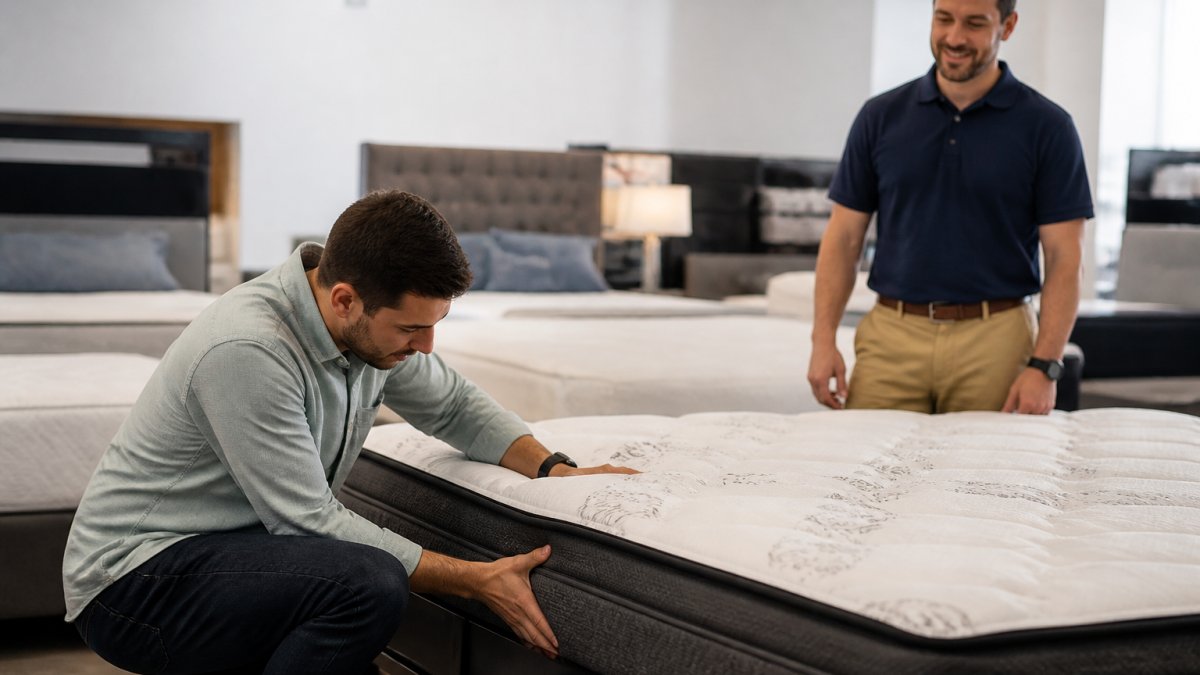
Shopper testing the edge support and stitching of cheap mattresses in a showroom

How to Score Two Mattresses Side by Side

Bring this list to the store and score each candidate on a simple pass/fail basis. If you need somewhere to start, our list of affordable mattress stores in Chattanooga shows where you can inspect options in person. A mattress that passes foam density, coil construction, edge support, warranty sagging threshold, and return terms is a genuinely discounted quality build. A mattress that fails two or more of those is a low price attached to a low-quality product, regardless of how it feels in the first five minutes.

Pro TipAsk the salesperson to write the foam densities, coil count, and warranty sagging threshold on the back of your quote. A retailer who will not put those numbers in writing is telling you something important.

Hidden Costs, Returns, and Warranty Fine Print

The sticker price is rarely the full cost. Delivery fees, setup charges, old-mattress removal, and return shipping can add up, and some “free” trials carry restocking fees. Read the return policy before you buy, and confirm whether a warranty covers sagging and how much sagging triggers a claim. At Mattress Outlet of Chattanooga, we keep pricing transparent and offer flexible payment plans and layaway so the price you’re quoted is the price you pay.

Frequently Asked Questions

Do cheap mattresses wear out faster than expensive ones?

Often, yes, but not always. Lower-density foams and thinner coil gauges compress sooner, so a budget mattress may show sagging in three to five years versus seven to ten for a well-built model. The gap narrows when you buy a cheap mattress with a decent support core and use a proper foundation. Check foam density and coil count before assuming price alone predicts wear. A cheap mattress that fits your body weight and sleeping position can last well past the average if you rotate it and use a mattress protector.

Are cheap mattresses worth it for side sleepers and heavier sleepers?

It depends on the sleeper profile. Side sleepers need pressure relief at the shoulder and hip, which usually means a softer comfort layer that budget models sometimes skimp on. Heavier sleepers put more stress on foam density and coil support, so a very cheap mattress may sag early. A $500 mattress with pocketed coils and a denser support core is often the safer floor for these profiles. Back and stomach sleepers on a tight budget can often do well with a firmer cheap mattress.

What mattress should you stay away from?

Avoid mattresses with no material certifications, no written warranty, and no return policy. Skip any listing that won’t state foam density or coil count, and walk away from floor models sold as new or mattresses with visible indentations in the showroom. Be cautious with ultra-low prices that hide shipping fees, restocking charges, or mandatory setup costs. If a seller can’t tell you what’s inside the mattress and what happens if you hate it, that’s the one to leave behind.

How much should you spend on a mattress?

There’s no universal number, but the useful test is cost per year, not sticker price. Divide the price by the realistic lifespan for that construction quality. A cheap mattress at a low price that lasts four years can cost more per year than a mid-priced one that lasts eight. Set a budget you can pay without financing stress, then compare construction details at that price. Shoppers who buy from truckload-priced outlets often get more mattress for the same budget than they would at full retail.


Replacing a worn-out mattress on a budget shouldn’t mean settling for something that sags in a year. At Mattress Outlet of Chattanooga, we offer brand-new mattresses at 60-80% below retail, flexible financing and layaway, and a personalized, appointment-based shopping experience so you can compare options without pressure. Get started with Mattress Outlet of Chattanooga and sleep better for less.

How to Choose the Right Mattress Size: 2026 Guide

Last Updated: October 24, 2026

Quick Summary

To choose the right mattress size, measure your room and bed frame first, then match the standard size chart to your tallest sleeper and how much each person moves. A mattress should be at least 6 inches longer than the tallest sleeper, and each person needs about 24 inches of width minimum, 30 inches to be comfortable.

  • Standard sizes run from twin (38 x 75) to California king (72 x 84), measured in inches.
  • Leave at least 24 inches of walkway on the sides you use most and 30 inches at the foot.
  • Queen dimensions are 60 wide by 80 long, making it the most popular size for couples.
  • A king gives each sleeper about 38 inches of width versus roughly 30 on a queen.
  • A frame built for a queen has an inside opening close to 60 by 80 inches.

Table of Contents

Start With the Mattress Size Chart and Your Room

Getting the mattress size right starts with two numbers: the standard size chart and your actual room measurements. Mattress size is the one decision you cannot undo after delivery day.

Here is the short version. A mattress size is the width and length of the sleep surface, measured edge to edge in inches. Standard sizes run from twin to California king, and each one fits a different sleeper and room.

Most buyers start with the bed they like, then measure the room. Do it the other way around. A king bed in a small apartment leaves no walkway, and a full bed in a large primary suite feels cramped for two adults.

Below, we show you exactly how to match a mattress size to your room, your sleepers, and your frame before you spend a dollar.

Standard Mattress Sizes and Dimensions

The standard mattress size chart is the fastest way to compare options. Every size below is a common US mattress dimension, measured in inches.

Mattress Size Width x Length (inches) Best For
Twin 38 x 75 Kids, guest rooms, bunk beds
Twin XL 38 x 80 Teens, dorm rooms, tall single sleepers
Full (Double) 54 x 75 Single adults, small guest rooms
Queen 60 x 80 Couples, most primary bedrooms
King 76 x 80 Couples who want space, large rooms
California King 72 x 84 Tall sleepers, long rooms

A few things stand out once you see it in a table. Twin XL adds five inches of length over a twin, which matters for anyone over about 5 feet 10 inches.

That last trade-off trips people up. A California king is narrower than a king, so couples who move around at night often prefer the extra width of a standard king.

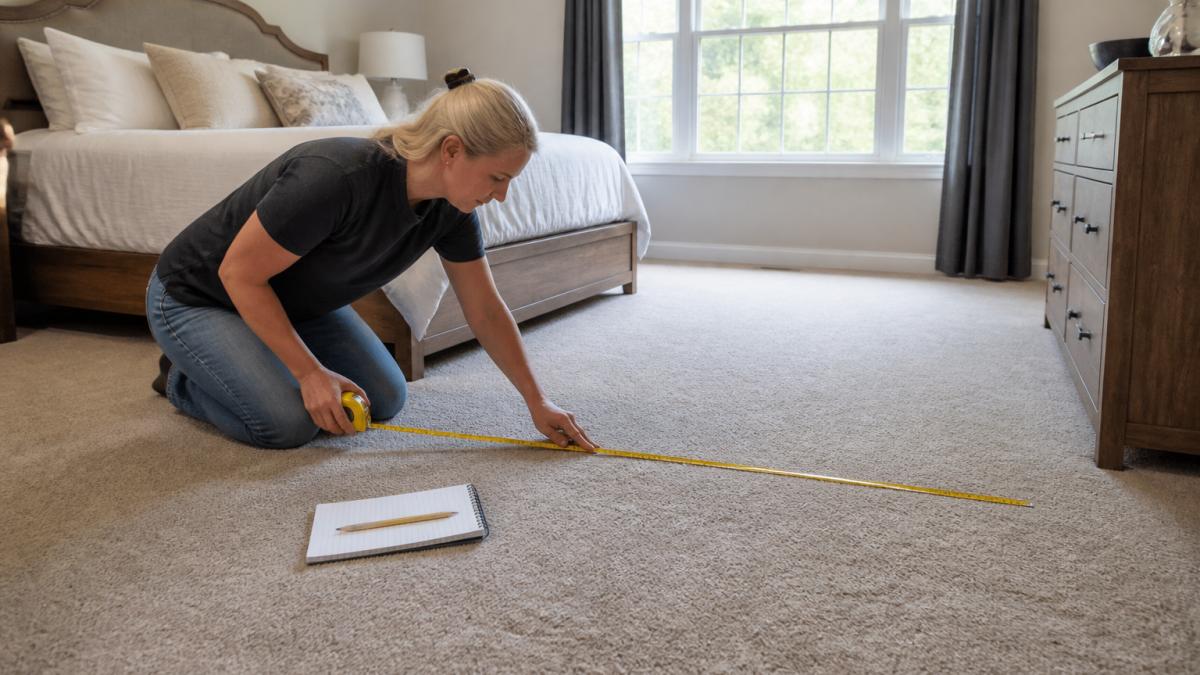
A person using a tape measure to measure the floor space where a bed will go in a bright bedroom, with a pencil and notepad nearby

How to Measure Your Room for a Bed

Measure the room before you shop, and measure the floor space, not the wall. Grab a tape measure and note three things:

  • Wall length and width of the room where the bed will sit
  • Door swing and closet clearance, so nothing blocks a walkway
  • Furniture footprints, including nightstands and dressers

A simple rule: leave at least 24 inches of walkway on the sides you use most. For the foot of the bed, aim for 30 inches or more. These are guidelines, not laws, but they keep a big bed from swallowing a small room.

Write the numbers down. Bring them to the store. A mattress size that looks fine on a showroom floor can feel enormous in a 10-by-10 bedroom.

Queen Mattress Dimensions in Inches: The Most Common Choice

Queen mattress dimensions in inches are 60 wide by 80 long (Queen Size Bed Dimensions). That makes the queen the most popular mattress size for couples and the default pick for most primary bedrooms.

Why does the queen win? It fits two adults without crowding a standard room, and it works with most bed frames and bedding sets. It is also the size where the price-to-space ratio tends to feel fairest.

Here is where buyers get confused. A queen mattress and a “queen bed” are not the same thing. The mattress is 60 by 80 inches.

That gap matters when you measure. If your room fits a queen mattress but not a queen frame, you need a different plan.

Pro Tip
Measure your bed frame’s inside opening, not its outside edges. A queen frame built for a 60-by-80 mattress usually has an inside measurement close to that, but headboards and footboards add length you must account for against the wall.

Mattress Size for Couples and Shared Beds

The right mattress size for couples comes down to personal space. Two adults sharing a full-size mattress get about 27 inches of width each. A queen gives each sleeper roughly 30 inches. A king pushes that closer to 38 inches per person.

That difference is why so many couples upgrade from full to queen, then from queen to king. Movement is the deciding factor. If one partner tosses and turns, the extra width of a king reduces the ripple effect on the other side.

Shared beds are not only couples, though. Consider these setups:

  • Two kids sharing: a full or queen works better than two twins pushed together
  • A parent and a small child: a queen gives room without taking over the room
  • Pets on the bed: add width, because a 70-pound dog takes up real estate
  • A couple plus a toddler: a king is often the only size that keeps everyone comfortable

Sleep position matters too. Side sleepers sprawl. Back and stomach sleepers stay put. If either partner is a sprawler, size up.

For a closer look at how sleep position changes the choice, see how your sleep position affects your mattress choice.

How to Measure a Mattress and Your Bed Frame

Knowing how to measure a mattress correctly saves you a return. Measure the sleep surface edge to edge: width first, then length. Do not measure the frame, the box spring, or the bedding. Measure the mattress itself.

Then measure the frame separately. Here is the distinction most guides skip:

  • Mattress dimensions describe the sleep surface: width and length in inches
  • Bed frame dimensions describe the outer footprint, including rails and headboard
  • Inside frame measurement tells you what mattress will actually drop in

A frame built for a queen mattress has an inside opening close to 60 by 80 inches. If your inside measurement comes up short, the mattress will not fit, no matter what the label says.

Call Us Today (423) 255-8124 → →

Watch Out
Buying a mattress before measuring the frame is the most common fit mistake we see. If the inside opening is smaller than the mattress, you are stuck with a bed that will not sit flat, and delivery day becomes a return.

Mattress height and depth matter here too. A thick mattress may hide the frame rails or sit above the headboard. Deep-pocket sheets solve the sheet problem, but they do not fix a frame that is too small.

Build a Decision Tree for Your Sleep Style and Space

A size chart tells you what exists. A decision tree tells you what you can actually sleep on.

Branch 1: Length. Start with the tallest sleeper.

Branch 2: Sleeping position and width per person. Width is where position matters most. Side sleepers tend to draw their knees up and extend an arm, so they use more horizontal space than back or stomach sleepers.

Branch 3: Movement. If either sleeper changes position frequently or gets up during the night, add width before you add length.

Branch 4: Room fit. Take the size the first three branches produced and run it through the floor-plan method in the previous section. If the bed leaves less than about 18 inches on a used side, or blocks a door swing, drop one size. A king that fits the sleepers but not the room is the wrong answer.

Branch 5: Budget and accessories. A larger mattress usually costs more, and so do the sheets, foundation, and frame that match it.

Run the tree with real numbers.

For a step-by-step companion to this process, our guide on how to choose the right mattress in 5 simple steps walks through the full selection.

Key Takeaway
Length is set by the tallest sleeper, width is set by position and movement, and the room has the final veto. Run the branches in that order and the size picks itself.

Check Bedding, Foundation, and Accessory Compatibility

A mattress size only works if everything around it fits. Check these before you buy:

  • Sheets: deep-pocket sheets fit thicker mattresses; standard sheets may pop off
  • Foundation or box spring: must match the mattress size exactly
  • Bed frame: confirm the inside measurement, not the outer edge
  • Mattress protector: sized to the mattress, not the frame
  • Adjustable base: check the size and weight limits

A king mattress needs king sheets, a king foundation, and a king frame. Mixing sizes is where returns come from. The same goes for accessories: a queen protector on a king mattress will not stay put.

Once you settle on a size, browse our mattresses to see what is available in that size before you commit.

Weigh Budget, Delivery, and Moving Trade-Offs

Bigger mattresses cost more to buy, deliver, and move. That is the trade-off nobody puts on the size chart.

A king or California king is heavy and awkward. It may need two people to carry, a larger delivery window, and a clear path through doorways and stairwells. You can check mattress delivery fees in Chattanooga before you choose a size.

Budget works the same way. The mattress is one cost, but sheets, a foundation, and a frame add up. If you are renting and may move soon, a queen is easier to relocate than a king.

At Mattress Outlet of Chattanooga, we keep brand-new mattresses at prices well below retail, and we offer payment plans and layaway for buyers who want to spread the cost. You can review mattress payment plans before you decide.

Key Takeaway
Pick the largest mattress your room, frame, and budget can support, then confirm the bedding and foundation fit that size. Size is the one choice you cannot adjust later without a return.

Conclusion

The hardest part of buying a mattress is not the shopping. It is committing to a size before you know it fits your room, your frame, and your sleepers. Measure first, run the decision tree, and check the bedding and foundation before you pay.

Mattress Outlet of Chattanooga can help you get there. We stock brand-new mattresses at deep discounts, offer flexible payment plans and layaway, and give you a personalized, appointment-based shopping experience so you leave with the right size, not a guess.

Call us today at (423) 255-8124 and get the right mattress size for your room and your sleepers.

Frequently Asked Questions

How big of a mattress should I get?

The right mattress size depends on who sleeps in the bed and how much room you have. A single adult often fits well on a full or queen, while couples usually need at least a queen and often prefer a king. Measure your room first, then leave 24 to 36 inches of walkway around the bed. Use a mattress size chart to compare dimensions before you buy.

What mattress size is best for two people?

For two adults, a queen is the minimum most couples find comfortable, but a king gives each sleeper more personal space. If you have a smaller bedroom or a tight budget, a queen mattress for couples works well at 60 by 80 inches. Couples who move a lot during sleep or have pets on the bed often do better with a king or California king.

How do I measure my room to choose the right mattress size?

Measure the length and width of the open floor area where the bed will sit, not just the wall. Account for doors, closets, dressers, and walkways. Leave at least 24 inches of clearance on the sides you use to get in and out. Write down your room dimensions and compare them to a mattress size chart to see which sizes fit with room to spare.

Will a larger mattress fit through my doorway and up the stairs?

A king or California king mattress can be hard to move through narrow hallways or stairwells. Measure your doorway width, hallway width, and stair clearance before you buy. Many mattresses bend or compress, but an innerspring king may not. If space is tight, a queen or a mattress-in-a-box style may be easier to deliver and set up.

Mattress Store Reviews Chattanooga TN: What to Know

Last Updated: October 23, 2026

Quick Summary

Mattress store reviews are customer accounts of a real purchase, delivery, and after-sale experience, published where shoppers can read them before visiting. Read the low ratings first, check review dates and purchase detail, and look for the store’s reply to complaints to tell verified feedback from marketing copy.

  • A verified review shows a purchase record behind it, while store-written claims are assertions, not evidence.
  • Reviews naming a model, delivery date, or sales associate are harder to fake than generic praise.
  • Confirm the return window start, condition rules, fees, and refund type in writing before paying.
  • Compare the delivered, set-up, old-bed-removed total instead of the sticker price.
  • Ask whether the mattress is brand-new or a return, floor model, or refurbished unit.

Table of Contents

How to Read Mattress Store Reviews in Chattanooga TN

Reading mattress store reviews in Chattanooga TN comes down to one skill: telling verified customer feedback apart from marketing copy. Reviews are useful only when you know what you’re looking at.

Mattress store reviews are customer accounts of a real purchase, delivery, and after-sale experience, published where shoppers can read them before visiting. That definition matters because it separates a genuine review from a paid placement or a store-written blurb.

Below, we’ll show you how to read a review page without getting fooled, which questions to ask before you pay, and how to compare total cost instead of sticker price. Most guides say “check the reviews” and stop there; the real work is in the details.

Start with where the review lives. A third-party review is harder for a store to edit than one on its own site. Both are worth reading, but they carry different weight.

https://g.page/r/Cahops-AgwA7EAE/

Separating Verified Feedback From Store-Provided Claims

A verified review shows a purchase record behind it. A store-provided claim is anything the business writes about itself: “best prices in town,” “top-rated service.” Those can be true, but they are assertions, not evidence.

Here’s how we’d sort them:

  • Check the date. A cluster of five-star reviews from one week, with nothing before or after, tells you more about a push for reviews than about the store.
  • Read the low ratings first. A store with a handful of detailed complaints and a real response underneath is usually more trustworthy than one with a perfect score and no specifics.
  • Look for purchase detail. Reviews that mention a model, a delivery date, or a specific sales associate are harder to fake than generic praise.
  • Match the review count to the store’s age. A long-established furniture store with only a dozen reviews is worth a second look.
Pro TipWhen you read a review that names a problem, look for the store’s reply. A response that explains the fix, rather than dismissing the customer, tells you how that store handles issues after the sale.

What Mattress Store Customer Reviews Actually Reveal

Customer reviews reveal patterns, not verdicts. One angry review is noise; the same complaint five times is a signal about how a store operates.

Couple reviewing mattress store reviews on a phone while consulting with a sales associate in a showroom

We group what shoppers report into four buckets: product condition, sales pressure, delivery accuracy, and after-sale support. Product condition matters most for budget shoppers: if reviews mention “floor model” or “slightly used” and you expected brand-new, that’s a red flag worth chasing.

Sales pressure is the second pattern. “No pushy salesperson” or “left us alone to browse” signals a relaxed experience; the opposite language tells you to expect a pitch.

Delivery accuracy shows up as “arrived when promised” versus “rescheduled twice.” After-sale support shows up as how a return or exchange actually went, not how it was described at checkout.

Questions to Ask When Buying a Mattress Before You Pay

The questions to ask when buying a mattress should cover condition, policy, and total price before you hand over a card. Ask in person and get answers in writing where you can.

Here’s our short list:

  • Is this mattress brand-new, or a return, floor model, or refurbished unit? Get a direct answer.
  • Are delivery and setup included, or added at checkout?
  • What does the warranty cover, and who honors it?
  • Is financing or layaway available, and what do I need to qualify?
  • Are there any fees not shown on the tag?
Watch OutThe most common mistake is asking about the return policy verbally and never seeing it on paper. If a store won’t put the window and any restocking fee in writing, assume the terms are less generous than described.

Mattress Delivery and Setup: Fees, Timing, and Pickup Options

Mattress delivery and setup terms decide whether the price you saw is the price you pay. Confirm the delivery fee, setup service, timing window, and whether old mattress removal is included.

Call Us Today (423) 255-8124 → →

Here is how to build that number step by step.

Step 1: Get the delivery fee in writing. Fees vary by store and distance. Ask whether it’s flat-rate or distance-based, and whether stairs, elevators, or a specific window change it.

Step 2: Confirm whether setup is included. Setup means the team places the mattress on your frame and removes packaging. Some stores include it; others charge extra.

Step 3: Ask about old mattress removal. The most overlooked line item. Removal fees commonly range from free to $50 or more, and some stores don’t offer it at all.

Step 4: Check pickup options. To save the delivery fee, ask whether same-day pickup is available on in-stock models. Pickup usually means transporting it yourself, and some stores won’t load it for you.

Step 5: Understand the timing window. Ask how far out delivery is scheduled and whether you get a specific window or just a day. A four-hour window beats an all-day commitment.

Key TakeawayThe number that matters is the delivered, set-up, old-bed-removed total. Ask for that single figure before you compare stores, and write it down next to the sticker price so you can see the real difference.

A simple total-cost worksheet. For each store, write down: sticker price + delivery fee + setup fee + old-mattress removal fee − any discount = delivered total. Compare that number, not the tag. A slightly higher sticker price with free delivery, setup, and removal can cost less overall than a cheaper store that charges for every add-on.

Delivery timing and your schedule. If you’re moving or renting, timing matters as much as price. Ask whether the store can hold the mattress until your move-in date, and whether there’s a storage fee.

What to confirm on delivery day. Before the team leaves, confirm the mattress is the model you ordered, the packaging is intact, and setup is complete.

Comparing Value: Price, Selection, and Total Cost

Value in a mattress store comes down to three numbers: the price, what’s included, and what you’d pay elsewhere for the same quality. A bargain that excludes delivery and setup isn’t a bargain.

Here’s how we’d compare two stores side by side:

What to Compare

Why It Matters

What to Confirm

Sticker price

Starting point only

Is it the out-the-door price?

Delivery and setup

Can add real cost

Included or extra?

Old mattress removal

Often overlooked

Free, paid, or not offered?

Return window

Your safety net

Days, fees, refund type

Selection

Fit for your needs

Firmness and size range

Financing and layaway

Budget flexibility

Terms and qualification

Selection matters too. Many firmness levels and sizes means you can find a fit instead of settling for what’s on the floor.

Matching a Mattress Store to Your Sleeper Needs and Budget

The right mattress store matches your sleep style, budget, and payment flexibility. A side sleeper needs a different feel than a back sleeper, and a family on a tight budget needs financing or layaway that actually works.

Match by need first:

  • Side sleepers: look for softer, pressure-relieving options.
  • Back and stomach sleepers: firmer support matters more.
  • Couples: ask about motion isolation and size options.
  • Budget shoppers: confirm financing, layaway, and discounts before you visit.

At Mattress Outlet of Chattanooga, we built our approach around value: brand-new mattresses at prices 60-80% below retail, flexible payment plans and layaway, and a personalized, appointment-based shopping experience. We also stock quality furniture from Ashley Furniture Direct, so one visit can cover more of a move or room refresh.

If your credit isn’t perfect, ask about payment plans directly rather than assuming you’ll be turned down. A store that offers layaway gives you a path to a better mattress without a lump-sum payment.

Conclusion

The challenge isn’t finding a mattress store, it’s finding one whose reviews, policies, and total cost all hold up when you look closely. Read the low ratings, ask the six questions, and compare the delivered total instead of the tag.

At Mattress Outlet of Chattanooga, we keep it simple: brand-new mattresses at prices 60-80% below retail, Ashley Furniture quality, flexible financing and layaway, and a personalized shopping experience. Call us today at (423) 255-8124 to confirm current pricing, delivery, and pickup options before your visit.

Frequently Asked Questions

What should I look for in mattress store reviews?

Look for reviews that name the store location, the date of purchase, and the specific mattress model. Reviews that mention delivery timing, return handling, and financing approval are more useful than star ratings alone. Check whether the reviewer describes a problem that was resolved or ignored. A store with a mix of ratings and detailed responses tends to be more trustworthy than one with only perfect scores and no specifics.

How can I tell whether a mattress store is legitimate?

Confirm the store has a physical address you can visit, a written return policy, and a phone number that reaches a person. Ask whether mattresses are brand-new and factory-sealed, and get that in writing on the receipt. Check that the store lists delivery fees and warranty terms before you pay. A legitimate mattress store will answer these questions directly and put the terms in your paperwork rather than only in conversation.

How do mattress return and exchange policies differ between stores?

Return windows vary widely. Some stores allow exchanges within a set number of days, others charge restocking or delivery fees, and some require the mattress to be in original condition with the law tag attached. Ask whether the policy covers refunds or exchanges only, who pays return shipping, and whether a warranty claim is separate from a return. Get the mattress store return policy in writing before purchase so you know exactly what applies.

Is it better to buy a mattress online or in a store?

In-store shopping lets you test comfort, compare firmness side by side, and confirm the mattress is brand-new and sealed before it leaves. Online purchases may offer convenience but often skip the trial you get from lying on the bed. If you buy online, confirm the return window, delivery fee, and whether pickup is available locally. Many shoppers use reviews to narrow options, then visit a store to test the final choice.

Mattress Payment Plans in Chattanooga: How to Pay

Table of Contents

Last Updated: October 19, 2026

How Mattress Payment Plans in Chattanooga Work

Mattress payment plans in Chattanooga let you split the cost of a new bed into smaller monthly amounts instead of paying in full at checkout.

Most shoppers use one of three routes: in-store financing, layaway, or buy now, pay later through a third-party app. Each works differently, and the differences matter.

Flowchart illustrating the step-by-step process for setting up mattress payment plans in Chattanooga homes.

The Three Main Ways to Pay Over Time

Store financing is a payment plan arranged through the retailer, often via a lending partner.

Layaway means you pay toward the mattress in installments and take it home once it’s paid off. No credit check, no interest, but you wait for delivery.

Buy now, pay later is a short-term installment plan run by a third-party provider at checkout. It’s fast, but terms are usually shorter than store financing.

What You’ll Need Before You Apply

Have these ready before you walk in or apply online:

  • Government-issued photo ID
  • Income of $1000 or more per month
  • A checking account for automatic payments

A common mistake is applying at three stores in one afternoon. Each credit application can show up on your report, and a cluster looks risky to lenders. Pick your store first, then apply once.

Pro TipAsk whether the plan runs a hard credit check before you hand over your information. Some in-store programs prequalify you with a soft check first, which lets you see your terms without affecting your credit score.

Mattress Financing With Bad Credit: What Actually Gets Approved

Mattress financing with bad credit is possible, but approval depends far less on your score than on which plan you choose. Store financing and third-party lending usually run a credit check; layaway typically does not.

What Lenders Actually Evaluate

Most mattress financing runs through a lending partner, and those partners weigh a predictable set of factors:

  • Payment history, the heaviest factor. A recent missed payment hurts more than an old collection.
  • Credit utilization, maxed-out cards read as risk even if you pay on time.
  • Length of credit history, thin files get treated cautiously, even with no negative marks.

A shopper with a modest score but steady income, a long banking relationship, and low utilization often gets approved over someone with a higher score and a maxed-out card. Income stability often carries more weight than the number itself.

Soft Pull vs. Hard Pull: Why the Order Matters

A soft credit check lets a lender preview your profile without affecting your score. A hard credit check is a formal application and typically shows on your report for about two years, with the impact fading over time.

The practical rule: prequalify with a soft pull first, then submit a full application only with the store you’ve chosen. Three applications in one afternoon can generate three hard pulls, which reads as risky to lenders.

Pro TipAsk the question directly: “Is this a soft pull or a hard pull?” A reputable store will tell you before you hand over your Social Security number. If the answer is vague, walk.

Ranking the Options by Approval Odds

If your credit is thin or bruised, here’s the honest ranking of what tends to get approved, easiest to hardest:

  1. Layaway, no credit check, so approval is essentially guaranteed if you keep up payments.
  2. Store financing with soft prequalification, you see terms before a hard pull, so you can decline without damage.
  3. Buy now, pay later, fast approval and often a soft pull, but shorter terms, higher late fees, and limited amounts.
  4. Lease-to-own, easier approval, but you don’t own the mattress until the lease is complete, and total cost is typically highest.
  5. Traditional credit card financing, hardest to qualify for with damaged credit, and a 0% promotional rate can jump to a high standard APR if you miss a payment.

Alternatives for Different Credit Profiles

  • Thin file, no negative marks: Start with soft prequalification at the store. A co-signer can also help, and some lenders accept them.
  • Recent late payments or collections: Layaway is the cleanest path, no credit application, and the plan can’t be denied.
  • High utilization: Paying down a card before applying can shift the outcome more than waiting for the score to move.

One thing nobody tells you about bad-credit financing: term length matters more than the interest rate. A longer term lowers the monthly payment but raises the total you pay. A shorter term you can actually afford usually beats the longest one available.

Watch OutA 0% promotional offer is not the same as a 0% loan. Many store cards defer interest rather than waive it, if you don’t pay the full balance before the promotional period ends, interest can be applied retroactively to the original purchase amount (How to understand special promotional financing offers on credit cards). Confirm in writing whether the offer is waived or deferred.

Ask about eligibility requirements up front. Most lenders want a minimum income and an open checking account, and some accept co-signers.

Mattress Layaway Plans: No Credit Check, No Interest

Mattress layaway plans are the simplest path for shoppers who want a new bed without a credit application. You make a down payment, pay the balance in installments, and collect the mattress when it’s paid in full.

The catch is timing. You don’t sleep on the mattress until the plan is complete, so layaway suits people planning a few weeks ahead, not someone whose bed broke last night.

How Layaway Differs From Buy Now, Pay Later and Lease-to-Own

These three plans get marketed as if they’re interchangeable. They aren’t. The differences show up in ownership, fees, and missed-payment consequences.

Feature

Layaway

Buy Now, Pay Later

Lease-to-Own

When you get the mattress

After final payment

At checkout

At signing

Who owns it during the plan

You, once paid off

You, subject to the lender’s terms

The leasing company until the lease is completed

Credit check

None

Usually a soft pull

Often none or a soft pull

Interest or finance charges

None

Usually none if paid on time

Built into the lease; total cost is typically highest

Typical term

Weeks to a few months

Weeks (often 4-6 payments)

Months

Missed payment consequence

Plan can be canceled; partial refund possible

Late fee; account may go to collections

Repossession possible; you lose the mattress and payments made

Total cost vs. cash

Same as cash

Same as cash if on time

Higher than cash

The key distinction is ownership. With layaway, the mattress is yours the moment you finish paying. With buy now, pay later, you take it home immediately but the plan is short and late fees are real. With lease-to-own, you’re renting toward ownership, miss payments and you can lose both the mattress and everything you’ve paid.

Questions to Ask Before Starting a Layaway Plan

Layaway terms are not standardized. Get them in writing before you pay the first installment.

  • What’s the minimum down payment?
  • How long do I have to pay it off?
  • What happens if I miss a payment or cancel?
Watch OutSkipping a layaway payment can void the plan and trigger a cancellation fee, and some stores refund only part of what you’ve paid. Confirm the missed-payment policy in writing before you start. The same applies to cancellation, ask whether the down payment is refundable or applied as a store credit.

When Layaway Is the Wrong Choice

Layaway is a poor fit if you need the mattress this week, if the store won’t put the terms in writing, or if the plan stretches past the point where you’d rather just save the cash.

Call Us Today (423) 255-8124 → →

A common mistake is assuming layaway terms are standard. They aren’t. Get the terms in writing, confirm the refund and cancellation policy, and treat the plan like any other contract.

How to Buy a Mattress With Monthly Payments Without Overpaying

Buying a mattress with monthly payments without overpaying comes down to one number: the total cost, not the monthly cost. A low monthly payment stretched over a long term often costs more than a higher payment over a short one.

Do this math before you commit:

  • Total cost = monthly payment × number of months, plus any down payment and fees
  • Interest paid = total cost minus the sticker price
  • Cost per month of use = total cost ÷ expected years of use ÷ 12

That last figure is the one that matters. A mattress you keep for eight years spreads its cost thin, which is why a quality mattress at outlet pricing usually beats a cheap one replaced every three years.

Total Cost Examples by Price and Term

The table below shows how the same mattress price changes with term length. These are illustrative examples only, not quotes. Ask us for current pricing and terms.

Mattress Price

Term

Monthly Payment

Total Paid

Extra Cost vs. Cash

$600

3 months, 0%

$200

$600

$0

$600

12 months, 0%

$50

$600

$0

$1,200

12 months, 0%

$100

$1,200

$0

$1,200

24 months, 15% APR

~$58

~$1,395

~$195

$2,000

24 months, 15% APR

~$97

~$2,325

~$325

The pattern is clear: zero-interest plans cost the same as cash, while interest-bearing plans add real money. Always compare the total, never just the monthly figure.

Key TakeawayIf a plan advertises a low monthly payment, ask for the total cost over the full term. That single number tells you whether the plan is a deal or a markup.

Step-by-Step: Comparing Financing Offers Side by Side

Comparing financing offers side by side takes about fifteen minutes per store if you use a consistent scorecard.

Step 1: Get the full terms in writing. Ask for the APR, term length, down payment, fees, and total cost.

Step 2: Score each offer on the same criteria. Use this checklist:

  • APR (0% is best; anything above 20% deserves scrutiny)
  • Term length and monthly payment you can afford
  • Down payment required

Step 4: Check the prepayment policy. If you plan to pay off early, confirm there’s no prepayment penalty.

Step 5: Confirm the mattress is in stock. A great financing offer on a mattress you can’t get delivered is worthless.

Pro TipBring your scorecard to the store on your phone. Salespeople respect a shopper with a checklist, and you’ll get straight answers faster when they know you’re comparing terms rather than browsing.

Questions to Ask Before You Sign Anything

Ask these questions before signing any payment plan agreement. The answers protect you more than any promotional offer will.

  • What’s the total cost over the full term? Not the monthly payment, the total.
  • Is the APR fixed or promotional? Some 0% offers jump to a high rate if you miss a payment or don’t pay off in time.
  • Are there any hidden fees? Ask specifically about origination, late, delivery, and restocking fees.

Deborah T, one of our customers, put it simply: she wanted to know the price quoted was the price paid at checkout. That’s the right instinct. Get every number confirmed before you sign.

Conclusion

The hardest part of buying a mattress on a payment plan isn’t the application, it’s knowing which plan actually costs less over time.

At Mattress Outlet of Chattanooga, we keep it straightforward: brand-new mattresses at 60-80% below retail, flexible payment plans and layaway, and same-day pickup or local delivery so you’re not waiting weeks for a bed.

Call us today at (423) 255-8124 to review your payment options and find the right mattress for your home.

Frequently Asked Questions

Can I finance a mattress with bad credit?

Yes, in most cases. Options range from store financing that weighs your application more broadly than a FICO score alone, to layaway plans that skip the credit check entirely. If a traditional card application is declined, ask about a layaway or a shorter-term in-house plan. Bring proof of income and a valid ID, and ask the store directly what their approval criteria are before you apply, since a hard credit check can ding your score.

Is mattress financing different from layaway?

They work in opposite directions. Financing gives you the mattress now and you repay over months, sometimes with interest. Layaway keeps the mattress in the store until you finish paying, usually with no credit check and no interest, but you don’t sleep on it until the balance is clear. If you need a bed this week, financing or a buy-now-pay-later option fits better. If your credit is thin and you can wait a few weeks, layaway avoids the application altogether.

What should I compare before choosing mattress payment plans?

Compare four numbers, not one. Look at the total amount you’ll pay across the full term, the interest rate or any flat financing fee, the length of the term, and the penalty for paying late or early. A plan advertising a low monthly payment can cost hundreds more over 24 months than a shorter term. Also ask whether a hard credit check happens at prequalification, and whether the price you’re quoted includes delivery and setup.

Can I pay for a mattress in installments without a credit card?

Yes. Layaway, in-store payment plans, and buy-now-pay-later services all let you spread the cost without opening a traditional credit card. Buy-now-pay-later typically splits the purchase into a few scheduled payments and may run a soft check first. Layaway requires no credit check at all. Ask the store which of these they offer, what the down payment is, and whether there are setup or service fees attached to the plan.

How to Spot New Mattresses: 8 Signs You Need One

Table of Contents

Last Updated: October 19, 2026

8 Signs You Need a New Mattress (And How to Spot Them)

A worn mattress is easy to live with and hard to notice. You adapt to it slowly, one stiff morning at a time, until you forget what good sleep feels like. Learning how to spot new mattresses versus tired ones starts with your own body.

Here are the eight signs worth checking, and how to spot each one before another year slips by.

Morning Aches, Stiffness, and Joint Soreness

Waking up sore is the most common sign you need a new mattress. A supportive bed keeps your spine aligned and spreads your weight evenly. A worn one lets your hips and shoulders sink, which puts pressure on joints all night.

Watch for:

  • Lower back pain that fades an hour after you get up
  • Stiffness in your hips or shoulders
  • Numbness or tingling in your arms

If the ache follows you into the day, your mattress is likely the cause.

Visible Sagging, Lumps, and Deep Indentations

Run your hand across the surface. A new mattress feels flat and even. A worn one shows dips where you sleep, lumps under the cover, or a raised ridge down the middle.

Check for:

  • Deep indentations where your body rests
  • Uneven surface you can feel with your palm
  • A visible sag when you look across the bed at eye level

These are mattress replacement signs you can see, not just feel.

How Long Does a Mattress Last? Lifespan by Material and Use

Most mattresses last seven to ten years, but the material and how you use it change that range (How Long Should A Mattress Last?). Age alone does not determine whether replacement is needed, a well-cared-for latex bed can outlast a poorly supported foam bed by several years. What matters is how the support layers fail and how fast your use pattern accelerates that failure.

Mattress Type Typical Lifespan What Speeds Up Wear
Innerspring 6-8 years Heavy use, weak foundation, broken coils
Foam 6-8 years Body heat, no mattress protector, heavy sleepers
Hybrid 7-10 years Poor airflow, excess moisture, edge compression
Latex 10-12 years Direct sun, damp rooms, improper foundation

Why each material fails the way it does

Innerspring mattresses fail when coils lose tension or break and when the padding above the coils compresses. A weak or flexing foundation accelerates both.

Foam mattresses soften over time as the foam cells compress and take a set where the body rests.

Hybrid mattresses combine a coil support core with foam or latex comfort layers.

Latex is the most durable common material because latex resists compression set better than polyurethane foam. It still degrades when exposed to direct sunlight, damp rooms, or an unsupportive foundation that lets it flex unevenly.

How use patterns change the math

  • Two sleepers vs. one: a shared bed breaks down faster because twice the weight and heat hit the same surface every night.
  • Weight and sleep position: heavier sleepers and side sleepers put more concentrated pressure on hips and shoulders, which compresses comfort layers faster.
  • Foundation type: a proper foundation matched to the mattress spreads load evenly; a mismatched or failing foundation shortens life regardless of material.
  • Protector and cleaning: a waterproof protector and regular airing reduce moisture and odor, which are common reasons beds get replaced before the support actually fails.
  • Rotation: regular rotation (where the mattress allows it) spreads wear and can add a year or more of comfortable use.

Track your mattress age. If you cannot remember when you bought it, that is a clue in itself, and a reason to inspect the bed rather than guess.

Pro Tip
Write the purchase date on the mattress tag with a marker. When you are deciding whether to replace, you will have a real number instead of a guess, and you can compare it against the lifespan range for your material.

The At-Home Inspection Checklist: How to Spot New Mattresses vs. Worn Ones

A worn mattress gives itself away in about ten minutes if you know where to look and what to measure. Use this checklist to compare what you have against how to spot new mattresses in a showroom.

A person pressing down on a mattress surface with one hand to check for sagging, with a notebook and measuring tape resting nearby on the bed

1. Measure the sag, don’t just feel it

Lay a straight edge, a yardstick, a level, or a broom handle, across the bed from head to foot and side to side. Measure the gap between the straight edge and the mattress surface at the lowest point. A dip of about 1 inch or more is a visible sag; anything approaching 1.5 inches is a clear replacement signal. Do this in the spots where you and your partner actually sleep, not just the center.

2. Press the center and the edges

Push down firmly with your palm in the middle, at the head, at the foot, and along both edges. A new mattress springs back evenly and quickly. A worn one feels soft or dead in the middle, or the border collapses when you sit on the edge. Edge collapse is a common sign of a broken or compressed border wire or foam encasement, and it usually means the support layer has failed even if the top looks fine.

3. Check the foundation before you blame the mattress

A cracked box spring, a bent metal frame, or broken slats cause dips that look exactly like mattress wear. Pull the mattress off and inspect the foundation. Slats should be evenly spaced and unbroken; box springs should not creak, flex, or show broken coils. If the foundation is failing, replacing the mattress alone will not fix the sag.

4. Look for surface and seam damage

Run your hand across the cover and check the seams and binding. Look for tears, compressed or flattened areas, stains that suggest moisture, and loose or broken stitching. Stains alone do not mean the mattress is worn out, but moisture damage often comes with compressed foam and odor.

Call Us Today (423) 255-8124 → →

5. Test the other side and the other sleeper

If the mattress is flippable, sleep on the unused side for a week. If it is not flippable, rotate it 180 degrees so your head is where your feet were. If you feel noticeably better, the wear is concentrated where you sleep and the mattress is on its way out. If two people share the bed, compare notes, one person may feel the sag more because of weight or sleep position.

6. Compare against your own baseline

Note your mattress age against the lifespan table below, then rate the bed on four things: morning aches, sleep quality, visible condition, and whether you sleep better elsewhere. Two or more failing checks points to a worn bed; one failing check plus a mattress past its expected lifespan is also a reasonable replacement signal.

Pro Tip
Photograph the straight-edge measurement and the foundation before you shop. A photo of a 1.5-inch dip is more useful than a memory of “it felt soft,” and it helps you compare honestly when a salesperson asks what is wrong with your current bed.

How to Test a New Mattress Before You Buy

Testing a new mattress takes more than a quick sit. Lie on it for at least ten minutes in your normal sleeping position. Roll from your back to your side. If your shoulders and hips feel pressure, the bed is too firm. If you sink in and struggle to turn, it is too soft.

Ask yourself:

  • Does my spine feel straight when I lie on my side?
  • Do my shoulders and hips feel pressure relief?
  • Can I move without fighting the surface?

A mattress that fits your sleeping position will feel right within minutes.

New Mattress Expansion Time: What to Expect After Delivery

A new mattress expansion time of 24 to 48 hours is normal for most foam and hybrid beds. These mattresses ship compressed and rolled. Once you open the packaging, they need time to regain full shape.

What to do:

  • Open the box within a few days of delivery
  • Let the mattress rest flat on the foundation
  • Wait the full expansion window before judging firmness
  • Expect a slight odor that fades within a day or two

Do not sleep on it too early. A half-expanded mattress feels firmer and flatter than it will later.

Troubleshoot First: Fixes to Try Before You Replace

Not every bad night means a new mattress. Try these fixes before you spend anything.

  1. Add a mattress topper. A firm topper can restore pressure relief on a soft bed.
  2. Check the foundation. A cracked box spring or sagging slats cause dips that look like mattress wear.
  3. Rotate the mattress. Flipping or rotating spreads wear and buys time.
  4. Replace the pillows. Old pillows cause neck and shoulder soreness that mimics mattress problems.
  5. Clean and air it out. Moisture and dust can make a good mattress feel worse.

If the bed still fails after these steps, replacement is the honest answer.

When to See a Doctor (And When It’s Just the Mattress)

Persistent pain that does not improve after a week on a better mattress deserves a doctor’s visit. A mattress can cause morning stiffness and soreness. It cannot explain chronic pain, numbness that spreads, or pain that wakes you at night.

See a doctor if you notice:

  • Pain that lasts all day, not just after waking
  • Numbness or weakness in your legs
  • Pain that gets worse over weeks

For most people, a supportive new mattress and a proper pillow fix the morning aches. When in doubt, ask a medical professional.

Conclusion

A worn mattress steals your sleep one night at a time, and the signs are easy to miss until you know what to look for. If your inspection checklist fails, Mattress Outlet of Chattanooga can help you find a brand-new bed at a price that fits your budget. We offer truckload pricing that keeps costs well below retail, flexible payment plans and layaway, and a personalized appointment-based shopping experience. Every mattress we sell is brand-new, never refurbished. Get started with Mattress Outlet of Chattanooga and sleep better on a bed built to last.


Call Us Today (423) 255-8124 →

Frequently Asked Questions

How do I know if it’s time for a new mattress?

Look for a cluster of signals rather than one. Waking with morning stiffness, shoulder soreness, or back pain most days, tossing and turning through the night, and visible sagging or deep indentations are the strongest indicators. If you sleep noticeably better in a guest bed or hotel, that is a practical test. Add your mattress age: most foam beds last 7 to 8 years and innerspring beds 7 to 10, so a mattress past that range with any of these symptoms is a strong candidate for replacement.

Can a mattress look fine but still need replacing?

Yes. Visible wear is only one sign of a worn mattress. Support layers break down inside the mattress before the surface shows it, so a bed can look flat and clean while pressure points, spinal alignment, and sleep comfort have already degraded. The tell is how you feel: morning aches, joint pain, restless sleep, and frequent waking that improve when you sleep elsewhere point to internal breakdown. Use the at-home inspection checklist to check for uneven surface and soft spots, not just stains or tears.

How can I tell if my mattress is sagging?

Lay a straight edge, like a broom handle or a long ruler, across the mattress surface. If you can see a gap of more than about 1 inch between the straight edge and the mattress in your usual sleeping area, the surface has dipped. Also press down firmly with your hand across the bed: soft spots that do not spring back quickly signal worn support layers. Compare the center of the bed to the edges, since most sagging shows up where you sleep.

How long should I wait before sleeping on a new mattress?

New mattress expansion time varies by type. Memory foam and other compressed mattresses typically need 24 to 48 hours to fully expand after unboxing, and some need up to 72 hours. Innerspring and hybrid mattresses that arrive uncompressed are ready to sleep on right away. Sleeping on a compressed foam mattress too early can affect how evenly it expands, so give it the full window. Check the manufacturer’s instructions, since expansion time depends on the foam and how long the mattress was boxed.

Mattress Delivery Fees in Chattanooga: What to Expect

Table of Contents

Last Updated: October 15, 2026

Mattress Delivery Fees in Chattanooga: The Basics

Mattress delivery fees in Chattanooga usually range from a modest flat charge to a distance-based rate, and many local retailers waive the fee entirely once your order total crosses a minimum purchase threshold.

A delivery fee is the amount a retailer charges to bring a mattress or mattress set from the store to your home, separate from the price of the product itself. It may cover transportation only, or it may bundle haul-away of your old bed and basic setup. Just because a company says delivery is free does not mean you aren’t just paying for it in the price of the mattress. Look at total cost and not just cost of delivery.

Delivery Fees

Most delivery fees are based on your needs and what you request. Some different examples are:

  • Transportation from the store or warehouse to your address
  • Carrying the mattress to the room of your choice
  • Unboxing and removing packaging materials
  • Basic setup on your existing frame or foundation
  • Removal of your old mattress, when the retailer offers it

Many other considerations should be considered. Stair carries above the ground floor, hoisting over balconies, and disassembly of complex bed frames often additional fees as well. Ask before delivery day, not on it.

Pro TipAsk whether the fee covers haul-away of your old mattress. Many shoppers pay for delivery, then pay again for removal because nobody confirmed it upfront.

Mattress Delivery Cost: What Drives the Price

Distance and access drive mattress delivery cost more than anything else. A ground-floor apartment two miles from the store costs far less to serve than a third-floor walk-up across the county line.

Infographic visualizing the process and logistics that influence mattress delivery fees for home setups.

Retailers build fees around a few practical factors:

  • Distance from the store or warehouse. Local deliveries inside a core service area cost the least.
  • Delivery area boundaries. Crossing into an out-of-area ZIP code usually adds an additional charge.
  • Order size. A single mattress set is cheaper to deliver than a full bedroom of furniture.
  • Access difficulty. Stairs, elevators, narrow hallways, and gated communities slow a crew down.
  • Timing. Weekend, evening, and same-day windows sometimes carry a premium.

Distance, ZIP Code, and Out-of-Area Delivery

Out-of-area delivery is the single biggest variable in mattress delivery cost. Stores typically define a free or low-cost radius around their location, then charge more once you cross it.

If you live near the edge of a service area, confirm your ZIP code before you buy. A five-mile difference can flip a waived fee into a paid one. For shoppers in Northwest Georgia moving into a new home, that boundary question is worth a phone call before purchase day.

Free Mattress Delivery: How to Qualify

Free mattress delivery almost always comes down to one thing: hitting a minimum purchase threshold. Retailers absorb the delivery cost when the order total is high enough to protect their margin.

Here is how free delivery typically works:

Requirement

How It Usually Works

What to Confirm

Minimum purchase

Order total must cross a set threshold

The exact dollar amount

Local delivery area

Address inside the core service zone

Your ZIP code is covered

Standard delivery

Basic drop-off and setup only

Stairs and haul-away included?

In-stock items

Mattress must be ready to ship

Availability on your model

A common mistake is assuming “free delivery” covers everything. In practice, a fee waiver often applies to standard delivery only, with extras like old-mattress removal billed separately.

Watch OutDo not assume a free delivery promotion includes haul-away. Shoppers who skip this question often pay a separate removal charge on delivery day.

Same-Day Mattress Delivery and Local Pickup Options

Same-day mattress delivery depends on stock and timing, not on how much you spend. If the model you want is in stock and you order early, many local retailers can deliver the same day or next day.

Availability rules vary by store, so treat same-day service as a scheduling question, not a guarantee. Two things decide it:

  • In-stock status. If your mattress is on the floor or in the warehouse, it can move fast.
  • Order timing. Morning orders leave more room in the day’s delivery window.

Local pickup is the faster, cheaper alternative. You skip the delivery fee entirely and control the timing yourself. The trade-off is transport: a mattress set is bulky, and you need a vehicle that can carry it without bending or tearing the cover.

Mattress Pickup Near Me: When to Skip Delivery

Choosing pickup over delivery saves the fee and usually gets you the mattress the same day. For shoppers searching “mattress pickup near me,” the decision comes down to three questions.

Can you transport it safely? A queen mattress fits in many pickup trucks and larger SUVs, but a mattress set with a box foundation needs more room. Straps and a clean truck bed protect the cover.

Do you have help? Mattresses are awkward, not just heavy. Two people make loading and unloading far easier and reduce the risk of damage.

Is your frame ready? Pickup only works if you can set the bed up yourself. If you need old-mattress removal or assembly, delivery earns its fee.

Best ForShoppers with a truck or large SUV, a helper, and a flexible schedule who want to skip the delivery fee and take the mattress home today.

How to Avoid or Reduce Delivery Fees

You can avoid or reduce delivery fees with a few practical moves, and none of them require haggling. The simplest is to raise your order total to the free-delivery threshold, often by adding a mattress protector, pillows, or a foundation you planned to buy anyway.

Other ways to cut the charge:

Call Us Today (423) 255-8124 → →

  • Choose local pickup and handle transport yourself.
  • Buy in-store rather than online, where pickup is built into the visit.
  • Ask about fee waivers during promotions or on floor models.
  • Bundle your purchase so a mattress set and furniture ship together.
  • Confirm out-of-area rates before you commit, so you can compare options.

At Mattress Outlet of Chattanooga, we price brand-new mattresses 60-80% below typical retail. Flexible payment plans and layaway also let budget-conscious families spread the cost without adding delivery charges on top.

Confirming Your Final Delivered Price: A Step-by-Step Checklist

The quoted price and the delivered price should match. When they do not, it is almost always because one of five line items was never confirmed: the delivery fee itself, the access surcharge, haul-away, sales tax, and any promotional condition attached to a fee waiver. Work through the checklist below in order, and get the answers in writing, a text, an email, or a printed quote all count.

Step 1, Separate the product price from the delivery fee. Ask for both numbers on the same quote. If the retailer will only give you a bundled total, that is a signal the fee is negotiable or conditional.

Step 2, Confirm your ZIP code is inside the free or standard delivery zone. Give the salesperson your full address, not just the ZIP. Service-area boundaries often follow roads or county lines, so two addresses in the same ZIP can fall on opposite sides of the line.

Step 3, Ask what the fee includes, line by line. Setup, haul-away, stair carries, and packaging removal are the four items that most often turn a “free” delivery into a paid one. Get a yes or no on each.

Step 4, Check the minimum purchase threshold against your actual cart. If free delivery requires a $599 minimum and your cart is at $549, you have two choices: add an item you actually need, or pay the fee. Do not add filler just to cross the line, the fee is often smaller than the filler.

Step 5, Ask about the access surcharge. Stairs, elevators, gated entries, and long carries from the truck to the door can each trigger a surcharge. Ask for the per-flight or per-item rate before delivery day.

Step 6, Confirm sales tax treatment. In most states, delivery charges are taxable when they are not separately stated, and may be taxable even when they are. Ask whether tax is applied to the product only or to the product plus delivery.

Step 7, Get the delivery window and the same-day cutoff in writing. Same-day service usually depends on order time and in-stock status, not on spend. Ask what time of day the cutoff falls.

Step 8, Ask about the return, exchange, and cancellation policy before you pay. Specifically: is the delivery fee refundable if you cancel, and is a redelivery charge applied if you exchange the mattress?

A note on promotional waivers. When a retailer advertises free delivery as a promotion, the waiver often applies to standard delivery only and expires with the promotion. Ask whether the waiver is permanent or tied to a date, and whether it survives a return or exchange.

Key TakeawayIf any line item is missing from the written quote, treat it as unconfirmed. The five-minute conversation before you pay is cheaper than the surprise on delivery day.

Frequently Asked Questions

How much does it cost to have a mattress delivered?

Mattress delivery fees vary by retailer, distance, and whether you need setup or old mattress removal. Some stores charge a flat fee, while others waive it above a minimum purchase threshold. Always ask whether the quoted fee includes setup, haul-away, and any stair or out-of-area surcharges before you buy.

Does mattress delivery include setup and removal of the old mattress?

Not always. Many delivery fees cover drop-off at the door only. Setup (placing the mattress on your frame) and removal of your old mattress are often add-ons or included only with premium delivery tiers. Ask specifically: ‘Does this fee include setup and haul-away?’ If you need both, confirm the total before scheduling.

Can you get same-day mattress delivery or pickup?

Same-day mattress delivery is possible with some local retailers if the item is in stock and you order early. Same-day pickup is more common: you buy in-store or online, then collect the mattress yourself. Call ahead to confirm stock and pickup hours. If you need same-day mattress delivery, ask about cut-off times and whether your ZIP code falls inside the delivery area.

What fees should you check before scheduling mattress delivery?

Before you schedule, confirm: the base delivery fee, any out-of-area or distance surcharge, stair or elevator fees, setup charges, old mattress removal cost, and whether taxes are included. Also ask about the delivery window and what happens if you need to reschedule. Getting these in writing prevents surprise charges. A quick call to the store before purchase is the fastest way to lock in the real total.


Delivery fees are rarely the real problem. The problem is not knowing the total until it is too late to compare. Mattress Outlet of Chattanooga removes that guesswork with transparent pricing, brand-new mattresses at 60-80% below retail, and flexible payment plans and layaway for budget-conscious families. Call us today at (423) 255-8124 and get your final delivered price upfront, with no hidden charges.