Hybrid Mattress Lifespan With Daily Use: How Long It Lasts
Last Updated: October 24, 2026
Quick Summary
A hybrid mattress lifespan with daily use typically runs 7 to 10 years when the mattress gets rotated on schedule, sits on a supportive frame, and matches the sleeper’s weight and position. Heavier sleepers and weak foundations push you toward the low end, while proper care helps you reach ten years.
- The weak point in any hybrid is the foam comfort layer, not the steel coil core.
- Rotate a hybrid every six months, and every three months during the first year.
- A queen hybrid typically weighs 80 to 120 pounds, so rotation takes two people.
- Slats should sit no more than a few inches apart so the mattress does not sag between them.
- Skipping a mattress protector is the most common mistake and can shorten the bed’s life by years.
Table of Contents
- How Long Do Hybrid Mattresses Last With Daily Use?
- What Shortens a Hybrid Mattress Lifespan
- Signs You Need a New Mattress
- How to Make a Mattress Last Longer
- The Mattress Rotation Schedule That Actually Helps
- Bed Frame Fit and Foundation Compatibility
- Conclusion
- Frequently Asked Questions
How Long Do Hybrid Mattresses Last With Daily Use?
A hybrid mattress lifespan with daily use typically runs 7 to 10 years. For a deeper look at the broader lifespan question, see how long hybrid mattresses last. That range holds when the mattress gets rotated on schedule, sits on a supportive frame, and matches the sleeper’s weight and position. Push past a decade and you are sleeping on compressed foam and stretched coils, not comfort.
Mattress Outlet of Chattanooga sells brand-new hybrids every week, and we hear the same question from buyers: how long will this actually last? The honest answer depends less on the calendar and more on how the bed gets used. A 160-pound back sleeper on a proper foundation will get closer to ten years.
Hybrid mattress lifespan is the number of years a coil-and-foam mattress keeps its support and shape under normal nightly use. Daily use is the key phrase. A guest room hybrid can last far longer than the one you sleep on every night.
Below, we break down what wears a hybrid out, how to spot the end, and the habits that add years.
What Separates a Hybrid From All-Foam
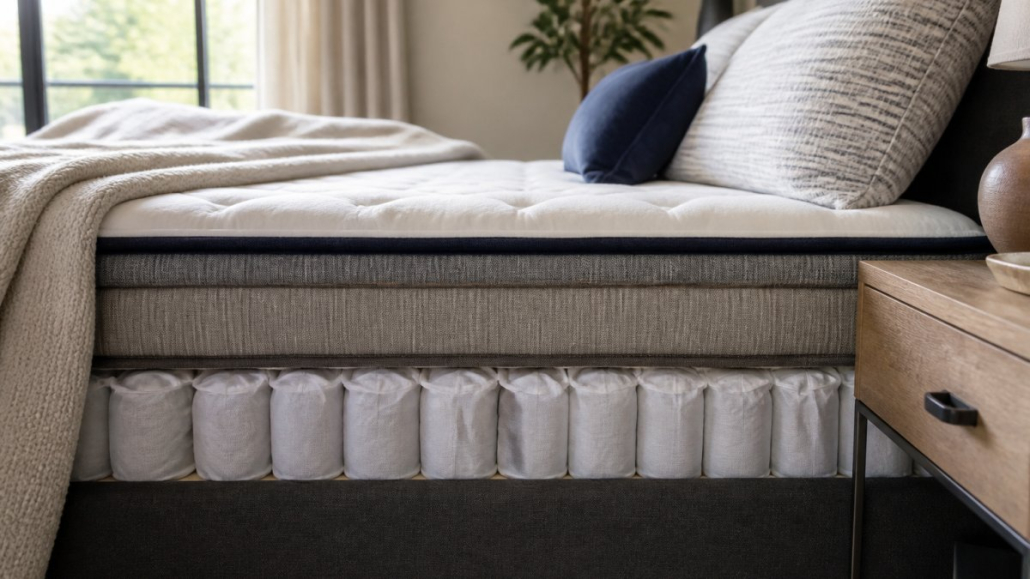
A hybrid pairs a coil support core with foam comfort layers on top. That steel core is why hybrids often outlast all-foam beds. Coils bounce back night after night. Foam alone compresses and slowly loses lift.
The weak point in any hybrid is the foam, not the springs. Cheap comfort foam breaks down first, and that is where sagging starts. Better hybrids use denser foam that holds its shape longer. When you shop, ask about foam density, not just coil count.
Press your palm into the comfort layer at the edge and center of a floor model. If it feels soft and slow to spring back, that foam will likely break down faster than a firmer, denser layer.
What Shortens a Hybrid Mattress Lifespan
Several everyday habits quietly cut years off a hybrid. None of them feel dramatic in the moment. Together they add up fast.
- Heavy sleepers: More weight means faster foam compression, especially in one spot.
- No rotation: Sleeping in the same dip every night wears one zone thin.
- Weak foundation: A sagging box spring or slatted frame twists the coil unit.
- Moisture and heat: Sweat and humidity break down foam and can rust coils over time.
- Jumping and sitting on edges: Repeated edge pressure loosens the border support.
- Wrong frame size: A frame that is too small pinches the mattress and stresses seams.
Sleeper Weight, Position, and Movement
Weight and sleep position decide where a hybrid wears first. Back and stomach sleepers load the center. Side sleepers press the shoulders and hips. Couples who toss and turn spread wear around, but they also put more total load on the bed.
Heavier sleepers should lean toward denser foam and stronger coil gauges. Lighter sleepers can get away with softer, plusher builds. If you share a bed, match the mattress to the heavier sleeper, not the lighter one.
Sleep position also shapes how your body meets the surface, which affects where the foam compresses. Our guide on how your sleep position affects your mattress choice explains how to match a build to the way you actually sleep.
Signs You Need a New Mattress
The clearest sign is a visible dip or sag where you sleep. Other signs show up before you can see them.
- You wake up sore or stiff most mornings
- The mattress feels lumpy or uneven under your hand
- You roll toward the center or edge
- The bed creaks, pops, or feels unstable
- You sleep better in a hotel bed than your own
- The mattress is past the 7-to-10-year mark
Run a simple check. Lay a straight edge, like a broom handle, across the surface. If you can slide your hand under the middle, the bed has sagged. That dip is not fixable, and it is time to shop.
If you are weighing whether to replace or hold out another year, our article on how often you should replace your mattress walks through the timing question in full.
How to Make a Mattress Last Longer
A few low-effort habits add real years to a hybrid. Start them on day one and the payoff shows up later.
- Use a mattress protector. It blocks sweat and spills from reaching the foam.
- Rotate the mattress on schedule. Head-to-foot flips wear more evenly.
- Use the right foundation. A sturdy frame or box spring supports the coils.
- Keep it clean. Vacuum the surface now and then to clear dust and grit.
- Avoid sitting on the edges. Edge sitting weakens the border support.
- Let it breathe. Strip the bedding now and then so moisture can escape.
New mattress in the house? Our step-by-step guide on how to break in a new mattress covers the first weeks, when the foam is still settling.
Call Us Today (423) 255-8124 → →
Skipping a mattress protector is the most common mistake we see. One sweat-soaked summer can stain foam and start a breakdown that shortens the bed’s life by years.
The Mattress Rotation Schedule That Actually Helps
Rotate a hybrid every six months, and more often in the first year. Set a reminder for every three months during year one, then twice a year after that. Rotation means turning the mattress head-to-foot, not flipping it over. Most hybrids are built to be rotated, not flipped, the comfort layers are on top, and flipping puts the support core where your shoulders should be.
Why rotation matters: foam settles where your body weight lands night after night. A 160-pound sleeper puts roughly 60% of that load through the hips and torso, so the center third of the mattress compresses first.
Here is a simple schedule to follow:
| Timeframe | Action | Why It Helps |
|---|---|---|
| Month 3 | Rotate head-to-foot | Evens out early foam settling while the mattress is still breaking in |
| Month 6 | Rotate head-to-foot | Spreads wear across the surface before a pattern sets |
| Every 6 months after | Rotate head-to-foot | Keeps one zone from wearing thin |
| Yearly | Check for sag and seams | Catches breakdown early, while the warranty may still apply |
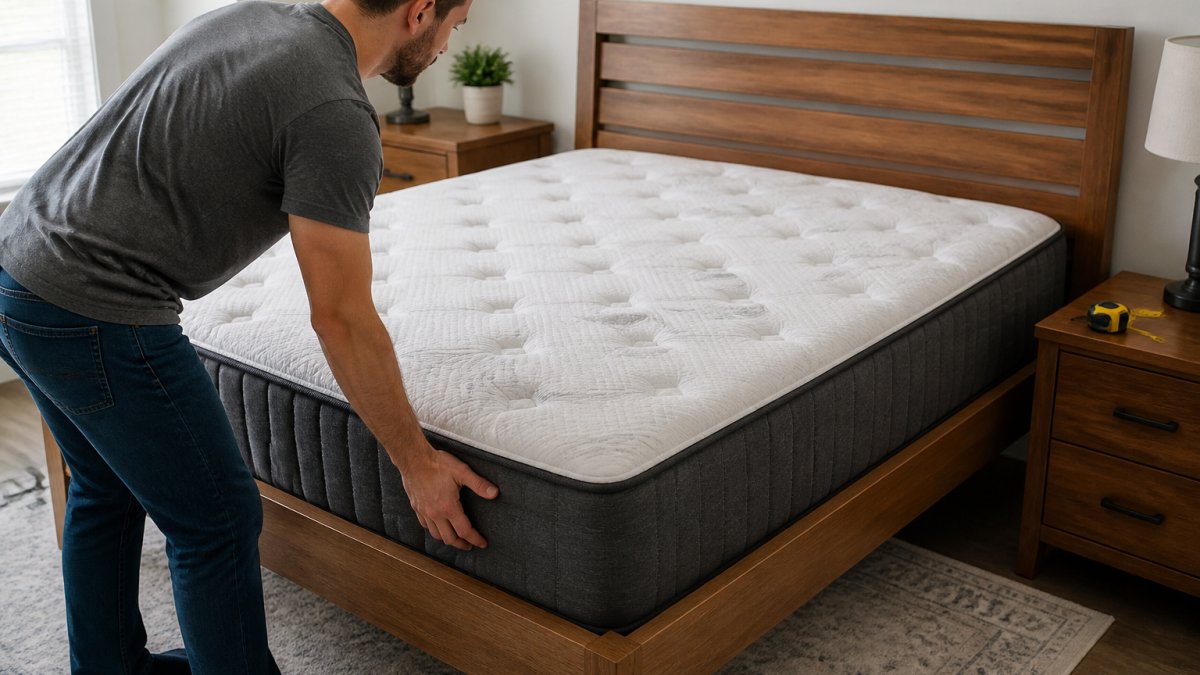
A rotation takes two people and a few minutes. Clear the nightstands first, strip the bedding, and grip the mattress by the handles or the corners, not the ticking. Walk it a quarter turn at a time rather than dragging, which stresses the seams and the coil unit.
What happens if you skip it: the center dip deepens, the edges soften unevenly, and the mattress starts to feel like two different beds depending on which side you sleep on. That small effort is the cheapest way to stretch a hybrid mattress lifespan, cheaper than a new mattress and far cheaper than a new back.
Put the rotation on the same calendar as your smoke-detector check. Twice a year, same day, and you will never miss it.
Bed Frame Fit and Foundation Compatibility
The right frame protects your mattress. The wrong one can wreck it.
Mattress dimensions are the size of the sleep surface. A queen is 60 by 80 inches; a king is 76 by 80 inches. Bed frame dimensions are the size of the opening the mattress drops into.
Room footprint is a third number entirely. A queen bed frame with a headboard and footboard can add 4 to 6 inches to each end, so a bed that measures 80 inches long may occupy 86 to 92 inches of floor space.
- Slatted frames: Slats should be close together, no more than a few inches apart, so the mattress does not sag between them. Check that the slats are supported in the center, not just at the rails.
- Box springs: A worn or soft box spring undermines even a good hybrid. If the box spring flexes when you press it, replace it with the mattress.
- Platform beds: A solid, flat platform works well and supports the coils evenly. Make sure it has ventilation, a solid deck with no airflow can trap moisture under the mattress.
- Adjustable bases: Check that the mattress is compatible before you pair them. Most hybrids flex, but a very thick or very stiff build may not articulate well, and the warranty may require a specific base type.
Bedding and accessories matter too. Sheet pocket depth needs to match the mattress height, a hybrid with a thick comfort layer can run 12 to 16 inches deep, and standard sheets may not tuck.
Measure three things before you buy: the inside of the frame, the floor space the bed will occupy, and the path the mattress has to travel to get there. A mattress that is a half inch too big for the opening will wear at the edges and never sit flat.
Shopping for a brand that holds up? Our list of the best mattress brands for longevity helps you compare durability before you spend.
Conclusion
A hybrid mattress gives you roughly 7 to 10 years of solid sleep with daily use, and the habits above decide whether you land at the top or bottom of that range. Rotate it, protect it, and put it on a frame that fits. That is most of the battle.
When it is time for a new one, Mattress Outlet of Chattanooga makes the swap easy on your budget. We stock brand-new hybrids at 60-80% below retail through smart truckload pricing, offer flexible payment plans and layaway, and give you a personalized, appointment-based shopping experience. No gimmicks, no marked-up showroom pricing.
Call us today at (423) 255-8124 and get a brand-new hybrid that fits your frame, your budget, and the way you sleep.
Frequently Asked Questions
How long does a hybrid mattress last with daily use?
Most hybrid mattresses hold up for seven to ten years with nightly use. The coil core usually keeps its shape longer than the foam layers on top, so comfort fades before support fails. Heavier sleepers, shared beds, and mattresses without a proper foundation land at the shorter end of that range. If you sleep on it every night and notice dips or sagging past about an inch, the hybrid mattress lifespan for your specific bed is probably closer to the low end.
Do hybrid mattresses last longer than memory foam mattresses?
On average, yes, but the gap is smaller than marketing suggests. The steel coil base resists the deep body impressions that all-foam beds develop, so a hybrid often reaches eight to ten years while a comparable memory foam mattress may soften noticeably around six to eight. The foam comfort layer still breaks down on the same timeline in both designs. Foundation quality, rotation habits, and sleeper weight matter as much as the construction type.
Does rotating a hybrid mattress extend its lifespan?
Rotating helps, but only if you do it on a schedule. Turning the mattress head-to-foot every three to six months spreads wear across the surface and slows the formation of body impressions. Set a reminder for the first of the month every quarter and rotate then. Skip flipping unless the manufacturer says the mattress is double-sided, since most hybrids are built to sit one way up. Pair rotation with a breathable protector and a supportive frame for the best results.
Can a sagging hybrid mattress be repaired?
Minor softening can sometimes be eased with a firm mattress topper or a new foundation, but a genuine sag deeper than about an inch and a half is not fixable. Once the coils compress or the foam crushes, the support structure is compromised. Check the frame first, since a weak slat base can mimic mattress sag. If the mattress still dips on a solid, flat foundation, replacement is the practical answer, and a budget-friendly outlet can soften the cost.