Posts

How to Choose King vs Queen Mattress for Couples

Last Updated: November 5, 2026

Quick Summary

The king vs queen decision comes down to 16 inches of width: a king is 76 inches wide and a queen is 60 inches, both 80 inches long. Choose a king for rooms 12 feet wide or more and couples who want room to move, or a queen for smaller rooms and tighter budgets.

  • A queen gives each partner 30 inches of width; a king gives 38 inches per sleeper.
  • Leave at least 24 inches of walking clearance on the sides of the bed you use most.
  • A king uses roughly 25 percent more surface area than a queen, raising mattress and bedding costs.
  • A California king is 72 inches wide by 84 inches long, trading width for four extra inches of length.
  • Couples who co-sleep with children or pets should almost always choose a king.

Table of Contents

King vs Queen Mattress for Couples: The Quick Comparison

A king mattress is 76 inches wide and 80 inches long (King Size Bed Dimensions). A queen mattress is 60 inches wide and 80 inches long (Queen Size Bed Dimensions). The entire king vs queen decision comes down to 16 inches of width, and that 16 inches changes how two people sleep, how a room feels, and what you spend over the life of the bed. The honest answer depends less on prestige than on your room, your budget, and how the two of you actually sleep.

Below, we’ll show you exactly how to measure your bedroom, what each size costs to own, and a simple decision tool that settles the question in about five minutes.

Factor Queen King
Width 60 inches 76 inches
Length 80 inches 80 inches
Space per sleeper 30 inches 38 inches
Best for Rooms under 12 feet wide, tighter budgets Rooms 12 feet wide or more, couples who want room to move
Bedding and frame cost Lower Higher
Bedroom floor space used Less More

Queen Mattress Dimensions in Inches and What They Mean for Two Sleepers

Queen mattress dimensions in inches are 60 by 80, which gives each partner 30 inches of width when two people share the bed. That is roughly the width of a standard doorway per person. It works well for couples who sleep close together or who are both average-sized. It feels tight for anyone who sprawls, runs hot, or wakes when the other person shifts.

Length matters less for most couples since both sizes run 80 inches, but taller sleepers should check that their feet clear the footboard. For a deeper breakdown of frame fit and room space, see our queen mattress dimensions in inches guide before you commit to a size.

How Much Extra Space Does a King Give Each Partner?

A king adds 16 inches of width, and that extra space translates to 38 inches per person instead of 30. Eight more inches per sleeper sounds small until you have lived with a partner who rolls, starfishes, or gets up twice a night. The extra room to move is the single biggest practical argument for a king.

The trade-off is footprint. A king bed frame eats into floor space, and in a smaller bedroom it can crowd dressers and closets. A common mistake is buying the bigger bed first and discovering the room feels cramped afterward. Measure twice, buy once.

Mattress Motion Isolation for Couples: Does Size Change Partner Disturbance?

Mattress motion isolation for couples depends far more on the mattress’s construction than on its width. A queen and a king built with the same materials transfer motion the same way. What the extra width does is create a buffer zone, so a light sleeper is less likely to be touched or jostled by a partner’s movement.

Here is the mechanism in plain terms. Innerspring and hybrid models use coils that compress under one sleeper and can pull on neighboring coils, so a partner rolling over sends a ripple across the surface. All-foam and memory-foam designs absorb and localize compression, which is why they tend to score better on motion isolation.

Size still earns its keep in three couple-specific scenarios. First, different sleep schedules: when one partner goes to bed at 9 p.m. and the other at midnight, the extra 16 inches of width lets the later sleeper slide in without touching the earlier one, which reduces the startle response that wakes light sleepers. Second, temperature preferences: a king gives each person more surface area to spread out, and spreading out reduces the heat trapped between two bodies, though it does not change the mattress’s cooling construction. Third, sleep-position geometry: two back-sleepers need less width than two side-sleepers who extend their arms, and a couple where one partner is a sprawler will feel the 30-inch queen allotment as tight even if both are average-sized.

What extra space cannot solve is worth saying plainly. A king will not stop a partner who thrashes violently, and it will not compensate for a mattress with poor edge support if one person sleeps near the perimeter. It also will not fix snoring, sleep apnea, or a mismatch in firmness preference; those are construction and health issues, not width issues.

One more variant deserves a mention because it changes the couple math: the California king. A California king measures 72 inches wide by 84 inches long, so it gives each partner 36 inches of width (six more than a queen) while adding four inches of length.

If you want to test motion isolation rather than read about it, ask to lie on a queen and a king built with the same construction and have a salesperson walk around the perimeter and press down near your side. The difference you feel is the construction talking, not the width.

How to Measure Bedroom for Mattress Size Before You Buy

To measure a bedroom for mattress size, note the room’s width and length, then subtract the bed footprint and leave at least 24 inches of walking clearance on the sides you use most. A king frame typically measures around 76 to 80 inches wide once you account for the frame itself, so a room narrower than 12 feet will feel tight with a king.
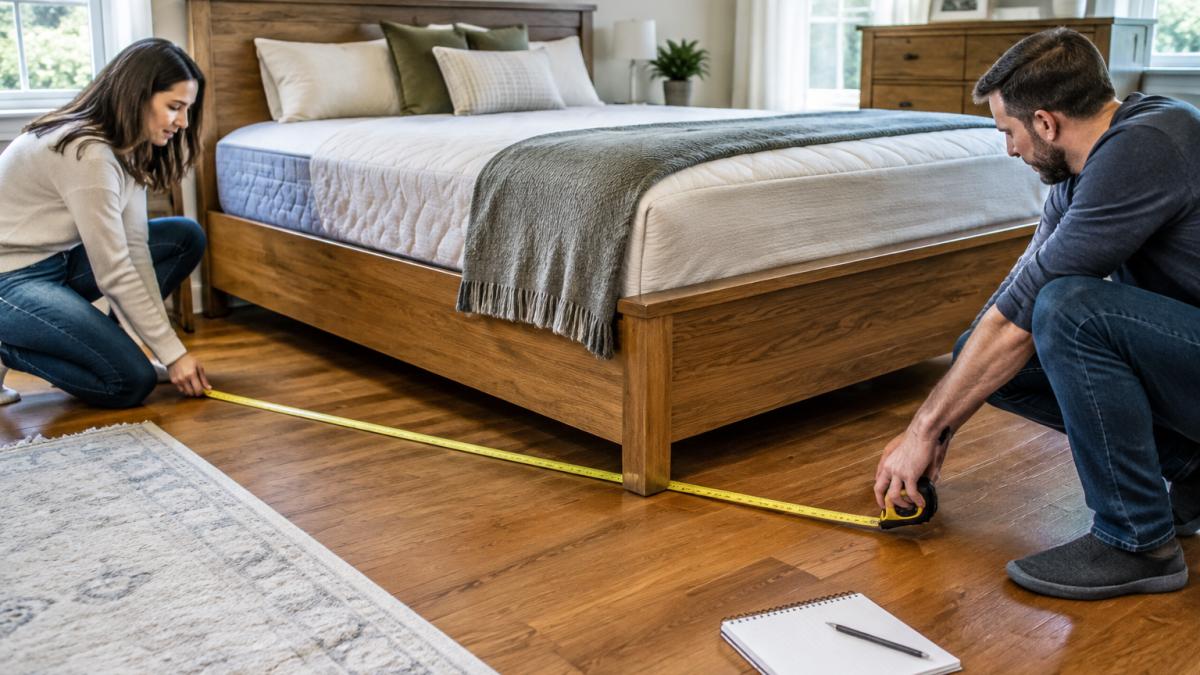
A couple uses a tape measure to check floor space around a bed frame to decide between a king vs queen mattress.

Follow these steps before you shop:

  • Measure the wall where the headboard will sit, then subtract the frame width
  • Leave 24 inches of clearance on the entry side of the bed at minimum
  • Check that closet doors and dresser drawers open fully with the bed in place
  • Confirm stairwell and doorway widths if the bedroom is upstairs
  • Mark the footprint on the floor with painter’s tape and live with it for a day

That tape outline tells you more than any showroom ever will. For a broader look at how size affects the whole room, our mattress size selection guide walks through every standard size.

Call Us Today (423) 255-8124 → →

Cost of Ownership: Sheets, Frames, and Replacement Costs for King vs Queen

A king costs more than a queen across the entire life of the bed, not just at purchase, and the gap is wider than most couples expect because the mattress is only one line item.

Start with the mattress itself. A king uses roughly 25 percent more surface area than a queen (76 by 80 inches versus 60 by 80 inches), and that extra material shows up in the price at every quality level.

Bedding is the sneaky part. King sheets, comforters, duvet covers, and mattress protectors generally run higher than queen equivalents because they use more fabric, and the gap is largest on fitted sheets and comforters where the width difference is fully realized.

Frames and foundations follow the same pattern. A king bed frame or adjustable base costs more than a queen because it spans more width and needs more structural support, and a king foundation or box spring is typically sold as two pieces or a split design.

Replacement timing is where the comparison gets interesting. A larger surface area means more material to wear, but the difference in lifespan is minor when both beds use comparable construction.

Watch out: buying a king mattress before pricing king bedding, a king frame, and delivery often leads to a budget surprise a month later, and returning a mattress because the total package did not fit the budget is far more painful than choosing a queen up front.

A simple total-cost worksheet helps. Our mattress price range by size guide breaks down what you will actually pay at each size so you can plan the whole purchase rather than just the mattress.

Which Size Fits Your Situation: A Couples Decision Tool

Use this tool to settle the king vs queen question in five minutes. Answer each line honestly, then count your results.

Your situation Pick this
Bedroom is 12 feet wide or more King
Bedroom is under 12 feet wide Queen
One or both partners are tall or broad-shouldered King
You sleep with a child or pet in the bed regularly King
You have a strict budget and need new bedding too Queen
You and your partner sleep close together and rarely wake each other Queen
Different sleep schedules or one light sleeper King
Renting and likely to move within two years Queen

If your answers split, lean toward the queen for a smaller room and the king for a larger one. Couples who regularly co-sleep with children or pets should almost always choose a king, because the extra width is the difference between a full night’s sleep and a restless one.

Try a Mattress In Person Before You Decide

Dimensions tell you what will fit. Lying on the bed tells you what you will actually live with. Sleeping position, firmness preference, and how you and your partner settle in together are things no spec sheet captures.

Browse our brand-new mattresses and check current pricing on our website. Browse our mattresses to see current options, then plan a visit. To discuss a king and a queen before committing, contact us.

Frequently Asked Questions

What are the exact dimensions of a queen vs king mattress in inches?

A standard queen measures 60 inches wide by 80 inches long, while a standard king measures 76 inches wide by 80 inches long. That makes the king 16 inches wider, giving each partner roughly 38 inches of width versus 30 inches on a queen. A California king swaps width for length at 72 inches wide by 84 inches long, which suits taller sleepers. Measure your frame and room before choosing so the mattress size fits the space you actually have.

Is a king mattress always better for couples?

No. A king gives each partner more room to move and can reduce disturbance if one person shifts at night, but it needs a larger bedroom and costs more for the mattress, frame, and bedding. Couples in smaller rooms, or those on a tighter budget, often sleep comfortably on a queen. Your sleeping positions, motion sensitivity, and whether children or pets share the bed matter more than size alone. Try both sizes in person before deciding.

Do king mattresses cost significantly more than queen mattresses?

A king typically costs more than a queen at the same quality level because it uses more materials, and the gap widens once you add a larger frame, sheets, comforter, and delivery. The total cost of ownership matters more than the sticker price. Budget for bedding and a foundation that fits the new size. Check current pricing on the Mattress Outlet of Chattanooga website, and ask about financing or layaway if you want to spread the cost.

Does a king mattress offer better motion isolation than a queen?

Size helps, but construction matters more. A wider king puts more distance between partners, so movement transfers less. However, motion isolation depends on the mattress type and build, such as pocketed coils or foam layers that absorb movement. Two people on a well-built queen can feel less disturbance than two on a poorly built king. Test how the mattress responds when someone sits or rolls over before you buy.


The right size for your relationship is the one you can measure, afford, and sleep well on. At Mattress Outlet of Chattanooga, we help couples compare king and queen options in person, with brand-new inventory, truckload pricing that undercuts typical retail, and payment plans or layaway that keep a quality mattress within reach. Get started with Mattress Outlet of Chattanooga and find the size that fits your room and your budget.

Queen Mattress Dimensions in Inches: A Complete Size Guide

Last Updated: October 27, 2026

Quick Summary

Queen mattress dimensions are 60 inches wide by 80 inches long, giving you 4,800 square inches of sleeping surface. In feet, that is 5 feet wide by 6 feet 8 inches long, or about 33.3 square feet of footprint. Keep both sets of numbers handy when planning your room and checking frames.

  • A full mattress is 54 by 75 inches, making a queen 6 inches wider and 5 inches longer.
  • Plan 24 to 30 inches of walking space on each side of the bed you use.
  • Leave at least 36 inches at the foot of the bed if it is a main walkway.
  • A 10 by 10 room fits a queen with side access on one side only.
  • Measure your frame opening and delivery route, not just the room.

Table of Contents

Queen Mattress Dimensions in Inches: The Standard 60 by 80

A queen mattress measures 60 inches wide by 80 inches long (Mattress Sizes 101: Finding Your Perfect Fit). That 60 by 80 footprint gives you 4,800 square inches of sleeping surface. This guide breaks down measurements from frame fit to room clearance.

In practice, the mattress is only part of the equation. Your frame, your room, and your doorway also matter.

Queen mattress dimensions are the starting point, not the finish line. Below, we walk through the numbers in inches and feet, how queen compares to full and king, and how to measure before you buy.

How Mattress Depth and Thickness Affect Fit

Length and width get all the attention. Depth is the measurement people forget, and it causes the most surprises. For guidance on how sleep position affects your mattress choice, see how your sleep position affects your mattress choice.

Your Queen Mattress Size in Feet

In feet, a queen mattress is 5 feet wide by 6 feet 8 inches long. That is the same 60 by 80 inches, just converted for room planning.

Feet are easier for floor layouts. Inches are better for doorways and frames. Keep both in your head when you shop:

  • Width: 5 feet
  • Length: 6 feet 8 inches
  • Total footprint: about 33.3 square feet

Queen Bed Frame Dimensions vs. Mattress Dimensions

A queen mattress and a queen bed frame are not the same size. The mattress is the 60 by 80 inch constant. The frame is everything built around it.

A queen mattress is 60 inches wide by 80 inches long. Frame dimensions vary, so check the specifications for the frame you have or are considering.

When fitting a bed into a wall niche or between two nightstands, check the frame’s outer dimensions as well as the mattress width.

How to Measure a Frame Opening

Before buying a mattress for an existing frame, check the frame and mattress specifications for compatibility. Measure the available space in the room and compare it with the frame’s outer dimensions.

Headboards, Footboards, and the Assembled Footprint

Headboards, footboards, and side rails can affect a bed’s overall footprint. Check the frame’s specifications when planning the room layout.

Check the frame’s outer dimensions and compare them with the available room space before you commit.

Pro Tip
Write the frame opening and the assembled outer dimensions on a sticky note and take it to the store. Those two numbers settle most queen frame questions faster than any size chart.

Measurement Tolerances and Real-World Variation

Check the stated dimensions for the specific mattress and frame you are considering.

That is why the product specification sheet matters more than the size name on the box. Check the stated dimensions for the exact model you are buying, and treat “queen” as a category, not a guarantee. A common pattern is for buyers to assume all queen mattresses are identical and then find that a deep pillow-top sits proud of the frame or that a tightly upholstered headboard crowds a nightstand. Confirm the numbers for the specific product before you order.

Diagram comparing interior queen bed frame dimensions to standard queen mattress dimensions

If you are pairing a new mattress with an existing frame, check the frame’s dimensions and compatibility.

Call Us Today (423) 255-8124 → →

Queen vs Full Mattress Dimensions: Which Fits Your Room

A queen is 60 by 80 inches. A full, also called a double, is 54 by 75 inches (Full Size Bed Dimensions). The queen is 6 inches wider and 5 inches longer.

Size Width Length Best For
Twin 38 in 75 in Kids, guest rooms
Twin XL 38 in 80 in Dorms, tall single sleepers
Full 54 in 75 in Single adults, small rooms
Queen 60 in 80 in Couples, most bedrooms
King 76 in 80 in Couples wanting maximum space
California King 72 in 84 in Tall sleepers

If you are weighing sizes for a specific room, our guide to choosing the right mattress size covers the full range in more detail.

Queen Mattress Room Size and Clearance You Need

Room size is one consideration; whether a queen’s 60 by 80 inch footprint suits the people sleeping on it is another.

Clearance You Need Around the Bed

Plan for these clearances:

  • Sides: 24 to 30 inches of walking space on each side you use to get in and out
  • Foot: at least 36 inches if it is a main walkway
  • Door swing: clear the door’s full swing plus a few inches
  • Closet and dresser: leave room to open drawers and doors fully

A 10 by 10 room fits a queen with side access on one side only. A 12 by 12 room gives you comfortable access on both sides plus furniture. If the room is your primary bedroom and two people share the bed, plan for side clearance on both sides, otherwise one sleeper is climbing over the other or shuffling along the wall.

Does a Queen Fit Your Height and Sleeping Arrangement?

Width is another consideration. A 60-inch queen provides about 30 inches of width per person when shared by two adults; a 54-inch full provides about 27 inches per person, and a 76-inch king provides about 38 inches per person.

Room Layout Examples

Key Takeaway
Measure the room and consider the mattress dimensions in relation to the people who will use it.

If you are weighing sizes for a specific room, our guide to choosing the right mattress size covers the full range in more detail.

How to Measure Your Space and Delivery Route

Before buying, measure the room and check the mattress and frame dimensions against the available space. Once your space and route check out, review mattress delivery fees in Chattanooga before you order. Consider the route into the room, including doorways, stairs, hallways, and elevators. If you are planning delivery logistics, this same day mattress take away guide for Chattanooga explains how old mattress removal works when the new queen arrives. Check the product specifications for the mattress you are considering.

Choosing Your Queen Mattress at Mattress Outlet of Chattanooga

You know the numbers. Now comes the part that actually matters: picking the mattress.

Mattress Outlet of Chattanooga offers brand-new mattresses at prices 60-80% below retail, with flexible payment plans and layaway.

A few things to confirm before you buy:

  • Measure your frame opening, not just the room
  • Check your doorway and stairwell for delivery access
  • Decide on depth based on your sleep position and sheet preferences

When you are ready, browse our mattresses.

Frequently Asked Questions

What are the standard queen mattress dimensions in inches?

A standard queen mattress measures 60 inches wide by 80 inches long, or 5 feet by 6 feet 8 inches.

Are queen mattress and queen bed frame dimensions the same?

No. A queen mattress is 60 by 80 inches. Check the frame’s specifications for its dimensions and compare them with the available room space.

Will a queen mattress fit in a 10-by-10-foot bedroom?

A 60-by-80-inch queen mattress may fit in a 10-by-10-foot bedroom, but the available space depends on the room layout and other furniture.

How much room do you need around a queen bed?

Consider the available floor space and room layout when deciding whether a queen bed will fit.


A queen mattress that fits your room, your frame, and your sleep style is worth the ten minutes of measuring. At Mattress Outlet of Chattanooga, we help budget-conscious families find brand-new queen mattresses at deep discounts, with flexible financing and layaway options to make it work. Get started with Mattress Outlet of Chattanooga and sleep better on a bed that actually fits.

How to Choose the Right Mattress Size: 2026 Guide

Last Updated: October 24, 2026

Quick Summary

To choose the right mattress size, measure your room and bed frame first, then match the standard size chart to your tallest sleeper and how much each person moves. A mattress should be at least 6 inches longer than the tallest sleeper, and each person needs about 24 inches of width minimum, 30 inches to be comfortable.

  • Standard sizes run from twin (38 x 75) to California king (72 x 84), measured in inches.
  • Leave at least 24 inches of walkway on the sides you use most and 30 inches at the foot.
  • Queen dimensions are 60 wide by 80 long, making it the most popular size for couples.
  • A king gives each sleeper about 38 inches of width versus roughly 30 on a queen.
  • A frame built for a queen has an inside opening close to 60 by 80 inches.

Table of Contents

Start With the Mattress Size Chart and Your Room

Getting the mattress size right starts with two numbers: the standard size chart and your actual room measurements. Mattress size is the one decision you cannot undo after delivery day.

Here is the short version. A mattress size is the width and length of the sleep surface, measured edge to edge in inches. Standard sizes run from twin to California king, and each one fits a different sleeper and room.

Most buyers start with the bed they like, then measure the room. Do it the other way around. A king bed in a small apartment leaves no walkway, and a full bed in a large primary suite feels cramped for two adults.

Below, we show you exactly how to match a mattress size to your room, your sleepers, and your frame before you spend a dollar.

Standard Mattress Sizes and Dimensions

The standard mattress size chart is the fastest way to compare options. Every size below is a common US mattress dimension, measured in inches.

Mattress Size Width x Length (inches) Best For
Twin 38 x 75 Kids, guest rooms, bunk beds
Twin XL 38 x 80 Teens, dorm rooms, tall single sleepers
Full (Double) 54 x 75 Single adults, small guest rooms
Queen 60 x 80 Couples, most primary bedrooms
King 76 x 80 Couples who want space, large rooms
California King 72 x 84 Tall sleepers, long rooms

A few things stand out once you see it in a table. Twin XL adds five inches of length over a twin, which matters for anyone over about 5 feet 10 inches.

That last trade-off trips people up. A California king is narrower than a king, so couples who move around at night often prefer the extra width of a standard king.

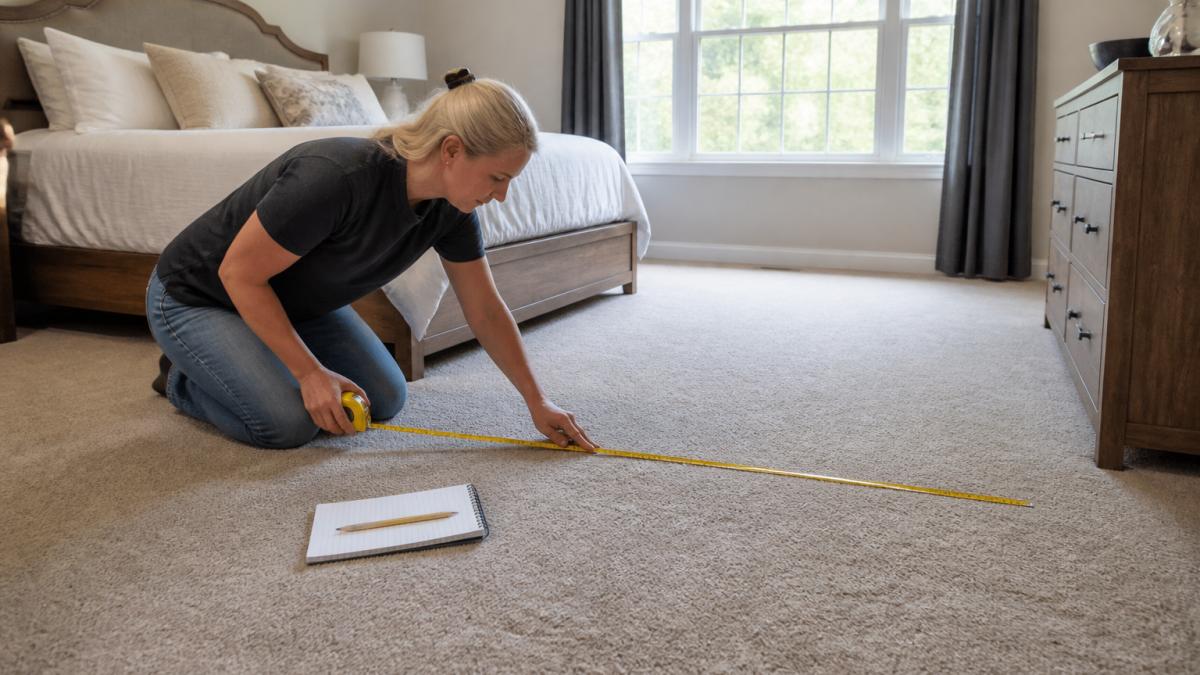
A person using a tape measure to measure the floor space where a bed will go in a bright bedroom, with a pencil and notepad nearby

How to Measure Your Room for a Bed

Measure the room before you shop, and measure the floor space, not the wall. Grab a tape measure and note three things:

  • Wall length and width of the room where the bed will sit
  • Door swing and closet clearance, so nothing blocks a walkway
  • Furniture footprints, including nightstands and dressers

A simple rule: leave at least 24 inches of walkway on the sides you use most. For the foot of the bed, aim for 30 inches or more. These are guidelines, not laws, but they keep a big bed from swallowing a small room.

Write the numbers down. Bring them to the store. A mattress size that looks fine on a showroom floor can feel enormous in a 10-by-10 bedroom.

Queen Mattress Dimensions in Inches: The Most Common Choice

Queen mattress dimensions in inches are 60 wide by 80 long (Queen Size Bed Dimensions). That makes the queen the most popular mattress size for couples and the default pick for most primary bedrooms.

Why does the queen win? It fits two adults without crowding a standard room, and it works with most bed frames and bedding sets. It is also the size where the price-to-space ratio tends to feel fairest.

Here is where buyers get confused. A queen mattress and a “queen bed” are not the same thing. The mattress is 60 by 80 inches.

That gap matters when you measure. If your room fits a queen mattress but not a queen frame, you need a different plan.

Pro Tip
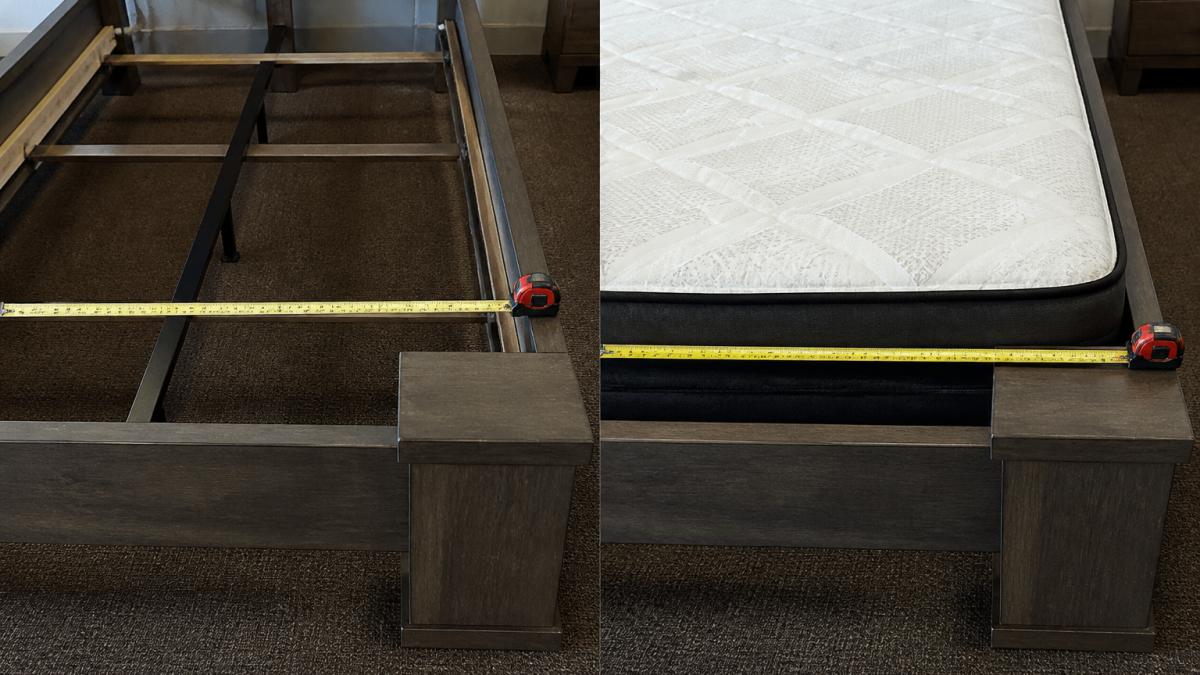
Measure your bed frame’s inside opening, not its outside edges. A queen frame built for a 60-by-80 mattress usually has an inside measurement close to that, but headboards and footboards add length you must account for against the wall.

Mattress Size for Couples and Shared Beds

The right mattress size for couples comes down to personal space. Two adults sharing a full-size mattress get about 27 inches of width each. A queen gives each sleeper roughly 30 inches. A king pushes that closer to 38 inches per person.

That difference is why so many couples upgrade from full to queen, then from queen to king. Movement is the deciding factor. If one partner tosses and turns, the extra width of a king reduces the ripple effect on the other side.

Shared beds are not only couples, though. Consider these setups:

  • Two kids sharing: a full or queen works better than two twins pushed together
  • A parent and a small child: a queen gives room without taking over the room
  • Pets on the bed: add width, because a 70-pound dog takes up real estate
  • A couple plus a toddler: a king is often the only size that keeps everyone comfortable

Sleep position matters too. Side sleepers sprawl. Back and stomach sleepers stay put. If either partner is a sprawler, size up.

For a closer look at how sleep position changes the choice, see how your sleep position affects your mattress choice.

How to Measure a Mattress and Your Bed Frame

Knowing how to measure a mattress correctly saves you a return. Measure the sleep surface edge to edge: width first, then length. Do not measure the frame, the box spring, or the bedding. Measure the mattress itself.

Then measure the frame separately. Here is the distinction most guides skip:

  • Mattress dimensions describe the sleep surface: width and length in inches
  • Bed frame dimensions describe the outer footprint, including rails and headboard
  • Inside frame measurement tells you what mattress will actually drop in

A frame built for a queen mattress has an inside opening close to 60 by 80 inches. If your inside measurement comes up short, the mattress will not fit, no matter what the label says.

Call Us Today (423) 255-8124 → →

Watch Out
Buying a mattress before measuring the frame is the most common fit mistake we see. If the inside opening is smaller than the mattress, you are stuck with a bed that will not sit flat, and delivery day becomes a return.

Mattress height and depth matter here too. A thick mattress may hide the frame rails or sit above the headboard. Deep-pocket sheets solve the sheet problem, but they do not fix a frame that is too small.

Build a Decision Tree for Your Sleep Style and Space

A size chart tells you what exists. A decision tree tells you what you can actually sleep on.

Branch 1: Length. Start with the tallest sleeper.

Branch 2: Sleeping position and width per person. Width is where position matters most. Side sleepers tend to draw their knees up and extend an arm, so they use more horizontal space than back or stomach sleepers.

Branch 3: Movement. If either sleeper changes position frequently or gets up during the night, add width before you add length.

Branch 4: Room fit. Take the size the first three branches produced and run it through the floor-plan method in the previous section. If the bed leaves less than about 18 inches on a used side, or blocks a door swing, drop one size. A king that fits the sleepers but not the room is the wrong answer.

Branch 5: Budget and accessories. A larger mattress usually costs more, and so do the sheets, foundation, and frame that match it.

Run the tree with real numbers.

For a step-by-step companion to this process, our guide on how to choose the right mattress in 5 simple steps walks through the full selection.

Key Takeaway
Length is set by the tallest sleeper, width is set by position and movement, and the room has the final veto. Run the branches in that order and the size picks itself.

Check Bedding, Foundation, and Accessory Compatibility

A mattress size only works if everything around it fits. Check these before you buy:

  • Sheets: deep-pocket sheets fit thicker mattresses; standard sheets may pop off
  • Foundation or box spring: must match the mattress size exactly
  • Bed frame: confirm the inside measurement, not the outer edge
  • Mattress protector: sized to the mattress, not the frame
  • Adjustable base: check the size and weight limits

A king mattress needs king sheets, a king foundation, and a king frame. Mixing sizes is where returns come from. The same goes for accessories: a queen protector on a king mattress will not stay put.

Once you settle on a size, browse our mattresses to see what is available in that size before you commit.

Weigh Budget, Delivery, and Moving Trade-Offs

Bigger mattresses cost more to buy, deliver, and move. That is the trade-off nobody puts on the size chart.

A king or California king is heavy and awkward. It may need two people to carry, a larger delivery window, and a clear path through doorways and stairwells. You can check mattress delivery fees in Chattanooga before you choose a size.

Budget works the same way. The mattress is one cost, but sheets, a foundation, and a frame add up. If you are renting and may move soon, a queen is easier to relocate than a king.

At Mattress Outlet of Chattanooga, we keep brand-new mattresses at prices well below retail, and we offer payment plans and layaway for buyers who want to spread the cost. You can review mattress payment plans before you decide.

Key Takeaway
Pick the largest mattress your room, frame, and budget can support, then confirm the bedding and foundation fit that size. Size is the one choice you cannot adjust later without a return.

Conclusion

The hardest part of buying a mattress is not the shopping. It is committing to a size before you know it fits your room, your frame, and your sleepers. Measure first, run the decision tree, and check the bedding and foundation before you pay.

Mattress Outlet of Chattanooga can help you get there. We stock brand-new mattresses at deep discounts, offer flexible payment plans and layaway, and give you a personalized, appointment-based shopping experience so you leave with the right size, not a guess.

Call us today at (423) 255-8124 and get the right mattress size for your room and your sleepers.

Frequently Asked Questions

How big of a mattress should I get?

The right mattress size depends on who sleeps in the bed and how much room you have. A single adult often fits well on a full or queen, while couples usually need at least a queen and often prefer a king. Measure your room first, then leave 24 to 36 inches of walkway around the bed. Use a mattress size chart to compare dimensions before you buy.

What mattress size is best for two people?

For two adults, a queen is the minimum most couples find comfortable, but a king gives each sleeper more personal space. If you have a smaller bedroom or a tight budget, a queen mattress for couples works well at 60 by 80 inches. Couples who move a lot during sleep or have pets on the bed often do better with a king or California king.

How do I measure my room to choose the right mattress size?

Measure the length and width of the open floor area where the bed will sit, not just the wall. Account for doors, closets, dressers, and walkways. Leave at least 24 inches of clearance on the sides you use to get in and out. Write down your room dimensions and compare them to a mattress size chart to see which sizes fit with room to spare.

Will a larger mattress fit through my doorway and up the stairs?

A king or California king mattress can be hard to move through narrow hallways or stairwells. Measure your doorway width, hallway width, and stair clearance before you buy. Many mattresses bend or compress, but an innerspring king may not. If space is tight, a queen or a mattress-in-a-box style may be easier to deliver and set up.