Posts

Hybrid Mattress Lifespan With Daily Use: How Long It Lasts

Last Updated: October 24, 2026

Quick Summary

A hybrid mattress lifespan with daily use typically runs 7 to 10 years when the mattress gets rotated on schedule, sits on a supportive frame, and matches the sleeper’s weight and position. Heavier sleepers and weak foundations push you toward the low end, while proper care helps you reach ten years.

  • The weak point in any hybrid is the foam comfort layer, not the steel coil core.
  • Rotate a hybrid every six months, and every three months during the first year.
  • A queen hybrid typically weighs 80 to 120 pounds, so rotation takes two people.
  • Slats should sit no more than a few inches apart so the mattress does not sag between them.
  • Skipping a mattress protector is the most common mistake and can shorten the bed’s life by years.

Table of Contents

How Long Do Hybrid Mattresses Last With Daily Use?

A hybrid mattress lifespan with daily use typically runs 7 to 10 years. For a deeper look at the broader lifespan question, see how long hybrid mattresses last. That range holds when the mattress gets rotated on schedule, sits on a supportive frame, and matches the sleeper’s weight and position. Push past a decade and you are sleeping on compressed foam and stretched coils, not comfort.

Mattress Outlet of Chattanooga sells brand-new hybrids every week, and we hear the same question from buyers: how long will this actually last? The honest answer depends less on the calendar and more on how the bed gets used. A 160-pound back sleeper on a proper foundation will get closer to ten years.

Hybrid mattress lifespan is the number of years a coil-and-foam mattress keeps its support and shape under normal nightly use. Daily use is the key phrase. A guest room hybrid can last far longer than the one you sleep on every night.

Below, we break down what wears a hybrid out, how to spot the end, and the habits that add years.

What Separates a Hybrid From All-Foam

A hybrid pairs a coil support core with foam comfort layers on top. That steel core is why hybrids often outlast all-foam beds. Coils bounce back night after night. Foam alone compresses and slowly loses lift.

The weak point in any hybrid is the foam, not the springs. Cheap comfort foam breaks down first, and that is where sagging starts. Better hybrids use denser foam that holds its shape longer. When you shop, ask about foam density, not just coil count.

Pro Tip
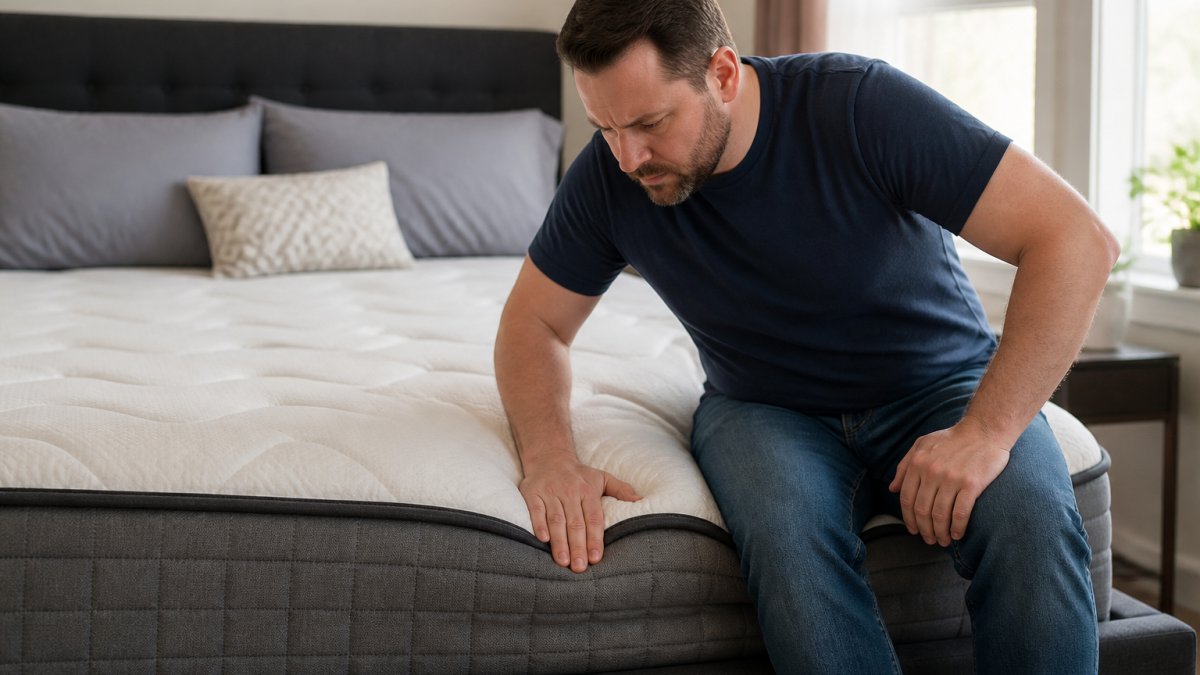
Press your palm into the comfort layer at the edge and center of a floor model. If it feels soft and slow to spring back, that foam will likely break down faster than a firmer, denser layer.

What Shortens a Hybrid Mattress Lifespan

Several everyday habits quietly cut years off a hybrid. None of them feel dramatic in the moment. Together they add up fast.

  • Heavy sleepers: More weight means faster foam compression, especially in one spot.
  • No rotation: Sleeping in the same dip every night wears one zone thin.
  • Weak foundation: A sagging box spring or slatted frame twists the coil unit.
  • Moisture and heat: Sweat and humidity break down foam and can rust coils over time.
  • Jumping and sitting on edges: Repeated edge pressure loosens the border support.
  • Wrong frame size: A frame that is too small pinches the mattress and stresses seams.

Sleeper Weight, Position, and Movement

Weight and sleep position decide where a hybrid wears first. Back and stomach sleepers load the center. Side sleepers press the shoulders and hips. Couples who toss and turn spread wear around, but they also put more total load on the bed.

Heavier sleepers should lean toward denser foam and stronger coil gauges. Lighter sleepers can get away with softer, plusher builds. If you share a bed, match the mattress to the heavier sleeper, not the lighter one.

Sleep position also shapes how your body meets the surface, which affects where the foam compresses. Our guide on how your sleep position affects your mattress choice explains how to match a build to the way you actually sleep.

Signs You Need a New Mattress

The clearest sign is a visible dip or sag where you sleep. Other signs show up before you can see them.

  • You wake up sore or stiff most mornings
  • The mattress feels lumpy or uneven under your hand
  • You roll toward the center or edge
  • The bed creaks, pops, or feels unstable
  • You sleep better in a hotel bed than your own
  • The mattress is past the 7-to-10-year mark

Run a simple check. Lay a straight edge, like a broom handle, across the surface. If you can slide your hand under the middle, the bed has sagged. That dip is not fixable, and it is time to shop.

If you are weighing whether to replace or hold out another year, our article on how often you should replace your mattress walks through the timing question in full.

How to Make a Mattress Last Longer

A few low-effort habits add real years to a hybrid. Start them on day one and the payoff shows up later.

  1. Use a mattress protector. It blocks sweat and spills from reaching the foam.
  2. Rotate the mattress on schedule. Head-to-foot flips wear more evenly.
  3. Use the right foundation. A sturdy frame or box spring supports the coils.
  4. Keep it clean. Vacuum the surface now and then to clear dust and grit.
  5. Avoid sitting on the edges. Edge sitting weakens the border support.
  6. Let it breathe. Strip the bedding now and then so moisture can escape.

New mattress in the house? Our step-by-step guide on how to break in a new mattress covers the first weeks, when the foam is still settling.

Call Us Today (423) 255-8124 → →

Watch Out
Skipping a mattress protector is the most common mistake we see. One sweat-soaked summer can stain foam and start a breakdown that shortens the bed’s life by years.

The Mattress Rotation Schedule That Actually Helps

Rotate a hybrid every six months, and more often in the first year. Set a reminder for every three months during year one, then twice a year after that. Rotation means turning the mattress head-to-foot, not flipping it over. Most hybrids are built to be rotated, not flipped, the comfort layers are on top, and flipping puts the support core where your shoulders should be.

Why rotation matters: foam settles where your body weight lands night after night. A 160-pound sleeper puts roughly 60% of that load through the hips and torso, so the center third of the mattress compresses first.
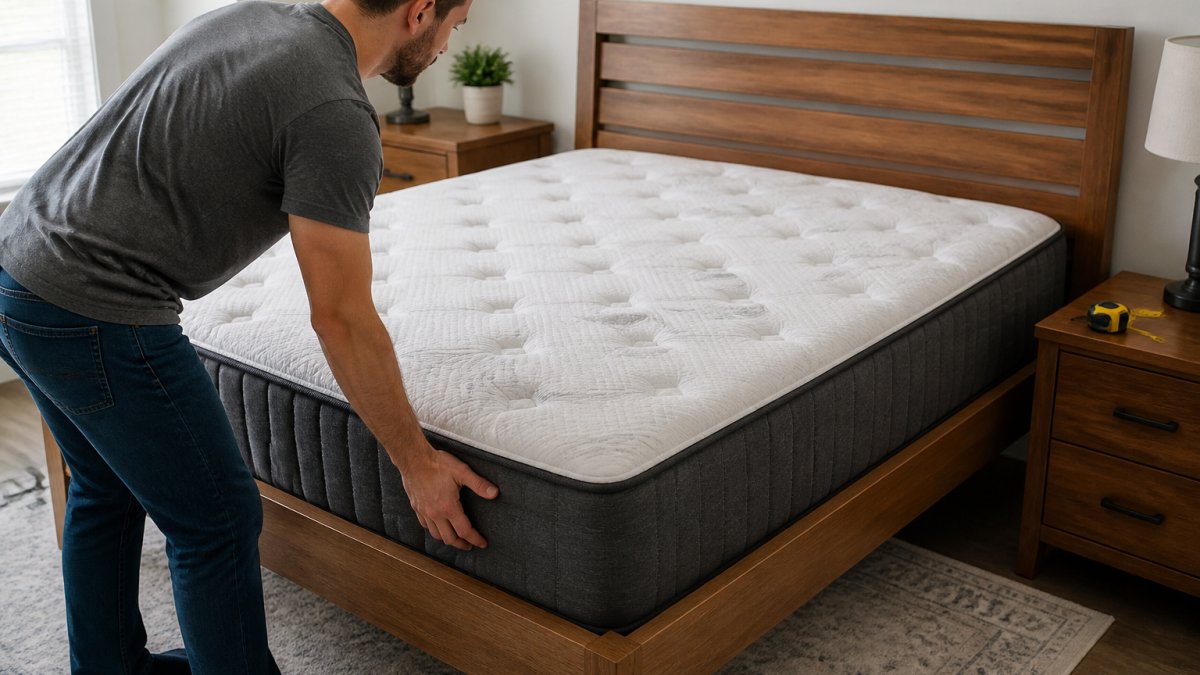
A person in casual clothes gripping the corner of a queen hybrid mattress and turning it a quarter turn on a wooden bed frame in a bright bedroom, tape measure resting on the nightstand

Here is a simple schedule to follow:

Timeframe Action Why It Helps
Month 3 Rotate head-to-foot Evens out early foam settling while the mattress is still breaking in
Month 6 Rotate head-to-foot Spreads wear across the surface before a pattern sets
Every 6 months after Rotate head-to-foot Keeps one zone from wearing thin
Yearly Check for sag and seams Catches breakdown early, while the warranty may still apply

A rotation takes two people and a few minutes. Clear the nightstands first, strip the bedding, and grip the mattress by the handles or the corners, not the ticking. Walk it a quarter turn at a time rather than dragging, which stresses the seams and the coil unit.

What happens if you skip it: the center dip deepens, the edges soften unevenly, and the mattress starts to feel like two different beds depending on which side you sleep on. That small effort is the cheapest way to stretch a hybrid mattress lifespan, cheaper than a new mattress and far cheaper than a new back.

Key Takeaway
Put the rotation on the same calendar as your smoke-detector check. Twice a year, same day, and you will never miss it.

Bed Frame Fit and Foundation Compatibility

The right frame protects your mattress. The wrong one can wreck it.

Mattress dimensions are the size of the sleep surface. A queen is 60 by 80 inches; a king is 76 by 80 inches. Bed frame dimensions are the size of the opening the mattress drops into.

Room footprint is a third number entirely. A queen bed frame with a headboard and footboard can add 4 to 6 inches to each end, so a bed that measures 80 inches long may occupy 86 to 92 inches of floor space.

  • Slatted frames: Slats should be close together, no more than a few inches apart, so the mattress does not sag between them. Check that the slats are supported in the center, not just at the rails.
  • Box springs: A worn or soft box spring undermines even a good hybrid. If the box spring flexes when you press it, replace it with the mattress.
  • Platform beds: A solid, flat platform works well and supports the coils evenly. Make sure it has ventilation, a solid deck with no airflow can trap moisture under the mattress.
  • Adjustable bases: Check that the mattress is compatible before you pair them. Most hybrids flex, but a very thick or very stiff build may not articulate well, and the warranty may require a specific base type.

Bedding and accessories matter too. Sheet pocket depth needs to match the mattress height, a hybrid with a thick comfort layer can run 12 to 16 inches deep, and standard sheets may not tuck.

Key Takeaway
Measure three things before you buy: the inside of the frame, the floor space the bed will occupy, and the path the mattress has to travel to get there. A mattress that is a half inch too big for the opening will wear at the edges and never sit flat.

Shopping for a brand that holds up? Our list of the best mattress brands for longevity helps you compare durability before you spend.

Conclusion

A hybrid mattress gives you roughly 7 to 10 years of solid sleep with daily use, and the habits above decide whether you land at the top or bottom of that range. Rotate it, protect it, and put it on a frame that fits. That is most of the battle.

When it is time for a new one, Mattress Outlet of Chattanooga makes the swap easy on your budget. We stock brand-new hybrids at 60-80% below retail through smart truckload pricing, offer flexible payment plans and layaway, and give you a personalized, appointment-based shopping experience. No gimmicks, no marked-up showroom pricing.

Call us today at (423) 255-8124 and get a brand-new hybrid that fits your frame, your budget, and the way you sleep.

Frequently Asked Questions

How long does a hybrid mattress last with daily use?

Most hybrid mattresses hold up for seven to ten years with nightly use. The coil core usually keeps its shape longer than the foam layers on top, so comfort fades before support fails. Heavier sleepers, shared beds, and mattresses without a proper foundation land at the shorter end of that range. If you sleep on it every night and notice dips or sagging past about an inch, the hybrid mattress lifespan for your specific bed is probably closer to the low end.

Do hybrid mattresses last longer than memory foam mattresses?

On average, yes, but the gap is smaller than marketing suggests. The steel coil base resists the deep body impressions that all-foam beds develop, so a hybrid often reaches eight to ten years while a comparable memory foam mattress may soften noticeably around six to eight. The foam comfort layer still breaks down on the same timeline in both designs. Foundation quality, rotation habits, and sleeper weight matter as much as the construction type.

Does rotating a hybrid mattress extend its lifespan?

Rotating helps, but only if you do it on a schedule. Turning the mattress head-to-foot every three to six months spreads wear across the surface and slows the formation of body impressions. Set a reminder for the first of the month every quarter and rotate then. Skip flipping unless the manufacturer says the mattress is double-sided, since most hybrids are built to sit one way up. Pair rotation with a breathable protector and a supportive frame for the best results.

Can a sagging hybrid mattress be repaired?

Minor softening can sometimes be eased with a firm mattress topper or a new foundation, but a genuine sag deeper than about an inch and a half is not fixable. Once the coils compress or the foam crushes, the support structure is compromised. Check the frame first, since a weak slat base can mimic mattress sag. If the mattress still dips on a solid, flat foundation, replacement is the practical answer, and a budget-friendly outlet can soften the cost.

How to Spot New Mattresses: 8 Signs You Need One

Table of Contents

Last Updated: October 19, 2026

8 Signs You Need a New Mattress (And How to Spot Them)

A worn mattress is easy to live with and hard to notice. You adapt to it slowly, one stiff morning at a time, until you forget what good sleep feels like. Learning how to spot new mattresses versus tired ones starts with your own body.

Here are the eight signs worth checking, and how to spot each one before another year slips by.

Morning Aches, Stiffness, and Joint Soreness

Waking up sore is the most common sign you need a new mattress. A supportive bed keeps your spine aligned and spreads your weight evenly. A worn one lets your hips and shoulders sink, which puts pressure on joints all night.

Watch for:

  • Lower back pain that fades an hour after you get up
  • Stiffness in your hips or shoulders
  • Numbness or tingling in your arms

If the ache follows you into the day, your mattress is likely the cause.

Visible Sagging, Lumps, and Deep Indentations

Run your hand across the surface. A new mattress feels flat and even. A worn one shows dips where you sleep, lumps under the cover, or a raised ridge down the middle.

Check for:

  • Deep indentations where your body rests
  • Uneven surface you can feel with your palm
  • A visible sag when you look across the bed at eye level

These are mattress replacement signs you can see, not just feel.

How Long Does a Mattress Last? Lifespan by Material and Use

Most mattresses last seven to ten years, but the material and how you use it change that range (How Long Should A Mattress Last?). Age alone does not determine whether replacement is needed, a well-cared-for latex bed can outlast a poorly supported foam bed by several years. What matters is how the support layers fail and how fast your use pattern accelerates that failure.

Mattress Type Typical Lifespan What Speeds Up Wear
Innerspring 6-8 years Heavy use, weak foundation, broken coils
Foam 6-8 years Body heat, no mattress protector, heavy sleepers
Hybrid 7-10 years Poor airflow, excess moisture, edge compression
Latex 10-12 years Direct sun, damp rooms, improper foundation

Why each material fails the way it does

Innerspring mattresses fail when coils lose tension or break and when the padding above the coils compresses. A weak or flexing foundation accelerates both.

Foam mattresses soften over time as the foam cells compress and take a set where the body rests.

Hybrid mattresses combine a coil support core with foam or latex comfort layers.

Latex is the most durable common material because latex resists compression set better than polyurethane foam. It still degrades when exposed to direct sunlight, damp rooms, or an unsupportive foundation that lets it flex unevenly.

How use patterns change the math

  • Two sleepers vs. one: a shared bed breaks down faster because twice the weight and heat hit the same surface every night.
  • Weight and sleep position: heavier sleepers and side sleepers put more concentrated pressure on hips and shoulders, which compresses comfort layers faster.
  • Foundation type: a proper foundation matched to the mattress spreads load evenly; a mismatched or failing foundation shortens life regardless of material.
  • Protector and cleaning: a waterproof protector and regular airing reduce moisture and odor, which are common reasons beds get replaced before the support actually fails.
  • Rotation: regular rotation (where the mattress allows it) spreads wear and can add a year or more of comfortable use.

Track your mattress age. If you cannot remember when you bought it, that is a clue in itself, and a reason to inspect the bed rather than guess.

Pro Tip
Write the purchase date on the mattress tag with a marker. When you are deciding whether to replace, you will have a real number instead of a guess, and you can compare it against the lifespan range for your material.

The At-Home Inspection Checklist: How to Spot New Mattresses vs. Worn Ones

A worn mattress gives itself away in about ten minutes if you know where to look and what to measure. Use this checklist to compare what you have against how to spot new mattresses in a showroom.

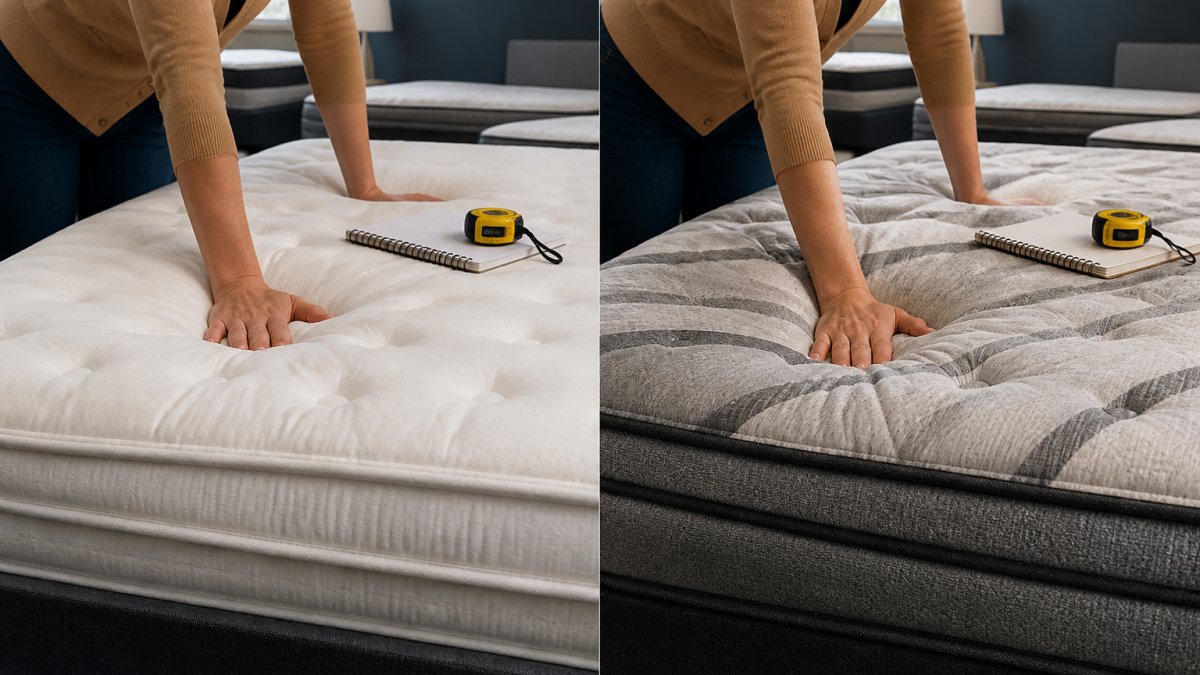
A person pressing down on a mattress surface with one hand to check for sagging, with a notebook and measuring tape resting nearby on the bed

1. Measure the sag, don’t just feel it

Lay a straight edge, a yardstick, a level, or a broom handle, across the bed from head to foot and side to side. Measure the gap between the straight edge and the mattress surface at the lowest point. A dip of about 1 inch or more is a visible sag; anything approaching 1.5 inches is a clear replacement signal. Do this in the spots where you and your partner actually sleep, not just the center.

2. Press the center and the edges

Push down firmly with your palm in the middle, at the head, at the foot, and along both edges. A new mattress springs back evenly and quickly. A worn one feels soft or dead in the middle, or the border collapses when you sit on the edge. Edge collapse is a common sign of a broken or compressed border wire or foam encasement, and it usually means the support layer has failed even if the top looks fine.

3. Check the foundation before you blame the mattress

A cracked box spring, a bent metal frame, or broken slats cause dips that look exactly like mattress wear. Pull the mattress off and inspect the foundation. Slats should be evenly spaced and unbroken; box springs should not creak, flex, or show broken coils. If the foundation is failing, replacing the mattress alone will not fix the sag.

4. Look for surface and seam damage

Run your hand across the cover and check the seams and binding. Look for tears, compressed or flattened areas, stains that suggest moisture, and loose or broken stitching. Stains alone do not mean the mattress is worn out, but moisture damage often comes with compressed foam and odor.

Call Us Today (423) 255-8124 → →

5. Test the other side and the other sleeper

If the mattress is flippable, sleep on the unused side for a week. If it is not flippable, rotate it 180 degrees so your head is where your feet were. If you feel noticeably better, the wear is concentrated where you sleep and the mattress is on its way out. If two people share the bed, compare notes, one person may feel the sag more because of weight or sleep position.

6. Compare against your own baseline

Note your mattress age against the lifespan table below, then rate the bed on four things: morning aches, sleep quality, visible condition, and whether you sleep better elsewhere. Two or more failing checks points to a worn bed; one failing check plus a mattress past its expected lifespan is also a reasonable replacement signal.

Pro Tip
Photograph the straight-edge measurement and the foundation before you shop. A photo of a 1.5-inch dip is more useful than a memory of “it felt soft,” and it helps you compare honestly when a salesperson asks what is wrong with your current bed.

How to Test a New Mattress Before You Buy

Testing a new mattress takes more than a quick sit. Lie on it for at least ten minutes in your normal sleeping position. Roll from your back to your side. If your shoulders and hips feel pressure, the bed is too firm. If you sink in and struggle to turn, it is too soft.

Ask yourself:

  • Does my spine feel straight when I lie on my side?
  • Do my shoulders and hips feel pressure relief?
  • Can I move without fighting the surface?

A mattress that fits your sleeping position will feel right within minutes.

New Mattress Expansion Time: What to Expect After Delivery

A new mattress expansion time of 24 to 48 hours is normal for most foam and hybrid beds. These mattresses ship compressed and rolled. Once you open the packaging, they need time to regain full shape.

What to do:

  • Open the box within a few days of delivery
  • Let the mattress rest flat on the foundation
  • Wait the full expansion window before judging firmness
  • Expect a slight odor that fades within a day or two

Do not sleep on it too early. A half-expanded mattress feels firmer and flatter than it will later.

Troubleshoot First: Fixes to Try Before You Replace

Not every bad night means a new mattress. Try these fixes before you spend anything.

  1. Add a mattress topper. A firm topper can restore pressure relief on a soft bed.
  2. Check the foundation. A cracked box spring or sagging slats cause dips that look like mattress wear.
  3. Rotate the mattress. Flipping or rotating spreads wear and buys time.
  4. Replace the pillows. Old pillows cause neck and shoulder soreness that mimics mattress problems.
  5. Clean and air it out. Moisture and dust can make a good mattress feel worse.

If the bed still fails after these steps, replacement is the honest answer.

When to See a Doctor (And When It’s Just the Mattress)

Persistent pain that does not improve after a week on a better mattress deserves a doctor’s visit. A mattress can cause morning stiffness and soreness. It cannot explain chronic pain, numbness that spreads, or pain that wakes you at night.

See a doctor if you notice:

  • Pain that lasts all day, not just after waking
  • Numbness or weakness in your legs
  • Pain that gets worse over weeks

For most people, a supportive new mattress and a proper pillow fix the morning aches. When in doubt, ask a medical professional.

Conclusion

A worn mattress steals your sleep one night at a time, and the signs are easy to miss until you know what to look for. If your inspection checklist fails, Mattress Outlet of Chattanooga can help you find a brand-new bed at a price that fits your budget. We offer truckload pricing that keeps costs well below retail, flexible payment plans and layaway, and a personalized appointment-based shopping experience. Every mattress we sell is brand-new, never refurbished. Get started with Mattress Outlet of Chattanooga and sleep better on a bed built to last.


Call Us Today (423) 255-8124 →

Frequently Asked Questions

How do I know if it’s time for a new mattress?

Look for a cluster of signals rather than one. Waking with morning stiffness, shoulder soreness, or back pain most days, tossing and turning through the night, and visible sagging or deep indentations are the strongest indicators. If you sleep noticeably better in a guest bed or hotel, that is a practical test. Add your mattress age: most foam beds last 7 to 8 years and innerspring beds 7 to 10, so a mattress past that range with any of these symptoms is a strong candidate for replacement.

Can a mattress look fine but still need replacing?

Yes. Visible wear is only one sign of a worn mattress. Support layers break down inside the mattress before the surface shows it, so a bed can look flat and clean while pressure points, spinal alignment, and sleep comfort have already degraded. The tell is how you feel: morning aches, joint pain, restless sleep, and frequent waking that improve when you sleep elsewhere point to internal breakdown. Use the at-home inspection checklist to check for uneven surface and soft spots, not just stains or tears.

How can I tell if my mattress is sagging?

Lay a straight edge, like a broom handle or a long ruler, across the mattress surface. If you can see a gap of more than about 1 inch between the straight edge and the mattress in your usual sleeping area, the surface has dipped. Also press down firmly with your hand across the bed: soft spots that do not spring back quickly signal worn support layers. Compare the center of the bed to the edges, since most sagging shows up where you sleep.

How long should I wait before sleeping on a new mattress?

New mattress expansion time varies by type. Memory foam and other compressed mattresses typically need 24 to 48 hours to fully expand after unboxing, and some need up to 72 hours. Innerspring and hybrid mattresses that arrive uncompressed are ready to sleep on right away. Sleeping on a compressed foam mattress too early can affect how evenly it expands, so give it the full window. Check the manufacturer’s instructions, since expansion time depends on the foam and how long the mattress was boxed.

How Long Do Hybrid Mattresses Last? A 2026 Guide

Table of Contents

Last Updated: October 10, 2026

How Long Do Hybrid Mattresses Last? The Real Answer

Most hybrid mattresses last 6 to 10 years, with seven to eight typical for a mid-quality model. Higher-end hybrids with denser foams and thicker coils often reach 10 to 12 years; budget hybrids wear out closer to six.

The range is wide because how long hybrid mattresses last depends more on what’s inside them and how you treat them than on the label.

A hybrid doesn’t die on a schedule, it dies when its support gives out.

Below: why estimates vary, how to inspect your mattress in ten minutes, and what extends its life.

Key TakeawayA hybrid mattress is a mattress built with a coil support core topped by foam comfort layers. Its lifespan is set by whichever fails first: the coils or the foam.

What “End of Life” Actually Means

The second reason estimates diverge: nobody agrees on when a mattress is dead.

Three definitions are in play:

  • Structural failure. A coil breaks, a foam layer crushes permanently, or edge support collapses. Objective, and often covered by warranty.
  • Functional failure. The mattress holds together but no longer keeps your spine aligned or relieves pressure. This drives most replacements, and it’s subjective.
  • Preference change. The mattress is fine, but you want something firmer, cooler, or bigger. Survey data counts this as a replacement even though nothing failed.

A durability lab measuring structural failure might rate a mattress at 10 years; the owner might hit functional failure at year seven. Both are correct answers to different questions.

The Variables That Actually Move the Number

Strip out the measurement noise and a handful of physical factors drive the real timeline:

  • Foam density. Measured in pounds per cubic foot. Lower-density foams compress and lose rebound faster; a denser comfort layer resists body impressions longer, which is the biggest reason premium hybrids outlast budget ones.
  • Coil gauge and count. Thinner wire fatigues sooner; a higher coil count spreads load across more contact points.
  • Sleeper weight and concentration. A 240-pound sleeper who stays in one position stresses the foam far more than a 140-pound sleeper who moves around.
  • Foundation type. A weak or flexing base lets the mattress bend where it wasn’t engineered to, accelerating foam breakdown and coil fatigue.
  • Rotation habits. Rotating spreads compression instead of letting it concentrate in one zone.

So when you read “hybrid mattresses last 8 years,” that’s a blended midpoint built from mixed measurement methods. Your mattress may beat it or miss it, and now you know which factors decide which.

Key TakeawayA lifespan number is only meaningful if you know what was measured. Warranty periods, blended averages, and roller tests answer three different questions, and none of them is “how long will this feel good to me.”

Signs You Need a New Mattress

The clearest sign you need a new mattress is a visible sag or dip where you sleep that doesn’t bounce back within a few minutes of getting up.

Person testing the edge of a mattress to see how long hybrid mattresses last before sagging.

But “it feels worn out” is not a diagnosis. Before you spend money, run this ten-minute inspection, no tools beyond a straightedge and tape measure, to separate normal settling from genuine failure.

The Ten-Minute Mattress Inspection

Step 1: Strip the bed and look from directly above. Stand at the foot of the bed and sight down the surface.

Rule of thumb: impressions under about three-quarters of an inch are normal settling.

Step 3: Test the edges. Sit on each corner and along each side, then stand up. The edge should push back and recover.

Step 5: Listen and feel for coil problems. Press down and release slowly.

Step 6: Lie down in your normal position for ten minutes. This functional test matters most.

Normal Settling vs. a Replacement-Level Problem

Every mattress settles. The question is whether you’re feeling expected break-in or actual failure:

  • Normal settling: shallow impressions under about three-quarters of an inch, even softening, foam that recovers within minutes, no change in how your body feels in the morning.
  • Replacement-level problem: impressions deeper than roughly an inch, a dip concentrated in one zone, foam that stays compressed, coils you can feel, new noise, or waking up sore in the same spots most mornings.

The pattern matters as much as the depth. A mattress that softened evenly is usually still supportive; one with a deep crater where you sleep has failed locally, and that’s the failure that ruins sleep.

The Symptoms That Point to Replacement

If the inspection turns up any of these, it’s time to shop:

  • You wake up stiff or sore in the same spots most mornings
  • You roll toward the middle or edge of the bed without trying
  • The mattress feels noticeably softer in your usual sleep position than elsewhere
  • You can feel the coils through the comfort layer
  • The mattress makes new creaking or popping sounds
  • The dip exceeds the sag threshold in your warranty, which means you may have a claim

Sagging and Body Impressions

A body impression is a shallow dip that forms where you sleep most nights. Every mattress develops some over time. The question is depth, and depth is measurable.

Learn More → →

If the dip is deeper than about one inch with no one on the bed, the comfort layer has broken down, usually the point where pressure relief stops working and you start waking up sore. Measure with a straightedge rather than eyeballing it; a dip that looks alarming from above often measures smaller than it appears.

Loss of Support and Pressure Relief

Loss of support is different from sagging. The mattress may look flat but still feel like it’s pushing back unevenly.

Test it by lying on your back for ten minutes. If your hips sink lower than your shoulders, spinal alignment is off, a support problem, not a comfort problem, and it won’t fix itself. On your side, your spine should stay roughly straight; if your waist sags toward the mattress, the support core has softened under your midsection.

Watch OutDon’t judge your mattress by how it looks from across the room. Body impressions and support loss are easiest to spot from directly above with the bedding off, and they’re easiest to confirm with a straightedge and a tape measure.
Pro TipWrite down your measurements and the date. If you end up filing a warranty claim, a documented dip depth measured with a straightedge is exactly what most manufacturers ask for, and having it ready speeds up the process.

How Often to Replace a Mattress: A Practical Timeline

A practical replacement timeline for a hybrid mattress is every 7 to 8 years for average use. Adjust up or down based on the factors below.

Situation

Expected Lifespan

Why

Single sleeper, average weight, quality hybrid

8-10 years

Less concentrated wear

Couple, average weight, quality hybrid

7-8 years

Two wear zones instead of one

Sleeper over 230 lbs

5-7 years

More stress on foam and coils

Budget hybrid, nightly use

5-6 years

Lower-density foams break down sooner

Guest room, occasional use

10+ years

Far fewer compression cycles

These are estimates, not rules. A well-built hybrid used gently can outlast a cheap one used hard.

How to Make a Mattress Last Longer

The single biggest thing you can do to make a mattress last longer is support it properly from underneath. A mattress performs only as well as the foundation beneath it.

Sleep Foundation guidance on mattress care and foundations

Beyond that:

  • Use a waterproof, breathable mattress protector and wash it monthly
  • Rotate the mattress on schedule (more on that below)
  • Avoid sitting on the same edge every night
  • Keep pets off if you can, or use a thick protector if you can’t
  • Let the mattress air out after removing bedding

Foundation and Bed Frame Matter More Than You Think

A hybrid needs a firm, flat, well-supported base. A slatted frame with wide gaps lets the mattress sag between slats; a weak box spring adds bounce the coils weren’t designed for.

What most guides miss: the wrong foundation can void a warranty. Many manufacturers require a specific base type, so check the warranty terms before you buy if you’re unsure yours qualifies.

Pro TipMeasure the gap between your bed frame slats. If they’re more than about three inches apart, add a bunkie board or a solid platform. It’s a cheap fix that can add years to a mattress.

How Often to Rotate a Hybrid Mattress

Rotate a hybrid mattress every three to six months for the first year, then every six months after that. Rotation spreads wear and delays body impressions.

Most hybrids today are one-sided, so rotate them head-to-foot rather than flipping. Never flip a mattress not designed to be flipped.

Set a phone reminder every three months. It takes two people about a minute.

Consumer Product Safety Commission guidance on mattress safety and care

Warranty Coverage vs. Expected Usable Life

A mattress warranty and a mattress lifespan are not the same thing, the gap that trips up most buyers.

A warranty covers defects: a broken coil, a split seam, a foam layer that collapses prematurely.

So your mattress may be “used up” long before the warranty expires, or fail in year three in a way the warranty does cover.

Read the fine print on two things:

  • The sag threshold. Many warranties only kick in past a certain dip depth, often measured with a straightedge.
  • The foundation requirement. Using the wrong base is one of the most common reasons claims get denied.

If you’re replacing a mattress that failed early, ask why before you buy again. The cause is often the base, not the mattress.

Conclusion

Figuring out when to replace a hybrid mattress comes down to one question: does it still support your body the way it did in year one? If not, the label’s estimated lifespan doesn’t matter.

At Mattress Outlet of Chattanooga, we help local sleepers replace worn-out mattresses without paying retail prices. We offer brand-new mattresses at 60-80% below retail through truckload pricing, quality furniture from Ashley Furniture Direct, and flexible payment plans and layaway. We’re appointment-only, so you get real help instead of a pushy sales floor.

Learn More →

Frequently Asked Questions

How often should you replace a hybrid mattress?

Most hybrid mattresses last 6 to 10 years, so replacing yours around the 7 or 8 year mark is a reasonable rule of thumb. That said, the timeline shifts based on how you sleep, your body weight, and how well you care for it. A 250-pound sleeper who uses the same spot every night wears through foam layers faster than a 130-pound sleeper who rotates the mattress on schedule. If you notice sagging or waking up sore before year 6, replace it sooner.

What are the signs you need a new mattress?

The clearest signs you need a new mattress include visible sagging or body impressions deeper than about 2 inches, a noticeable loss of support around the edges, and waking up with aches that fade once you’re out of bed. You may also notice more noise from the coil system, a mattress that feels softer than it did a year ago, or allergy symptoms that worsen at night. If two or more of these show up together, it’s time to shop.

How often should I rotate a hybrid mattress?

Rotate your hybrid mattress head-to-foot every 3 to 6 months for the first year, then every 6 months after that. Rotation keeps the foam layers and coil system from compressing in the same spots night after night. You do not need to flip a hybrid mattress, since the support core is built to stay on the bottom. If you sleep with a partner, rotation matters even more because body weight concentrates in two areas instead of one.

Does a warranty mean my hybrid mattress will last that long?

No. A 10-year warranty covers manufacturing defects like a broken coil or a foam layer that fails prematurely, not normal wear and tear. Most warranties require a certain impression depth (often 2 inches) before they’ll honor a claim, and they don’t cover softening, stains, or damage from a bad foundation. Think of the warranty as protection against a defect, and the 6 to 10 year lifespan as what you can realistically expect from nightly use.