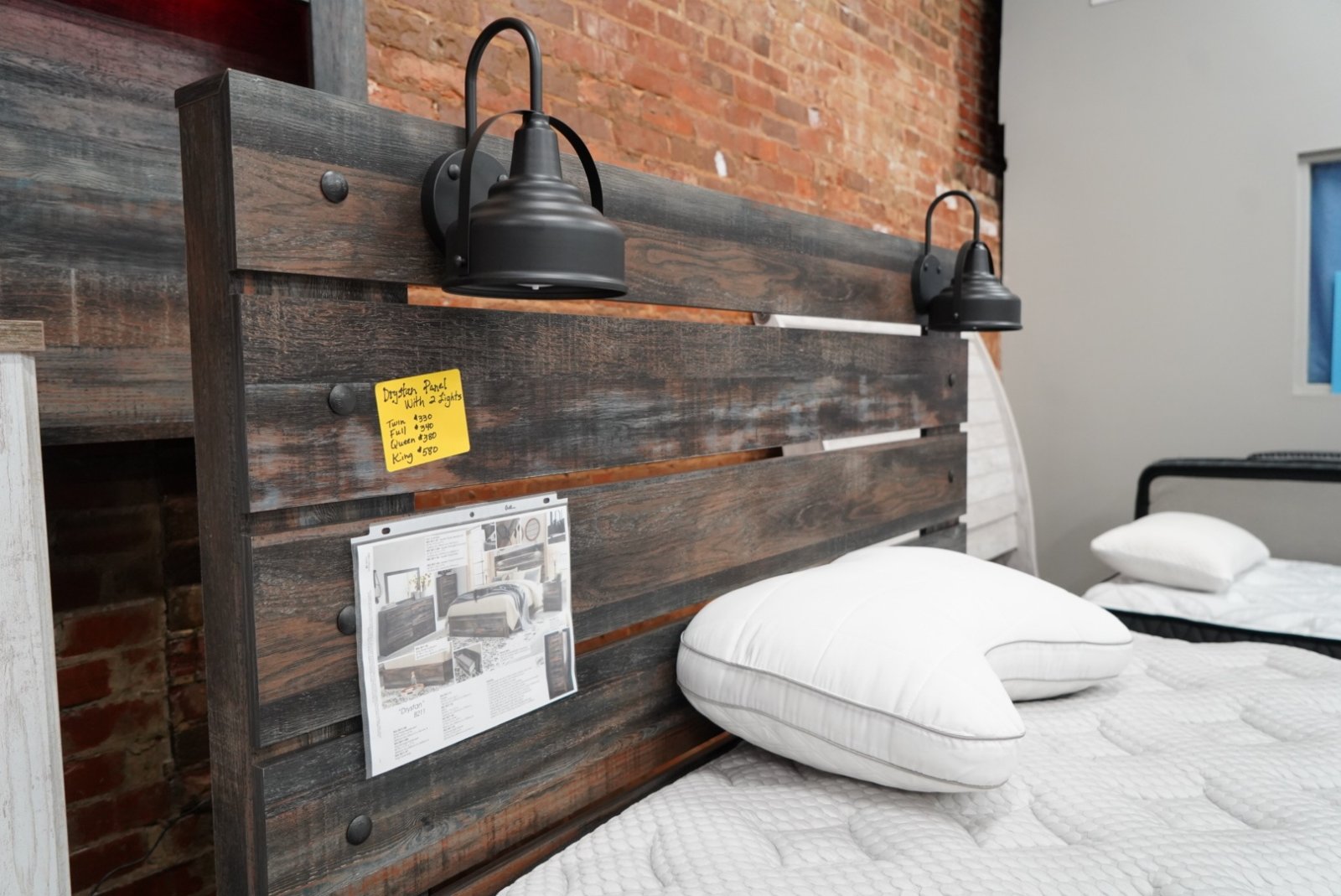
Mattress Price Range by Size in 2026: What You’ll Actually Pay
Last Updated: November 4, 2026
Quick Summary
The mattress price range by size runs from $150-$400 for a budget Twin to $2,700-$5,500 for a premium California King, with Queen sitting in the middle at $300-$800 budget, $800-$1,800 mid-range, and $1,800-$3,500 premium. Queen anchors the market because it outsells every other size, so shop Queen first to establish your baseline, then scale up or down.
- Moving up one size typically adds a modest premium rather than a dramatic jump.
- Foam is generally an entry-level construction, while hybrids and latex typically cost more.
- Budget mattresses use fewer layers and lighter foams; luxury models add natural latex and reinforced edges.
- Split King setups use two smaller mattresses on one frame, pushing cost above a standard King.
- Standard sizes give the best value because they’re mass-produced.
Table of Contents
- What the Mattress Price Range Looks Like Across Standard Sizes
- Average Cost of a Queen Mattress and Why It Anchors the Market
- How Mattress Construction Changes the Price Range
- Budget, Mid-Range, and Luxury Tiers: What Separates Them
- Mattress Price vs Quality: What You Get for the Money
- Mattress Financing Options and Layaway for Budget-Conscious Buyers
- Sale Prices vs Regular Prices: How to Read a Mattress Tag
- Total Cost of Ownership by Size: Beyond the Mattress Itself
- Split, RV, and Custom Sizes: Where the Price Range Shifts
- Frequently Asked Questions
What the Mattress Price Range Looks Like Across Standard Sizes
Mattress prices vary widely by size, construction, and timing, with Queen sitting in the middle as one of the most common purchases. This guide breaks down how size, construction, and timing affect mattress cost and where the real value tends to sit.
Size matters, but not as much as most shoppers assume. Moving up one size typically adds a modest premium rather than a dramatic jump. Construction and brand positioning move the price far more than dimensions do.
Side-by-Side Price Table for Every Standard Size
Prices depend on quantity, dates, firmness, materials, and delivery. For current pricing and a quote, visit the Mattress Outlet of Chattanooga website.
| Size | Dimensions | Budget | Mid-Range | Premium |
|---|---|---|---|---|
| Twin | 38″ x 75″ | $150-$400 | $400-$900 | $900-$1,800 |
| Twin XL | 38″ x 80″ | $175-$450 | $450-$1,000 | $1,000-$2,000 |
| Full | 54″ x 75″ | $250-$600 | $600-$1,200 | $1,200-$2,500 |
| Queen | 60″ x 80″ | $300-$800 | $800-$1,800 | $1,800-$3,500 |
| King | 76″ x 80″ | $500-$1,200 | $1,200-$2,500 | $2,500-$5,000 |
| California King | 72″ x 84″ | $550-$1,300 | $1,300-$2,700 | $2,700-$5,500 |
Each size step up generally adds cost, and Queen is a common volume size. Twin XL is longer than Twin, which matters for taller sleepers and dorm rooms (Twin vs. Twin XL Mattress Comparison 2025).
Watch out: compare the regular price and any sale price side by side before you judge a deal.
For a benchmark on what counts as reasonable at each level, see our guide to what is a reasonable price to pay for a mattress.
Average Cost of a Queen Mattress and Why It Anchors the Market
Queen is the reference point for the entire mattress price range because it outsells every other size. When shoppers compare quotes, they almost always compare Queen to Queen. That makes the average cost of a queen mattress the number that sets expectations for the whole category.
A Queen sits in the middle of the size ladder: big enough for couples, small enough for a guest room, and compatible with the widest selection of bed frames and bedding. Retailers price around it, manufacturers build around it, and promotions cluster around it. If you understand Queen pricing, you can estimate every other size by adjusting up or down.
The practical takeaway: shop Queen first to establish your baseline, then scale. A King adds width and cost; a Full trims both. The Queen is your anchor, not your only option.
How Mattress Construction Changes the Price Range
Construction is a major driver of price within any given size, since the materials inside a mattress differ. The four main builds each carry a different cost profile, and the table below cross-tabulates typical price ranges by size and construction so you can compare directly.
Foam, Innerspring, Hybrid, and Latex Cost Differences
- Polyfoam and memory foam: The most affordable build. Foam mattresses use layered polyurethane and memory foam, which keeps material costs down and pricing accessible.
- Innerspring: Traditional coil systems, including pocket spring designs, land in the budget-to-mid range. Simple bonnell coils cost less; individually wrapped pocket coils cost more.
- Hybrid: Combines a coil support core with foam or latex comfort layers. Hybrids sit in the mid-to-premium band because they use more materials and more complex construction.
- Latex: Natural latex and blended latex carry the highest material cost, which pushes latex mattresses toward the premium end of the range.
Price Ranges by Size and Construction
Construction is a major factor in price. For current prices by construction and size, visit the Mattress Outlet of Chattanooga website.
| Size | Foam | Innerspring | Hybrid | Latex |
|---|---|---|---|---|
| Twin | $150-$700 | $200-$800 | $400-$1,200 | $600-$1,800 |
| Full | $250-$1,000 | $300-$1,200 | $600-$1,800 | $900-$2,500 |
| Queen | $300-$1,300 | $400-$1,500 | $800-$2,500 | $1,200-$3,500 |
| King | $500-$1,800 | $600-$2,000 | $1,200-$3,500 | $1,800-$5,000 |
Foam is generally an entry-level construction, while hybrids and latex typically cost more because of their materials. Innerspring is a traditional option for shoppers who prefer that feel.
Firmness and durability also factor in. When comparing two mattresses at the same size and construction, check the foam density and coil count to understand the specifications.
Watch out: confirm the layer and coil specs of any model before assuming you found a bargain.
Budget, Mid-Range, and Luxury Tiers: What Separates Them
Mattresses are often grouped into budget, mid-range, and luxury tiers, and the differences typically lie in materials, layer count, warranty length, and edge support. Budget mattresses use fewer layers and lighter foams. Mid-range models add pocket coils, better covers, and longer warranties. Luxury models layer in natural latex, denser foams, and reinforced edges.

Many shoppers choose mid-range models for a balance of comfort and durability. Budget models suit guest rooms and first apartments. Luxury models reward sleepers who want the longest service life and the most support.
For budget-focused shoppers, our guide on how to choose a mattress under 1000 walks through the trade-offs step by step.
Mattress Price vs Quality: What You Get for the Money
Higher price does not automatically mean better sleep. Price and quality are not always linked; whether the materials match your needs for support, firmness, and durability matters most. A well-built budget mattress can outperform an overpriced luxury model for a guest room that sees occasional use.
Call Us Today (423) 255-8124 → →
Where the money goes at higher price points: denser support foams, more coil counts, natural materials, reinforced edges, and longer warranties. Where it doesn’t always go: better sleep for your specific body type and sleeping position. Match the build to the sleeper, not the price tag.
Skeptical buyers should read are cheap mattresses worth it before assuming a lower price means lower quality.
Mattress Financing Options and Layaway for Budget-Conscious Buyers
Mattress financing options let you spread the cost of a new mattress over time instead of paying the full amount upfront. Common financing structures include installment plans and layaway, where you pay in increments and take delivery once the balance clears.
Which one fits depends on your situation. Layaway is one option if you prefer to pay in increments rather than all at once. If you may move, confirm the return and exchange policy before you commit.
Mattress Outlet of Chattanooga offers flexible payment plans and layaway. You can review mattress payment plans and see what fits your budget before you visit.
Sale Prices vs Regular Prices: How to Read a Mattress Tag
The number on the tag is rarely the number you pay. Mattress retail pricing runs on a sale cycle, and understanding the difference between retail price and sale price is how you avoid overpaying. A “compare at” figure reflects the manufacturer’s suggested retail, not what anyone actually charges.
Here’s how to read a tag like a pro:
- Check whether the listed price is the regular price or a current promotion.
- Ask how long the promotion runs and whether it includes delivery.
- Confirm what’s included: foundation, removal of your old mattress, warranty registration.
- Compare the final out-the-door number, not the headline price.
Some discount retailers buy in volume, which can lower prices compared with a manufacturer’s suggested retail figure. Confirm that any mattress is brand-new and that its warranty is intact before you buy.
Total Cost of Ownership by Size: Beyond the Mattress Itself
The mattress is only part of what you’ll spend. Total cost of ownership by size includes the foundation or bed frame, bedding, delivery, and old-mattress removal. These extras scale with size: a King needs a bigger frame, larger sheets, and often a sturdier foundation than a Twin.
| Cost Component | Twin/Full | Queen | King/Cal King |
|---|---|---|---|
| Foundation or frame | Lower | Mid | Higher |
| Sheet set and bedding | Lower | Mid | Higher |
| Delivery and setup | Similar | Similar | Similar |
| Old mattress removal | Similar | Similar | Similar |
Budget for the whole setup, not just the mattress, since foundations, bedding, and delivery add to the total.
If you’re still deciding on dimensions, our guide to choosing the right mattress size breaks down room fit and sleeper needs.
Split, RV, and Custom Sizes: Where the Price Range Shifts
Non-standard sizes sit outside the main table and carry their own pricing logic. Split King and split California King setups use two smaller mattresses on one frame, so you pay for two pieces, which pushes cost above a standard King. RV and camper mattresses come in shorter, narrower dimensions and often cost less than a standard mattress of similar build, though selection is narrower. Custom sizes cost more because they’re built to order.
The rule of thumb: standard sizes give you the best value because they’re mass-produced. The moment you leave the standard ladder, expect either a premium for customization or a limited selection.
Replacing a worn-out mattress shouldn’t mean stretching your budget to its limit. At Mattress Outlet of Chattanooga, we stock brand-new mattresses priced well below typical retail through smart truckload buying, and we back that with flexible payment plans and layaway for shoppers who need to spread the cost. Visit us for a personalized, appointment-based experience, compare sizes and builds side by side, and get started with Mattress Outlet of Chattanooga to sleep better for less. Call us today at (423) 255-8124.
Frequently Asked Questions
What is a reasonable price to pay for a mattress?
A reasonable price depends on size and construction. Twin and Full sizes sit at the lower end of the mattress price range, while Queen and King cost more due to materials. Budget models use basic foam or innerspring, mid-range adds better support layers, and luxury uses premium materials. Set your budget by size first, then compare what each tier offers at that price point before you shop.
Is $300 a good price for a mattress?
At $300 you are typically looking at a Twin or Full size in a budget construction, such as basic foam or a simple innerspring. That can suit a guest room or a child’s bed, depending on the construction you choose. Compare the warranty and trial period to judge whether the price reflects real value.
How does mattress size impact the total cost?
Size is one of the biggest drivers of the mattress price range. A King uses roughly twice the materials of a Twin, so it costs more at every quality tier. California King adds length, which can push the price slightly above a standard King. Moving up a size also means you may need a new bed frame, foundation, and bedding, so factor those accessories into your total budget.
Are there ways to find premium mattresses at a discount?
Yes. Ask whether the mattress is brand-new or refurbished, confirm the warranty terms, and check any trial period before buying. Comparing sale prices against regular retail tags shows you the real discount.
What factors contribute to the price difference between mattress sizes?
Material volume is the main factor: larger sizes use more foam, springs, and fabric. Construction type matters too, since hybrids and latex cost more per square foot than basic foam. Brand markup, warranty length, and delivery charges also affect the final price. Comparing the same construction across sizes gives you the clearest picture of how size alone changes cost.
How much should I budget for a high-quality king mattress?
A high-quality King sits at the upper end of the mattress price range because it uses the most materials. Budget for a premium construction such as a hybrid or latex model, and add the cost of a sturdy foundation and King-size bedding. Financing and layaway can spread the cost over time, so ask about payment plans before you commit to a specific model.