
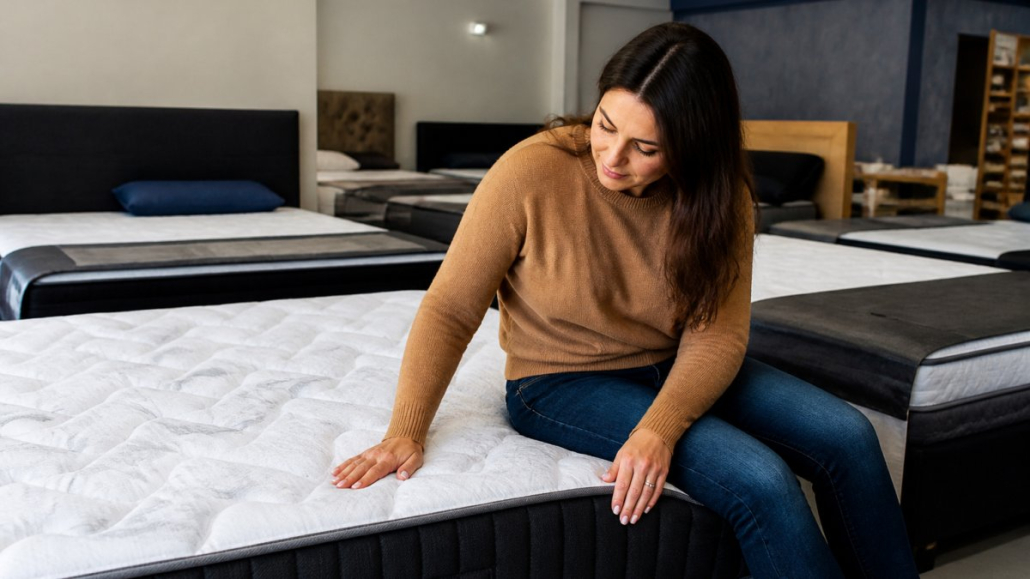
How to Choose a Mattress Under $1,000 in 2026
Table of Contents
- Start With Your Sleep Position and Body Type
- Match Mattress Firmness for Sleeping Position
- Compare Mattress Types and Materials
- Evaluate Mattress Durability and Lifespan
- Understand the Total Cost of a Mattress Under $1,000
- Conclusion
- Frequently Asked Questions
Last Updated: October 13, 2026
Start With Your Sleep Position and Body Type
Learning how to choose a mattress under $1000 starts with two facts: how you sleep and how much you weigh. Get those right and most of the decision makes itself; get them wrong and even a well-built bed can leave you sore.
A mattress under 1000 dollars still delivers brand-new construction, a real warranty, and a sleep trial. At Mattress Outlet of Chattanooga, the happiest shoppers are the ones who matched firmness to sleep position before walking in the door.
Side, Back, Stomach, and Combination Sleepers
Side sleepers need the most cushioning: shoulders and hips press deep into the surface, so a medium or medium-firm feel keeps the spine level.
Back sleepers do best on medium-firm. Stomach sleepers need firm support to keep hips from sinking and arching the lower back. Combination sleepers should prioritize responsiveness so they can change position without fighting the bed.
Weight, Height, and Partner Considerations
Body weight changes how a mattress feels: a lighter sleeper may find a medium-firm bed supportive, while a heavier sleeper sinks through the comfort layer to the support core. Heavier sleepers should lean firmer and look for sturdier coils.
Shopping with a partner? You need a surface that works for both sleep positions, not an average of the two, plus motion isolation so one person’s repositioning doesn’t wake the other.
Match Mattress Firmness for Sleeping Position
Firmness is the most useful filter when choosing a mattress on a budget, because it’s the one spec you can match to your body before comparing price tags.
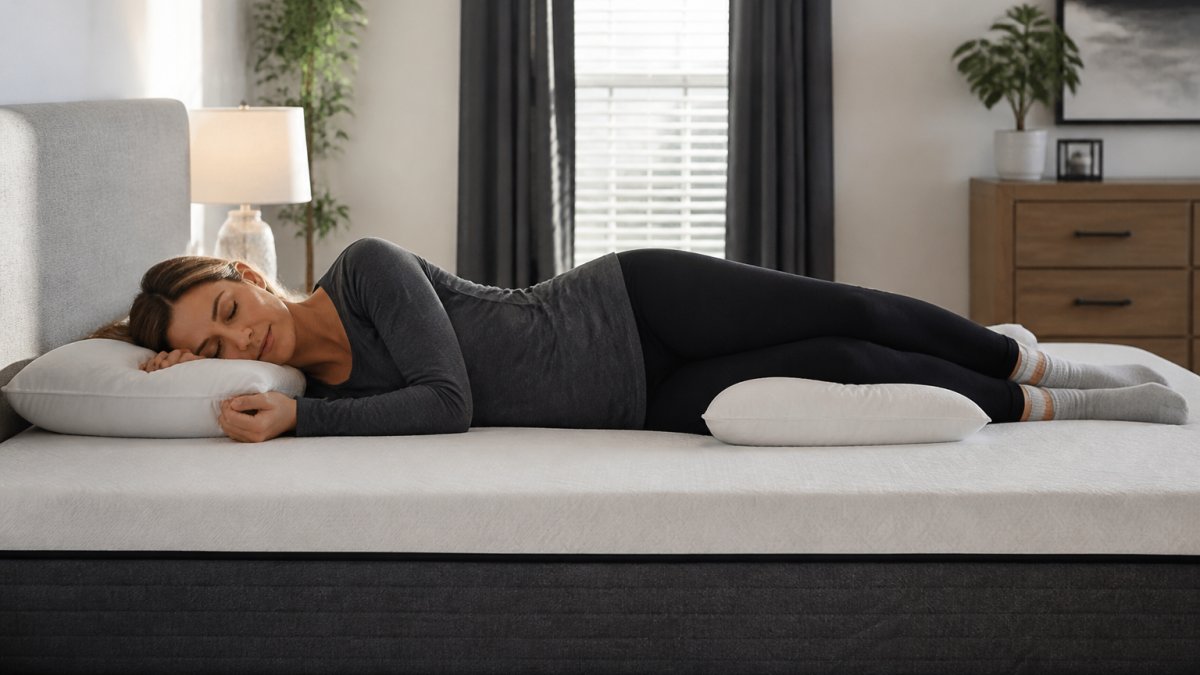
Use this as your starting point:
- Side sleepers: medium to medium-firm, with a pressure-relieving comfort layer
- Back sleepers: medium-firm, which keeps the lumbar curve neutral
- Stomach sleepers: firm, so the hips stay level with the shoulders
- Combination sleepers: medium-firm with responsive foam or coils
- Heavier sleepers: firm, with a dense support core
Firmness isn’t quality. A firm budget mattress can outperform a soft premium one for a stomach sleeper, so test feel before price.
Compare Mattress Types and Materials
Four constructions dominate the sub-$1,000 market, each trading off differently between price, cooling, and motion isolation. Understanding mattress types and materials tells you what you’re paying for, and what to inspect on the spec sheet before trusting a showroom feel.
Foam, Hybrid, Innerspring, and Latex
Hybrid mattresses pair a coil support core with a foam or latex comfort layer. They sleep cooler than all-foam, add bounce, and are the most common pick for shoppers who want support without giving up cushioning.
Innerspring builds use traditional coils with minimal foam. They’re the firmest and often most affordable, with strong airflow but weaker motion isolation, often the best value per dollar if you sleep hot or alone.
Latex is responsive, durable, and naturally breathable. It costs more per unit than foam, so a latex bed under $1,000 usually means a thinner comfort layer.
|
Type |
Feel |
Cooling |
Motion Isolation |
Best For |
|---|---|---|---|---|
|
Memory foam |
Conforming, slow |
Lower |
Excellent |
Side sleepers, couples |
|
Hybrid |
Balanced, bouncy |
Good |
Good |
Most sleepers |
|
Innerspring |
Firm, traditional |
Excellent |
Fair |
Stomach sleepers, hot sleepers |
|
Latex |
Responsive, springy |
Excellent |
Good |
Durable-value shoppers |
What to Check on the Spec Sheet
A product page can call a mattress “premium” without telling you anything useful. These details actually predict how a budget bed will perform:
- Comfort-layer density. Higher-density foams resist softening; low-density foams break down faster.
- Support-core construction. Coil count, gauge, and perimeter reinforcement affect support and edge stability.
- Total height and layer order. A thicker comfort layer feels plusher but reduces support; a thinner one feels firmer but may bottom out for heavier sleepers.
- Certifications. Look for independent testing labels on foam emissions and material safety.
Match the Material to Your Priorities
There’s no single “best” material, only the best fit for how you sleep:
- If you overheat: prioritize innerspring, hybrid, or latex over all-foam.
- If you share the bed: prioritize memory foam or a hybrid with strong motion isolation.
- If you need firm support: prioritize innerspring or a firm hybrid.
- If you want longevity on a budget: prioritize higher-density foam or latex, even if the layer is thinner.
Foam vs. Hybrid: The Budget Decision
The foam-versus-hybrid choice is the one most budget shoppers face. All-foam beds cost less at a given comfort level and isolate motion better, but sleep warmer and feel sluggish when you change position. Hybrids cost a bit more, sleep cooler, and add bounce that helps combination sleepers move freely, but transmit more motion and may have weaker edge support unless the perimeter is reinforced.
If you sleep hot, share the bed with a restless partner, or rotate positions overnight, a hybrid is usually worth the stretch. If you sleep cool, sleep alone, and want the lowest price for a given plushness, all-foam is often the smarter buy.
Call Us Today (423) 255-8124 → →
Warranties Cover Defects, Not Discomfort
Warranties are separate from trials, and confusing the two is common. A warranty covers manufacturing defects, sagging beyond a stated threshold, a broken coil, a failed seam, not a change of heart about firmness.
When you compare warranties, check:
- Coverage years and whether coverage is prorated. A long term with prorated coverage is worth less than it sounds.
- The sagging threshold. Most warranties only kick in after a specific depth of indentation, so a bed that feels unsupportive but hasn’t sagged enough won’t qualify.
- What voids coverage. Using the wrong foundation, removing the law tag, or skipping a required mattress protector are common disqualifiers.
- Who pays shipping on a warranty claim. Even a valid claim can cost you if you’re responsible for freight.
In-Store vs. Online: How the Policies Differ
The purchasing route changes your risk profile as much as the mattress does.
Online usually offers longer trials and lower prices, but you’re buying sight unseen and may handle repacking or shipping on returns. Online-only brands often publish policies clearly, but the logistics fall on you.
A practical middle path: test feel in a showroom, then confirm the exact model’s trial, return, and warranty terms in writing before you commit, whether you buy there or online.
Build a Simple Policy Checklist
Before you hand over payment, confirm these five things in writing:
- Trial length and any required break-in period.
- Return cost, fees, shipping, and who arranges pickup.
- Refund type and timeline.
- Warranty length, sagging threshold, and what voids it.
- Foundation requirements, since the wrong base can void both the trial and the warranty.
Evaluate Mattress Durability and Lifespan
Mattress durability and lifespan come down to construction quality, not marketing claims. A well-built budget mattress can last as long as a poorly built premium one, so judge materials rather than the label.
Higher-density foams hold their shape longer than low-density ones, and a thicker-gauge coil system resists sagging better than a thin one. A supportive foundation or adjustable base protects the mattress from the flexing that wears it out early.
To judge value over time, divide what you’ll pay by the years you expect to keep the bed, and compare that annual figure across options.
Understand the Total Cost of a Mattress Under $1,000
The advertised price is rarely the full cost of a mattress under $1,000. Budget for the whole setup.
Beyond the mattress, factor in:
- Foundation or adjustable base, if your current one isn’t compatible
- Delivery and setup, which some sellers charge for
- Old mattress removal, often a separate line item
- Protector and pillows, small costs that extend the mattress’s life
- Sales tax, which varies by location
Financing and layaway change the math too. Spreading payments keeps the upfront cost manageable, but confirm whether interest or fees apply. Ask for the out-the-door total before you commit, and check the seller’s website for current pricing.
A mattress under 1000 dollars can be an excellent buy, but only when the all-in number still fits your budget after the extras.
Conclusion
Choosing a mattress under $1,000 is less about the lowest tag and more about matching firmness, materials, and durability to how you actually sleep. Get those three right, read the trial and warranty terms closely, and add up the true total cost before you buy.
Mattress Outlet of Chattanooga makes that process simpler with brand-new mattresses priced well below retail, flexible payment plans and layaway, and a personalized, appointment-based shopping experience.
Call Us Today (423) 255-8124 → and let us help you find a mattress you’ll sleep well on for years.
Frequently Asked Questions
Are there any good mattresses under $1,000?
Yes. Many quality mattresses are available under $1,000, including foam, hybrid, and innerspring models from reputable brands. The key is to focus on construction, materials, and warranty rather than price alone. A mattress under $1,000 can offer solid support and comfort for 7-10 years if you choose the right firmness and type for your sleep position.
What mattress type is best for side sleepers?
Side sleepers typically need a medium to medium-firm mattress that cushions pressure points at the shoulders and hips while keeping the spine aligned. Memory foam and hybrid mattresses often work well because they contour to the body. A mattress that is too firm can cause shoulder and hip pain, while one that is too soft may lead to sagging and poor alignment.
How can you tell if a mattress is durable?
Check the warranty length, foam density, and coil gauge. A longer warranty (10 years or more) usually signals better durability. High-density memory foam (at least 3.5 lb per cubic foot) and tempered steel coils resist sagging. Also, look for reinforced edge support and a breathable cover. Reading owner reviews about how the mattress holds up after a few years can give you real-world clues.
Should you try a mattress in person before buying?
Trying a mattress in person helps you gauge firmness, comfort, and support. Lie on it for at least 10-15 minutes in your typical sleep position. If shopping online, choose a mattress with a generous sleep trial (at least 90 nights) and a hassle-free return policy. Many retailers also offer showrooms where you can test models before ordering.
